QC/T 293-2019 PDF English
Price & Delivery
US$175.00 · In stock · Download in 9 secondsQC/T 293-2019: Specifications and bench test methods of automotive axle shaft
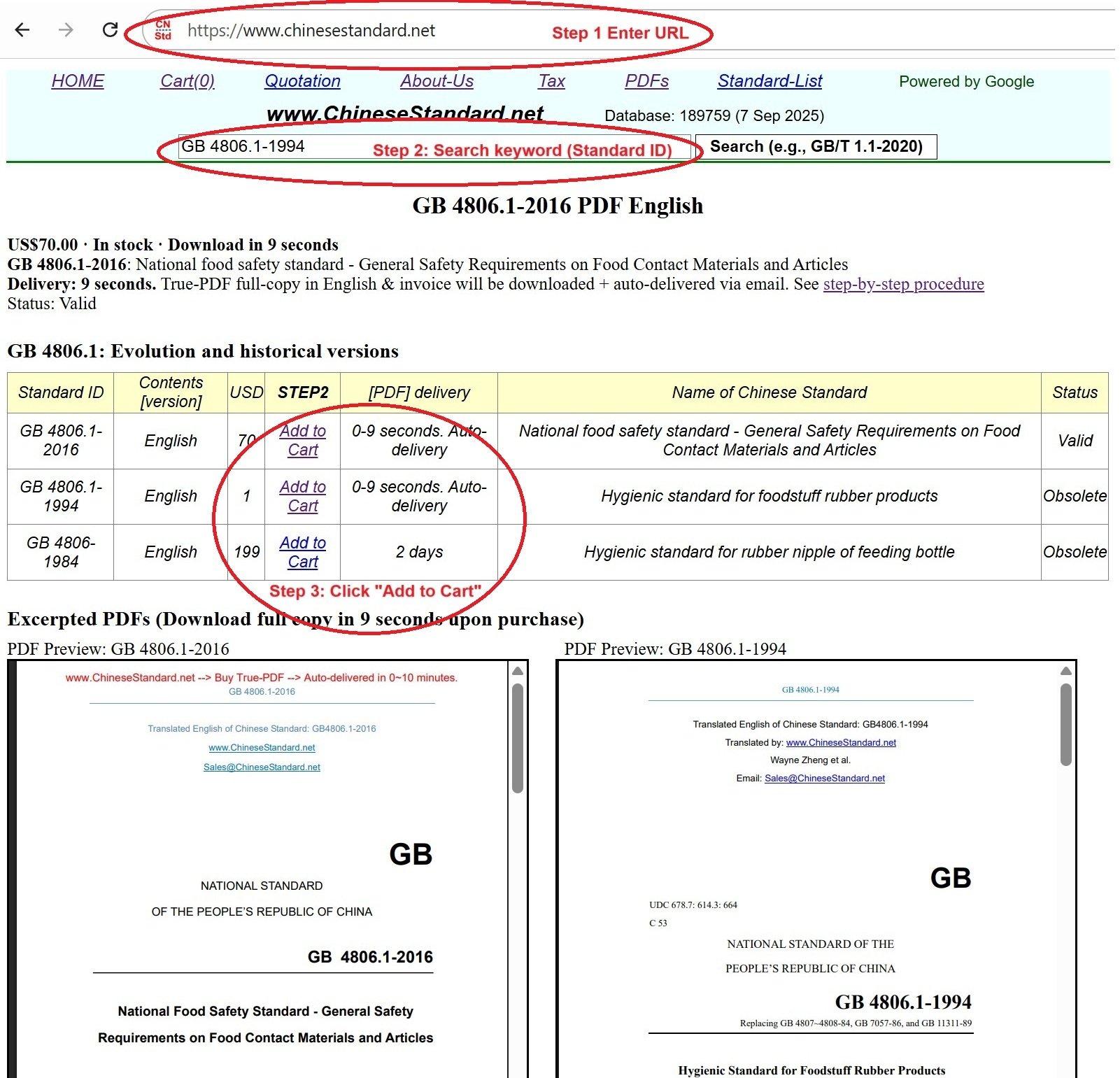
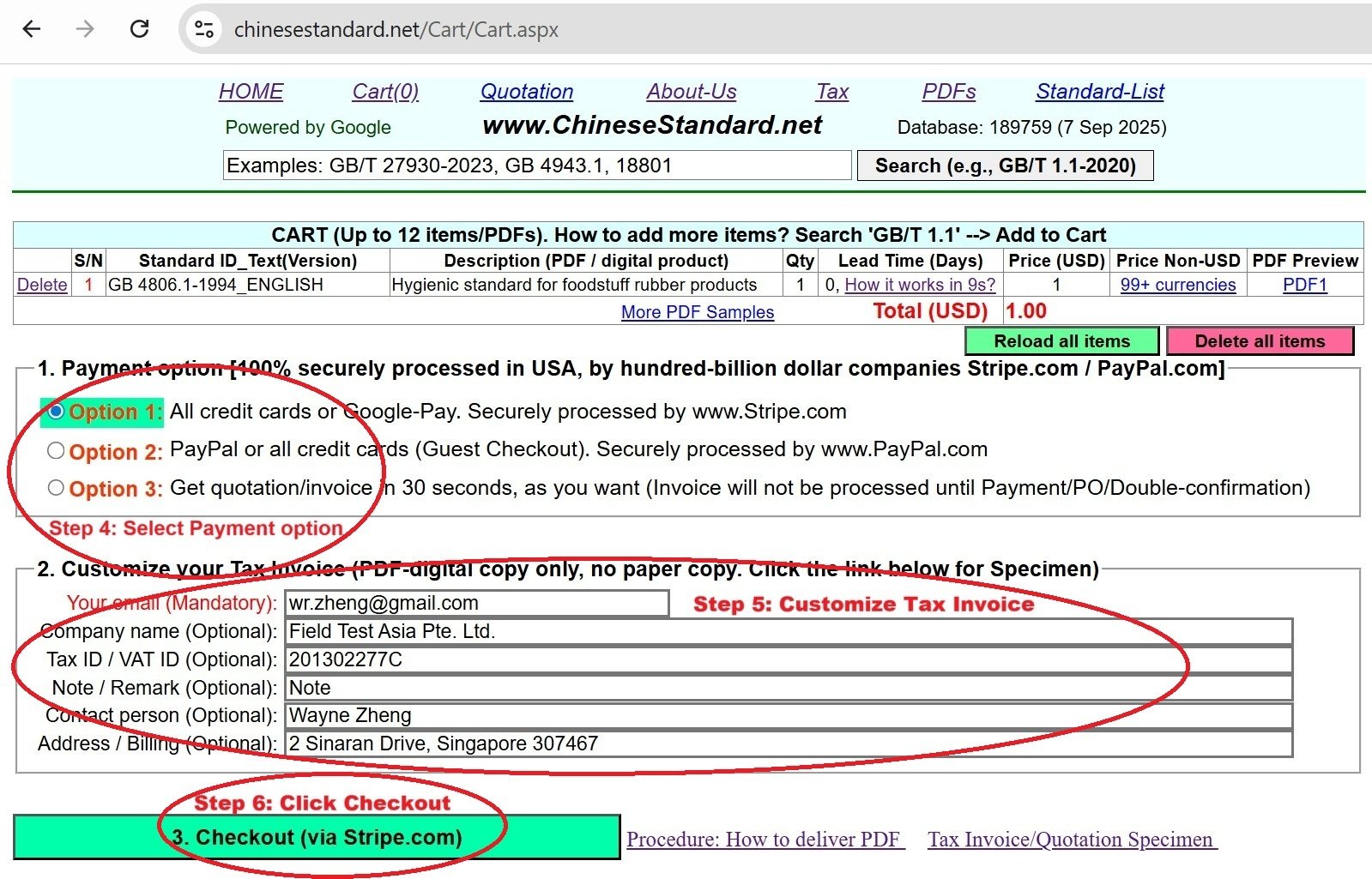
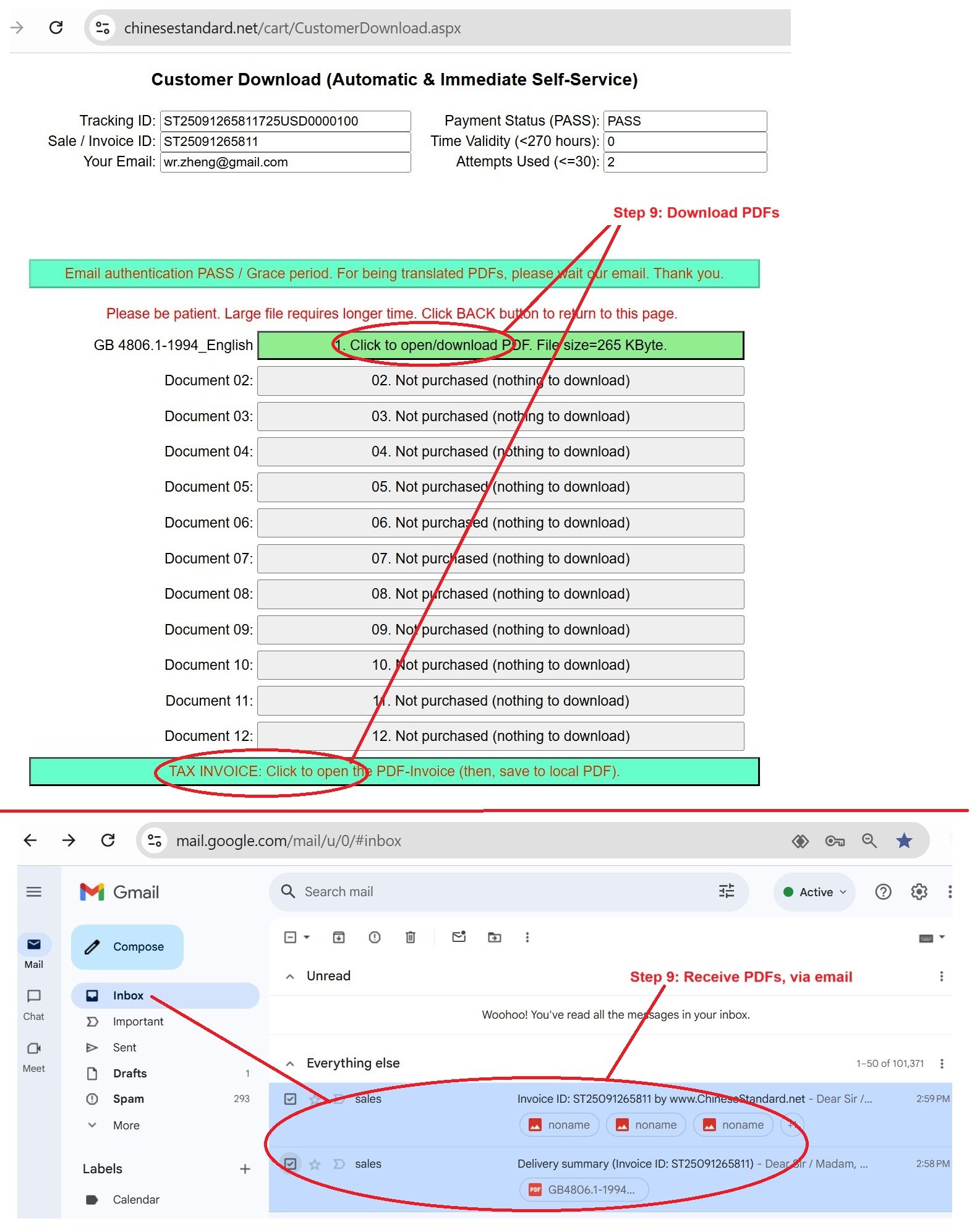
Delivery: 9 seconds. True-PDF full-copy in English & invoice will be downloaded + auto-delivered via email. See step-by-step procedure
Status: Valid
QC/T 293: Historical versions
| Standard ID | USD | BUY PDF | Delivery | Standard Title (Description) | Status |
| QC/T 293-2019 | 175 | Add to Cart | Auto, 9 seconds. | Specifications and bench test methods of automotive axle shaft | Valid |
| QC/T 293-1999 | 399 | Add to Cart | 3 days | Test methods of automotive axle shaft | Obsolete |
Click to Preview this PDF
QC/T 293-2019: Specifications and bench test methods of automotive axle shaft
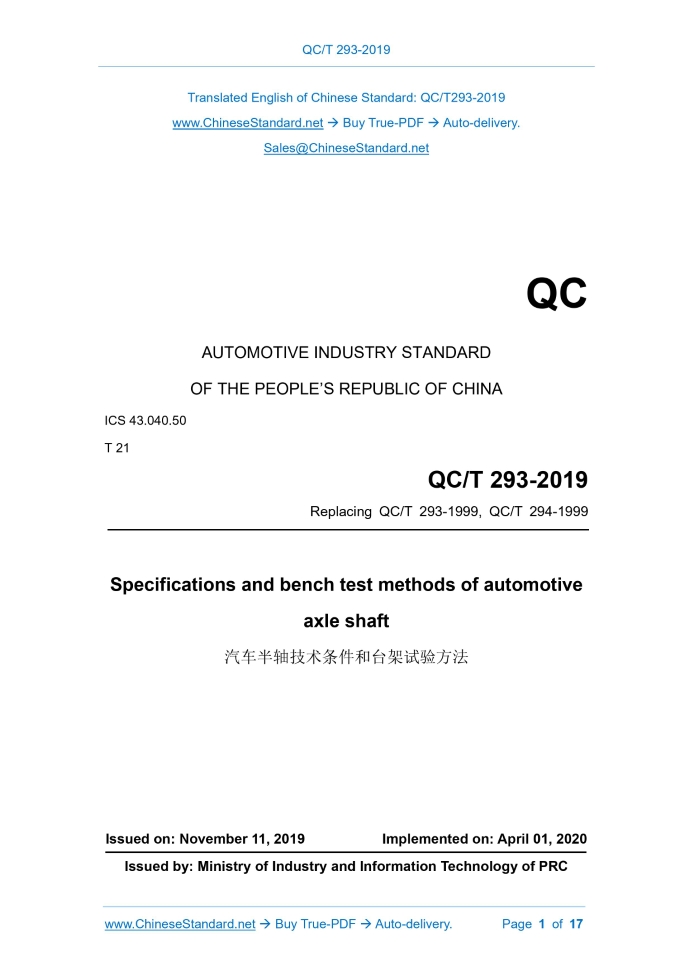
---This is an excerpt. Full copy of true-PDF in English version (including equations, symbols, images, flow-chart, tables, and figures etc.), auto-downloaded/delivered in 9 seconds, can be purchased online: https://www.ChineseStandard.net/PDF.aspx/QCT293-2019QC AUTOMOTIVE INDUSTRY STANDARD OF THE PEOPLE’S REPUBLIC OF CHINA ICS 43.040.50 T 21 Replacing QC/T 293-1999, QC/T 294-1999 Specifications and bench test methods of automotive axle shaft ISSUED ON: NOVEMBER 11, 2019 IMPLEMENTED ON: APRIL 01, 2020 Issued by: Ministry of Industry and Information Technology of PRC
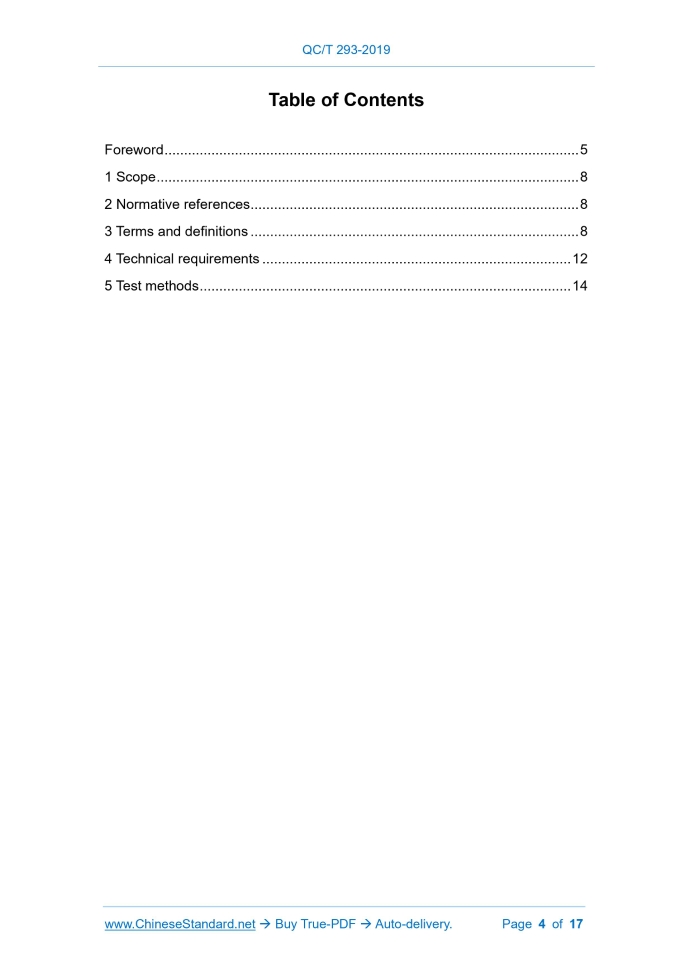
Table of Contents
Foreword ... 5 1 Scope ... 8 2 Normative references ... 8 3 Terms and definitions ... 8 4 Technical requirements ... 12 5 Test methods ... 14 Specifications and bench test methods of automotive axle shaft1 Scope
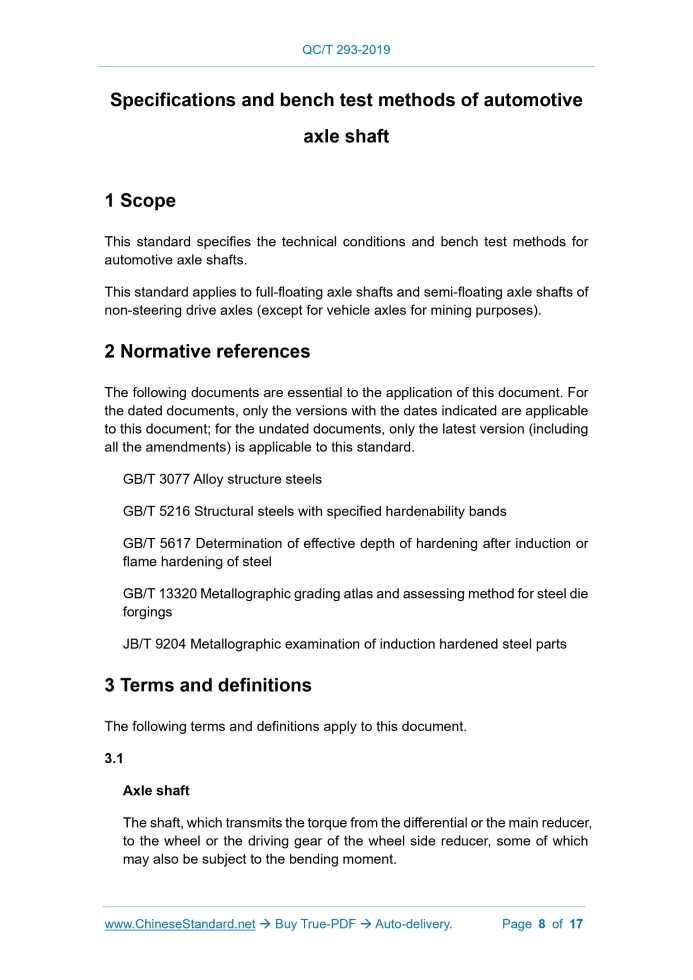
This standard specifies the technical conditions and bench test methods for automotive axle shafts. This standard applies to full-floating axle shafts and semi-floating axle shafts of non-steering drive axles (except for vehicle axles for mining purposes).2 Normative references
The following documents are essential to the application of this document. For the dated documents, only the versions with the dates indicated are applicable to this document; for the undated documents, only the latest version (including all the amendments) is applicable to this standard. GB/T 3077 Alloy structure steels GB/T 5216 Structural steels with specified hardenability bands GB/T 5617 Determination of effective depth of hardening after induction or flame hardening of steel GB/T 13320 Metallographic grading atlas and assessing method for steel die forgings JB/T 9204 Metallographic examination of induction hardened steel parts3 Terms and definitions
The following terms and definitions apply to this document. 3.1 Axle shaft The shaft, which transmits the torque from the differential or the main reducer, to the wheel or the driving gear of the wheel side reducer, some of which may also be subject to the bending moment.4 Technical requirements
4.1 General technical requirements 4.1.1 The axle shaft shall be produced, according to the product drawings and technical documents. 4.1.2 Axle shaft material Under the condition of ensuring product design performance requirements, the axle shaft material shall meet the relevant requirements of chemical composition and mechanical properties, which are required in GB/T 3077 and GB/T 5216. The recommended designations are 40Cr, 40CrH, 42CrMo, 42CrMoH, 40MnB, 40MnBH, 50CrV, 50CrVA. Other materials that meet the requirements of this standard are also allowed. 4.1.3 Heat treatment requirements for axle shafts The intermediate frequency quenching process on the surface after pre- quenching and tempering treatment is recommended, for the axle shaft's heat treatment process. Under the condition that the performance index of the axle shaft is guaranteed, it is also allowed to use other heat treatment processes, such as surface intermediate frequency quenching after normalizing treatment. The axle shaft's heat treatment process should meet the following requirements: a) The recommended value of the hardness, at the center of the axle shaft, after pre-conditioning and tempering treatment, is 24HRC ~ 30 HRC; b) The recommended value of the core hardness, after pre-conditioning and tempering treatment of axle shafts, which are made of 42CrMo and 42CrMoH, is 28HRC ~ 36HRC; c) The hardness of the semi-floating axle shaft flange is 180HB ~ 240HB; d) After the intermediate frequency quenching of the axle shaft, the surface hardness of the rod shall not be lower than 52HRC; however, at the spline, it is allowed to reduce 3 hardness units. The effective hardened layer's depth of the rod is 10% ~ 20% of the rod diameter; the change in the effective depth of the hardened layer, at the same section of the rod, is not more than 5% of the diameter of the rod; e) The depth of the effective hardened layer, at the fillet R at the root of the axle shaft flange, is measured along the 45° direction of the fillet R. The effective depth of the hardened layer, at this point, is not less than 5% of the diameter at the root of the axle shaft's flange; it is not more than the upper limit of the effective hardened layer depth of rod after quenching; f) The effective depth of the quenched hardened layer, at the spline, is measured from the minor diameter of the spline; its depth shall not be less than 10% of the major diameter of the spline; g) The maximum length of the non-quenched area of the axle shaft's spline, which is measured from the end of the axle shaft's spline, is 10 mm. 4.1.4 Dimensions of the spline of axle shaft The spline shall be inspected by a comprehensive gauge OR subject to a single-time inspection. The cumulative tolerance, tooth shape tolerance, tooth direction tolerance of the spline teeth shall meet the requirements of the product drawing. 4.1.5 Magnetic flaw detection of axle shaft The axle shaft shall be demagnetized, after magnetic flaw detection. 4.1.6 Surface quality of axle shaft The non-machined surface of the axle shaft is allowed to have traces of cleaning defects; the depth of the traces after cleaning is not more than 0.5 mm. The same cross-section of the rod is not allowed to have more than two traces of cleaning defects. The rest of the surface shall be free of defects, such as folds, dents, smashed marks. 4.2 Inspection requirements 4.2.1 Axle shaft pre-conditioning hardness and metallographic structure inspection The inspection point of the pre-conditioning hardness of full-floating axle shaft is at the flange of the axle shaft. The inspection point of the quenched and tempered hardness of the semi-floating axle shaft and the flange-free full- floating axle shaft, is the 1/2 radius of the rod. If the inspection point is the heat- affected zone after quenching treatment, it may carry out inspection, at a position beyond the heat-affected zone. The pre-quenched and tempered metallographic structure of the axle shaft shall be inspected, according to the inspection method specified in GB/T 13320. 4.2.2 The depth of the effective hardened layer after the intermediate frequency quenching on the surface of the axle shaft and the metallographic structure inspection The depth of the effective hardened layer, after the intermediate frequency quenching of the axle shaft, shall be inspected, according to the inspection method specified in GB/T 5617. The metallographic structure of the ......Source: Above contents are excerpted from the full-copy PDF -- translated/reviewed by: www.ChineseStandard.net / Wayne Zheng et al.