GB/T 5494-2026 PDF English
Price & Delivery
US$299.00 · In stock · Download in 9 secondsGB/T 5494-2026: Inspection of grain and oils - Determination of impurities and defective kernels in grains and oilseeds
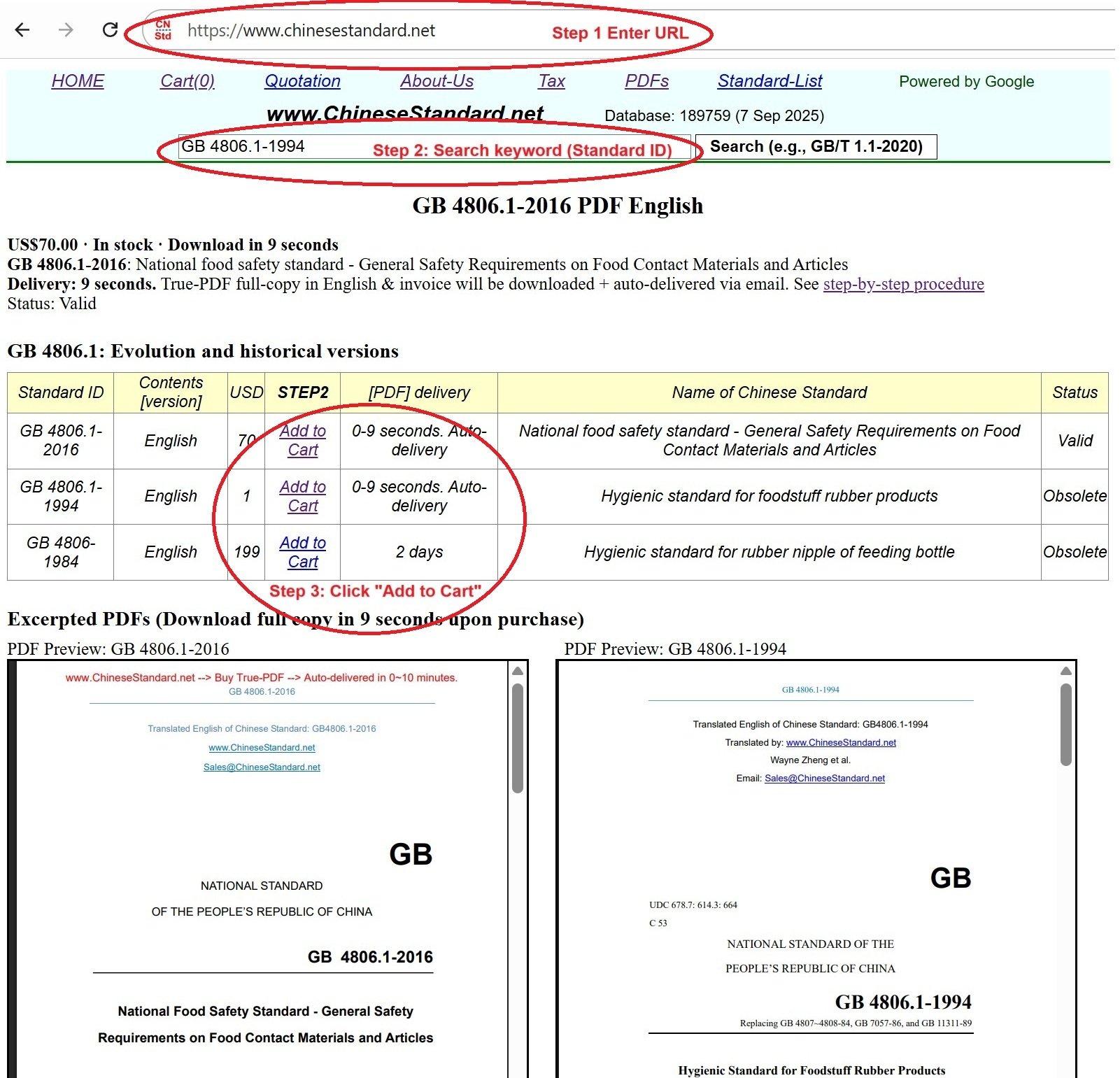
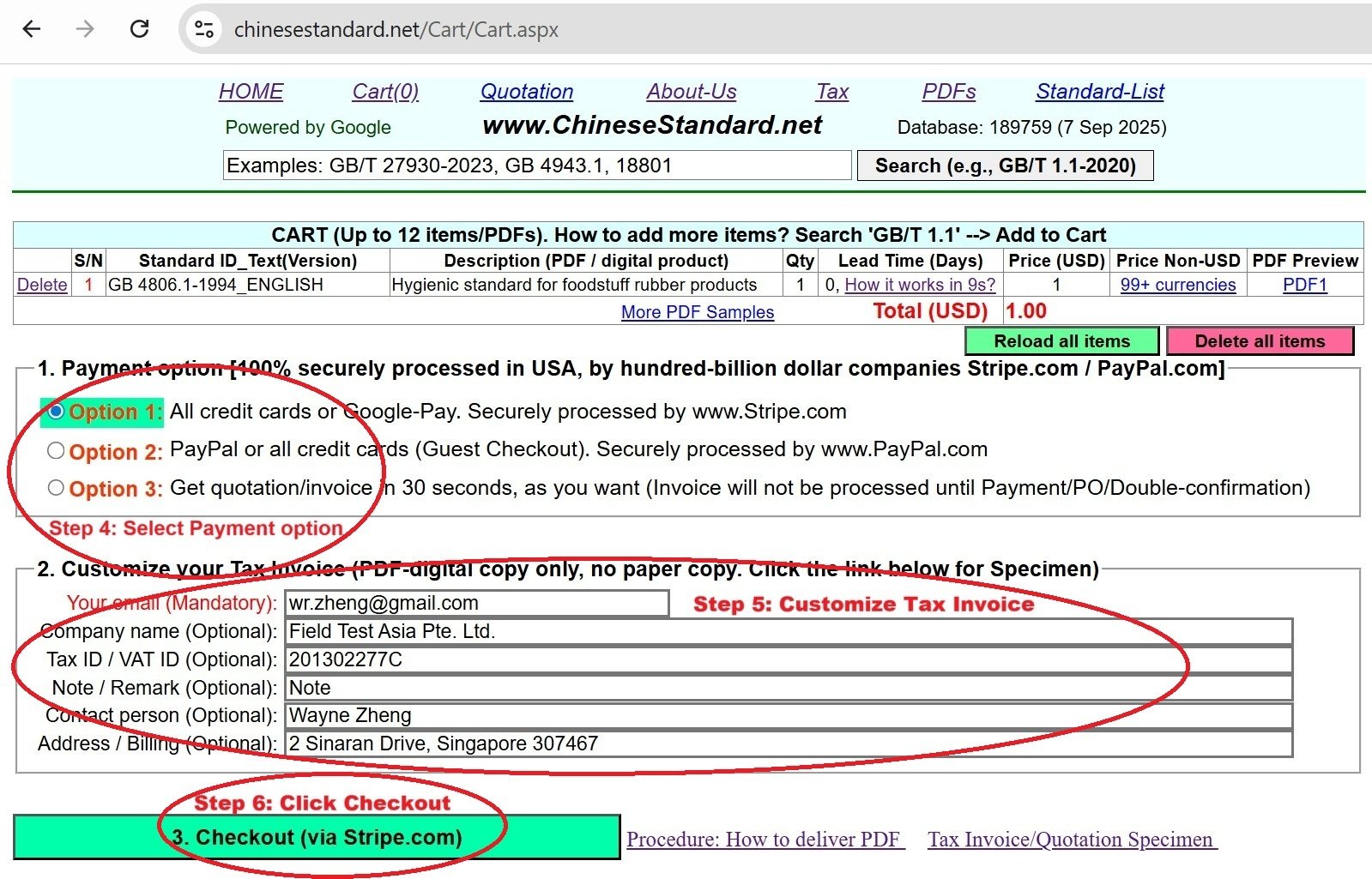
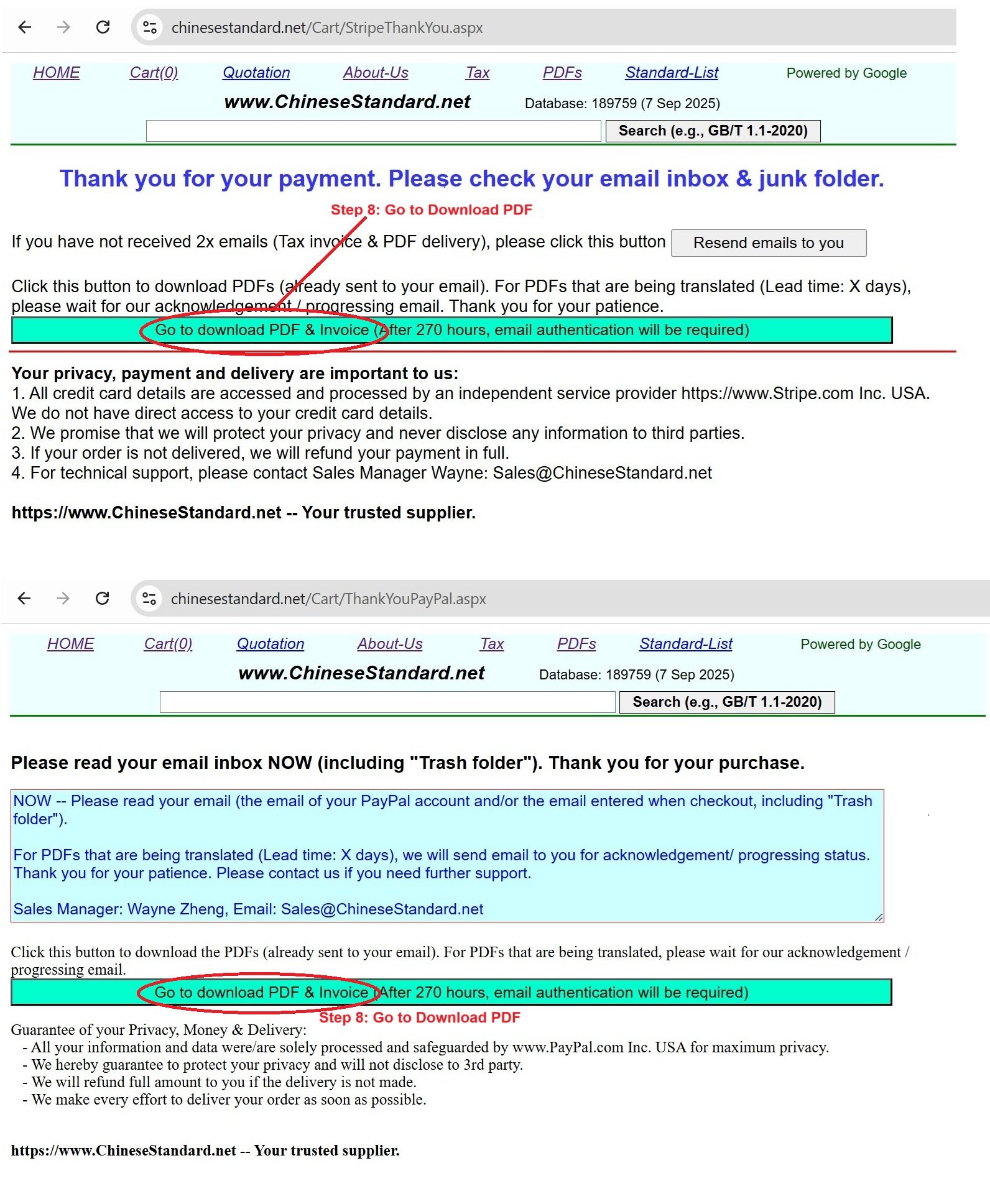
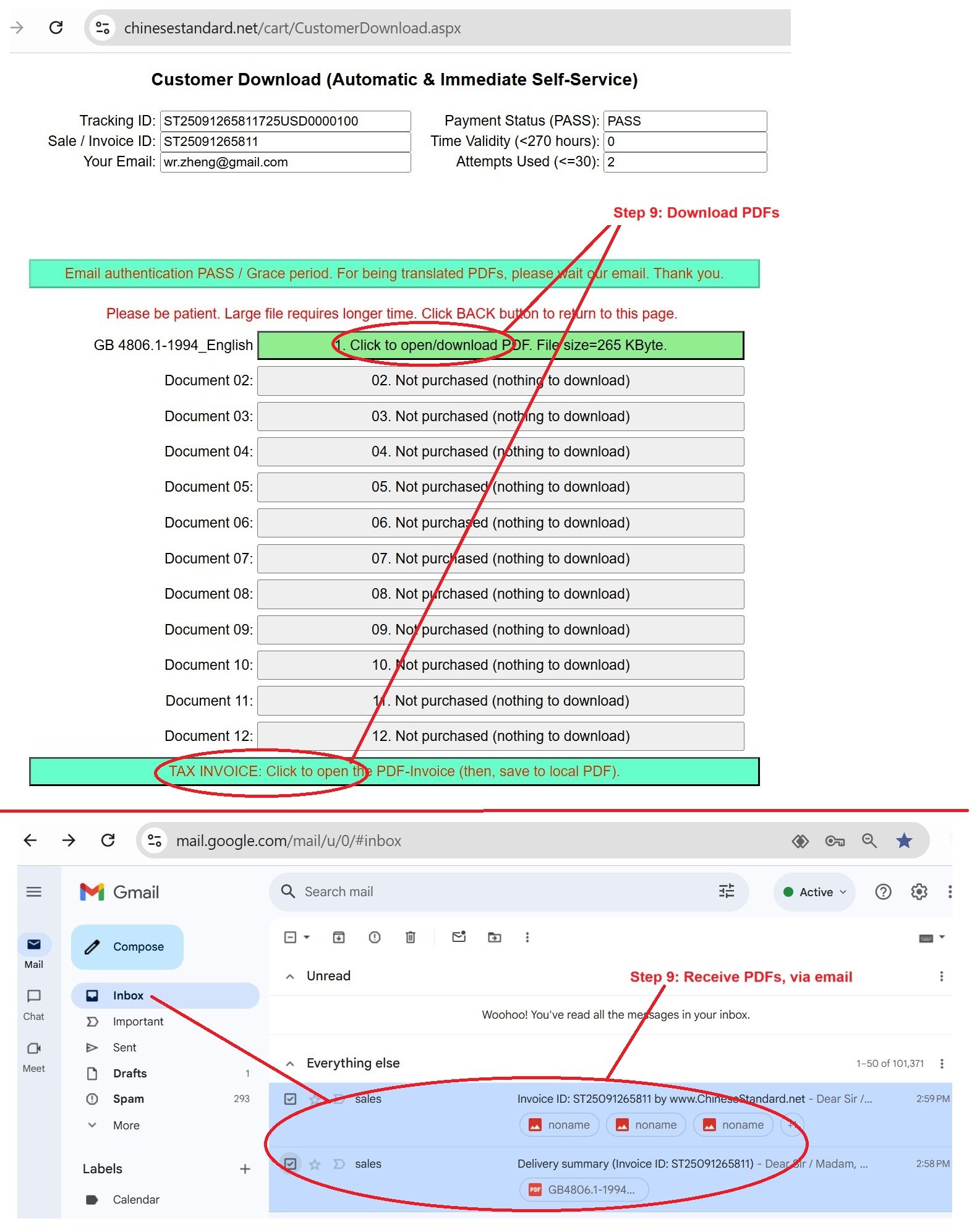
Delivery: 9 seconds. True-PDF full-copy in English & invoice will be downloaded + auto-delivered via email. See step-by-step procedure
Status: Valid
GB/T 5494: Historical versions
| Standard ID | USD | BUY PDF | Delivery | Standard Title (Description) | Status |
| GB/T 5494-2026 | 299 | Add to Cart | 3 days | Inspection of grain and oils - Determination of impurities and defective kernels in grains and oilseeds | Valid |
| GB/T 5494-2019 | 130 | Add to Cart | Auto, 9 seconds. | Inspection of grain and oils - Determination of foreign matter and unsound kernels of grain and oilseeds | Valid |
| GB/T 5494-2008 | 90 | Add to Cart | Auto, 9 seconds. | Inspection of grain and oils -- Determination of foreign matter and unsound kernels of grain and oilseeds | Obsolete |
| GB/T 5494-1985 | 199 | Add to Cart | 2 days | Inspection of grain and oilseeds--Methods for determination of foreign matter and unsound kernels | Obsolete |
Click to Preview this PDF
GB/T 5494-2026: Inspection of grain and oils - Determination of impurities and defective kernels in grains and oilseeds
---This is an excerpt. Full copy of true-PDF in English version (including equations, symbols, images, flow-chart, tables, and figures etc.), auto-downloaded/delivered in 9 seconds, can be purchased online: https://www.ChineseStandard.net/PDF.aspx/GBT5494-2026
GB NATIONAL STANDARD OF THE PEOPLE’S REPUBLIC OF CHINA ICS 67.040 CCS X 04 Replacing GB/T 5494-2019 Inspection of Grain and Oils – Determination of Impurities and Defective Kernels in Grains and Oilseeds Issued on: JANUARY 28, 2026 Implemented on: AUGUST 1, 2026 Issued by. State Administration for Market Regulation; Standardization Administration of the People’s Republic of China.
Table of Contents
Foreword... 3 1 Scope... 5 2 Normative References... 5 3 Terms and Definitions... 5 4 Sensory Inspection Method... 6 5 Instrumental Inspection Method... 15 Appendix A (Normative) Sieve Layer Specifications for Screening Specimens... 18 Inspection of Grain and Oils – Determination of Impurities and Defective Kernels in Grains and Oilseeds1 Scope
This Document describes the inspection methods for impurities, defective kernel content in grains and oilseeds; and brown rice content in paddy rice. The sensory inspection method described in this Document is applicable to the inspection of impurities, defective kernel content in grains and oilseeds; and brown rice content in paddy rice. The instrumental inspection method is applicable to the inspection of defective kernel content in grains and oilseeds; and brown rice content in paddy rice.2 Normative References
The provisions in following documents become the essential provisions of this Document through reference in this Document. For the dated documents, only the versions with the dates indicated are applicable to this Document; for the undated documents, only the latest version (including all the amendments) is applicable to this Document. GB/T 5490 Inspection of grain and oils - General rules GB/T 5491 Inspection of grain and oilseed - Sampling and Subsampling Methods GB/T 22505 Inspection of grain and oils - Sensory analysis environment-lighting GB/T 36091 Grain and oil machinery - Grain sieves for inspection LS/T 3545 Machine of grain and oils - Sample divider used in inspection LS/T 6402 Inspection of grain and oils - The general principle of standard adaptability verification and evaluation results for equipment and testing methods3 Terms and Definitions
For the purposes of this Document, the terms and definitions given in GB/T 5490 and the following apply. 3.1 Large sample Samples that are separated from laboratory samples are used to screen large impurities on the upper sieve and undersize material on the lower sieve. 3.2 Impurities from large samples The term is referred to as the large impurities on the upper sieve and the undersize material on the lower sieve obtained during the large sample screening process. 3.3 Small sample Samples that are separated from the one that has been tested for large impurities and are used to test for impurities, brown rice, and defective kernels that are similar in size to grains. 3.4 Impurities from small samples The term is referred to as the impurities that are picked out from the sample according to the product standard.4 Sensory Inspection Method
4.1 Instruments and equipment 4.1.1 Balance. Sensitivity 0.01 g, 0.1 g. 4.1.2 Grain Sieve. Meets the requirements of GB/T 36091. 4.1.3 Electric Sieving machine. Rotate clockwise and counterclockwise for 1 min each, with the speed of 110 r/min ~ 120 r/min. 4.1.4 Sample divider. Meets the requirements of LS/T 3545. 4.1.5 Dehulling equipment. Does not damage dehulled kernels or rice (such as peanut kernels, brown rice). 4.1.6 Sub-sampling plate 4.1.7 Analytical disc. 4.1.8 Tweezers. 4.2 Lighting requirements The operation shall be carried out under diffused sunlight or a standard light source conforming to GB/T 22505. As per the method in 4.4.1.1.1, assemble the sieve layers; pour in the specimen; and cover it with the sieve cover. Then place the sieve on a glass plate or smooth tabletop; and sieve with both hands at a speed of 110 r/min to 120 r/min, rotating clockwise and counterclockwise for 1 min each. The sieve rotation range shall be controlled to increase the sieve diameter by 8 cm to 10 cm. The post-sieve operation is the same as in 4.4.1.1.1. 4.4.1.2 Inspection of impurity content from large samples According to the provisions of 4.3, take the sample to the large sample mass (m) specified in Table 1, accurate to 0.1 g. Perform screening twice according to the screening method specified in 4.4.1.1.1 or 4.4.1.1.2 (four screenings for extra-large grain and oilseeds). Then pick out the large impurities on the sieve layer and combine them with the undersize material from the lower sieve; weigh it (m1), accurate to 0.01 g; and calculate according to Formula (1). If large impurities are attached to grains, the grains shall be returned to the large sample. For example, corn cobs shall be hulled and the kernels removed, classifying them as impurities. For paddy rice samples, a 1.5mm-diameter round-hole sieve shall be placed under a 2.0mm- diameter round-hole sieve. Samples shall be taken according to the provisions of 4.3 to the large sample mass (m) specified in Table 1, accurate to 0.1 g. The samples should be screened twice according to the screening method specified in 4.4.1.1.1 or 4.4.1.1.2.Large impurities on the 2.0mm-diameter round-hole sieve shall then be removed. Whole grain rice and whole grain brown rice remaining on the 1.5mm-diameter round-hole sieve shall be removed and added to the rice sample on the 2.0mm-diameter round-hole sieve. The undersize material from the 1.5mm-diameter round-hole sieve and other materials remaining on the 1.5mm-diameter round- hole sieve, along with the large impurities on the 2.0mm diameter round-hole sieve, shall be weighed together (m1), accurate to 0.01 g, and calculated according to Formula (1). 4.4.1.3 Inspection of impurity content from small samples From the specimens tested for impurity from large samples, take a sample according to the provisions of 4.3 to the small sample mass (m2) specified in Table 1, accurate to 0.01 g. Pour it into the analytical dish; pick out the impurities according to the product standard; weigh it (m3), accurate to 0.01 g; and calculate according to Formula (2). 4.4.1.4 Inspection of inorganic impurity content Pick out the inorganic impurities from the picked-out small sample impurities; weigh it (m4), accurate to 0.01 g; and calculate according to Formula (4). NOTE 1.The inspection of mineral content refers to the inspection of inorganic impurity content. NOTE 2.The inorganic impurity content in the product standard for grains and oilseeds (excluding rice) specifically refers to the inorganic impurity content from the small sample. 4.4.1.5 Inspection of defective kernel content 4.4.1.5.1 Grains and oilseeds not requiring dehulling While inspecting the impurity from small samples, pick out all defective kernels according to the product standard and weigh them (mn), accurate to 0.01 g; and calculate according to Formula (5) or (7). 4.4.1.5.2 Grains and oilseeds requiring dehulling (e.g., paddy rice, peanuts, etc.) Weigh the net specimen after inspecting the impurity from small sample (m5); first pick out the sprouted grains; and manually dehull them separately. Then, dehull the remaining specimen using a dehulling device or manually; pick out all defective kernels according to the product standard. And combine the separately dehulled sprouted grains; weigh them (mj), accurate to 0.01 g; and calculate according to Formula (6) or (8). 4.4.2 Inspection of impurity and defective kernel content from rice 4.4.2.1 Inspection of undersize material (bread crumbs) Take approximately 200 g (m') of sample, accurate to 0.1 g; and place it twice into a 1.0 mm diameter round-hole sieve. Sieve according to the sieving method specified in 4.4.1.1.1 or 4.4.1.1.2.After sieving, gently tap the sieve to allow the undersize material (bread crumbs) to fall to the bottom. After all specimens have been sieved, brush off the undersize material (bread crumbs) remaining on the bottom of the sieve; combine and weigh (m1'), accurate to 0.01 g. Pour the oversize sample into an analytical disc. 4.4.2.2 Inspection of inorganic impurity content From the inspected undersized material (bread crumbs) specimen, separate and weigh the inorganic impurities (m2'), accurate to 0.01 g. Separate and weigh the organic impurities (m3'), accurate to 0.01 g. NOTE. The inspection of mineral content refers to the same procedure as the inspection of inorganic impurity content. 4.4.2.3 Inspection of other impurity content Separate and weigh the other impurities (m4') according to the product standard, accurate to 0.01 g. Calculate the content using Formula (11). NOTE 1.Foxtail millet grains are removed from millet; proso millet grains from proso millet rice; Japanese millet grains from Japanese millet rice; sorghum husks from sorghum kernel; quinoa grains from quinoa rice, etc. NOTE 2.This test is performed when specified in the product standard. 4.4.2.4 Inspection of defective kernel content ......Source: Above contents are excerpted from the full-copy PDF -- translated/reviewed by: www.ChineseStandard.net / Wayne Zheng et al.