GB/T 1299-2025 PDF English
Price & Delivery
US$920.00 · In stock · Download in 9 secondsGB/T 1299-2025: Tool and mould steels
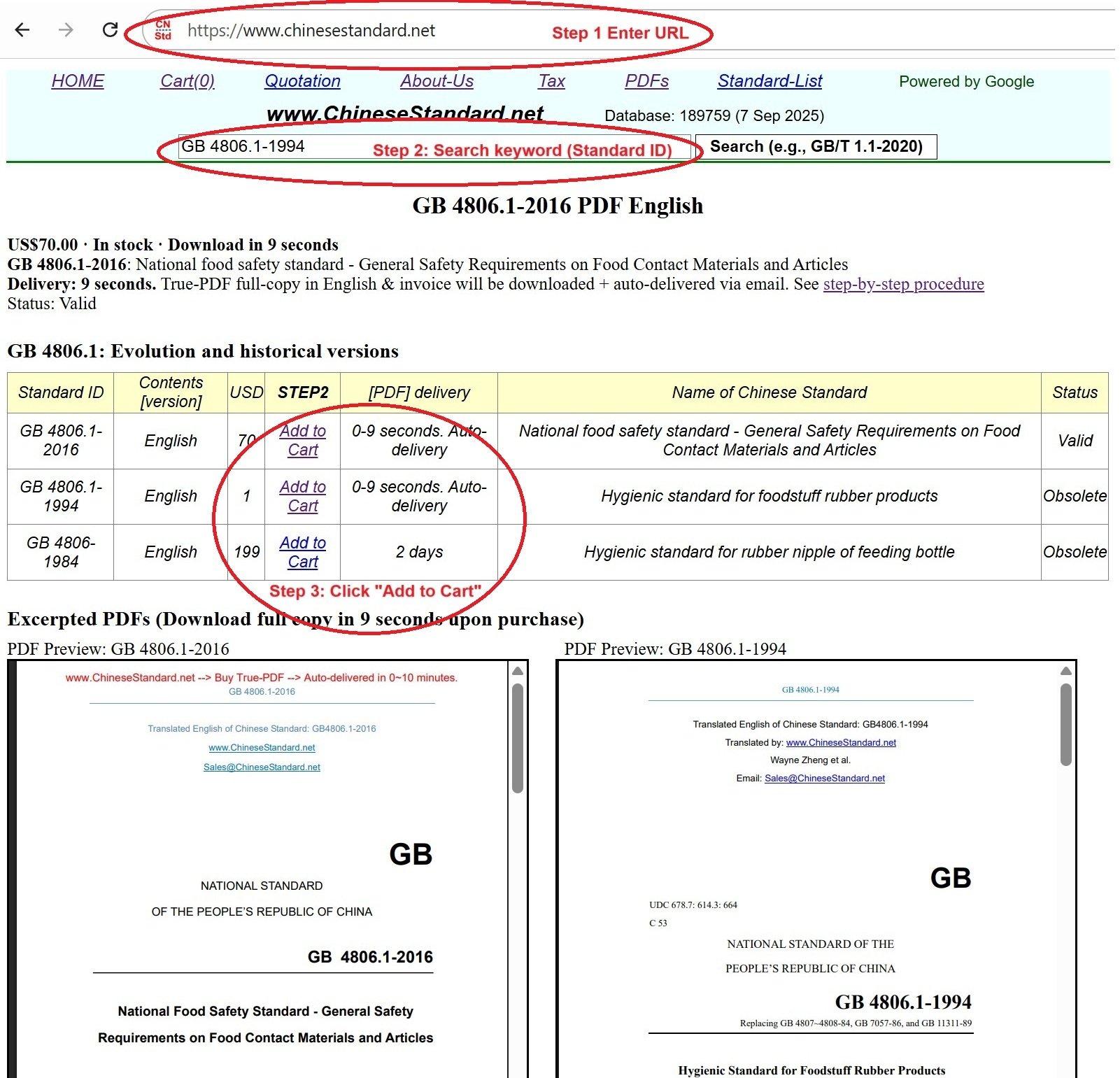
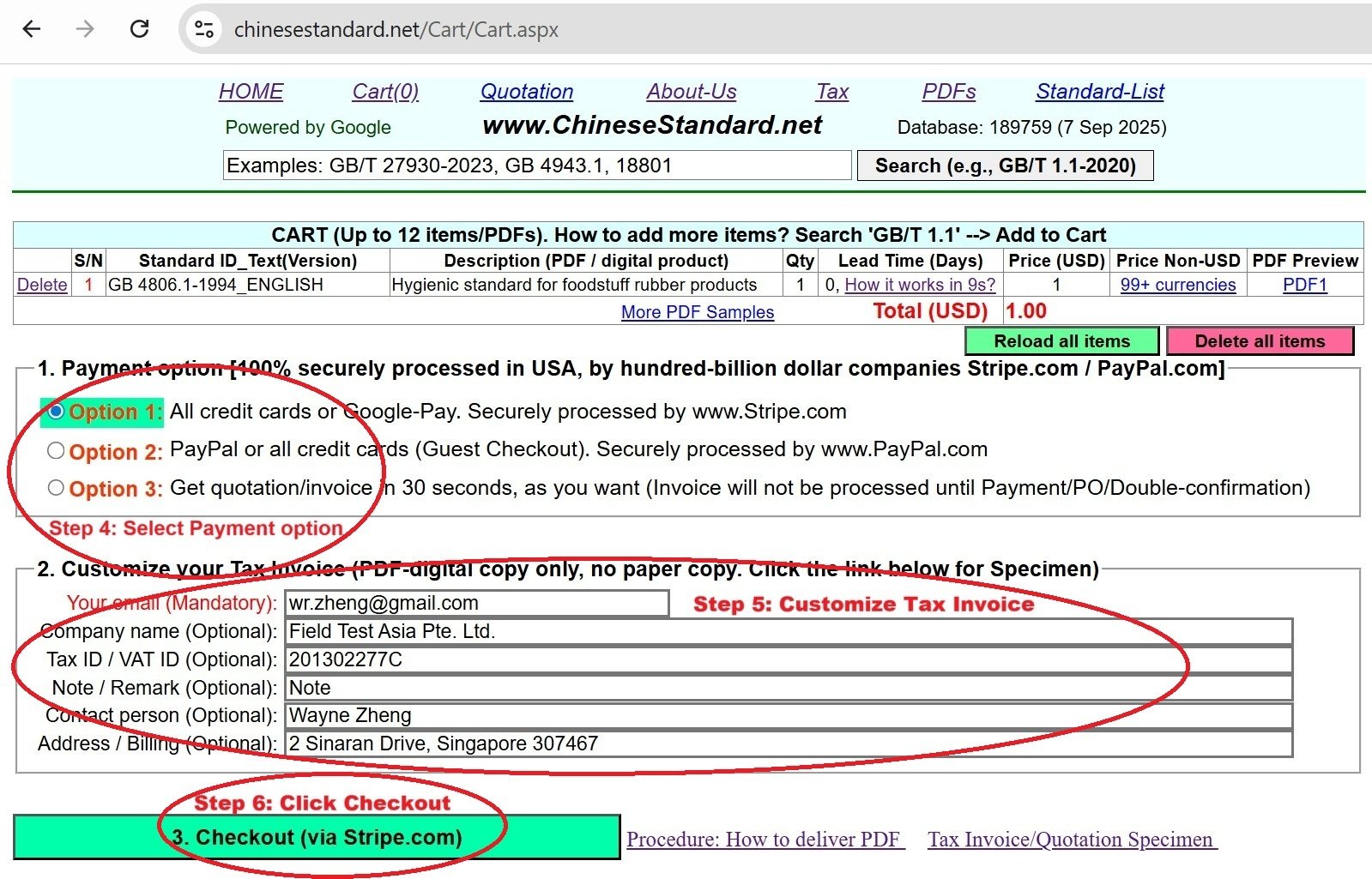
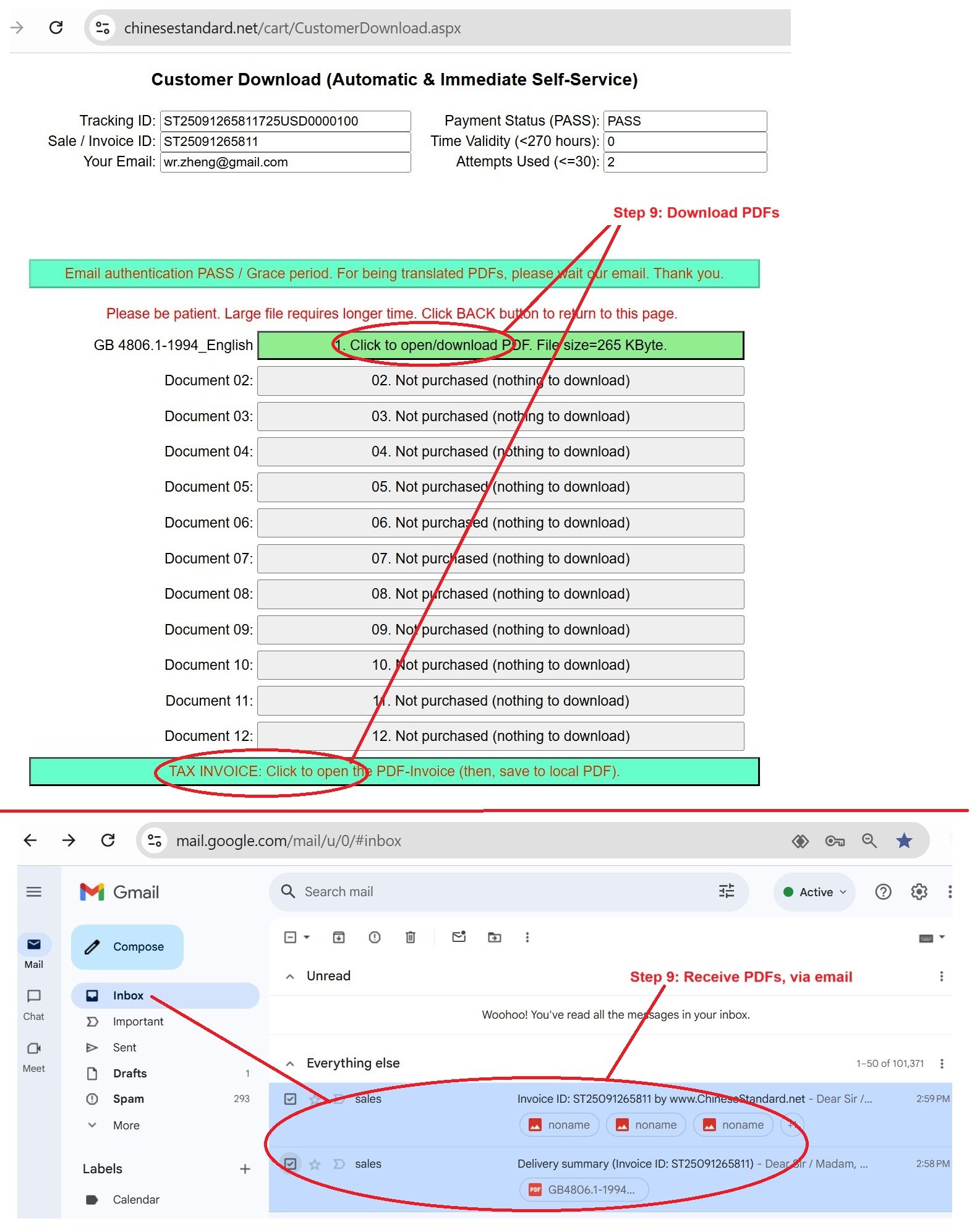
Delivery: 9 seconds. True-PDF full-copy in English & invoice will be downloaded + auto-delivered via email. See step-by-step procedure
Status: Valid
GB/T 1299: Historical versions
| Standard ID | USD | BUY PDF | Delivery | Standard Title (Description) | Status |
| GB/T 1299-2025 | 920 | Add to Cart | Auto, 9 seconds. | Tool and mould steels | Valid |
| GB/T 1299-2014 | 225 | Add to Cart | Auto, 9 seconds. | Tool and mould steels | Valid |
| GB/T 1299-2000 | 919 | Add to Cart | 6 days | Alloy tool steels | Obsolete |
| GB/T 1299-1985 | RFQ | ASK | 3 days | Alloy tool steels--Technical requirements | Obsolete |
Click to Preview this PDF
GB/T 1299-2025: Tool and mould steels
---This is an excerpt. Full copy of true-PDF in English version (including equations, symbols, images, flow-chart, tables, and figures etc.), auto-downloaded/delivered in 9 seconds, can be purchased online: https://www.ChineseStandard.net/PDF.aspx/GBT1299-2025GB NATIONAL STANDARD OF THE PEOPLE’S REPUBLIC OF CHINA ICS 77.140.35 CCS H 40 Replacing GB/T 1299-2014, GB/T 33811-2017 Tool and mould steels Issued on: OCTOBER 31, 2025 Implemented on: MAY 01, 2026 Issued by. State Administration for Market Regulation; Standardization Administration of the People's Republic of China.
Table of Contents
Foreword... 4 1 Scope... 8 2 Normative references... 8 3 Terms and definitions... 10 4 Classification and codes... 11 5 Ordering contents... 12 6 Manufacturing process... 13 6.1 Smelting method... 13 6.2 Delivery state... 13 7 Technical requirements... 14 7.1 Designation and chemical composition... 14 7.2 Delivery hardness... 22 7.3 Low-magnification structure... 28 7.4 Structure... 29 7.5 Non-metallic inclusions... 32 7.6 Decarburization layer... 32 7.7 Relative permeability... 35 7.8 Ultrasonic testing... 35 7.9 Surface quality... 36 7.10 Dimensions, appearance, and weight... 38 7.11 Special requirements... 46 8 Test methods... 46 9 Inspection rules... 49 9.1 Inspection and acceptance... 49 9.2 Batching rules... 49 9.3 Sampling quantity and sampling site... 49 9.4 Re-inspection and judgment rules... 49 10 Packaging, marks and quality certificate... 50 Annex A (informative) Comparison on designations in this document with foreign designations... 51 Annex B (informative) Main characteristics and applications of each designation... 54 Annex C (normative) Sampling for quenching or quenching + tempering hardness test ... 62 Annex D (normative) Rating chart for steel bars... 64 Annex E (normative) Low-magnification etching and evaluation methods for remelted steel bars and billets... 70 Tool and mould steels1 Scope
This document specifies the classification and designation of tool and mould steels, ordering details, manufacturing process, technical requirements, test methods, inspection rules, packaging, marks, and quality certificate. This document applies to tool and mould steel hot-rolled, forged, cold-drawn, bright, and machined steel bars and hot-rolled wire rods (hereinafter collectively referred to as steel bars), as well as single-rolled cold-rolled steel plates with a nominal thickness of no more than 4 mm and single-rolled hot-rolled steel plates with a nominal thickness of no more than 10 mm (hereinafter referred to as steel plates). The chemical composition also applies to steel ingots, billets, and their products. NOTE. In this document, steel bars and steel plates are collectively referred to as steel products.2 Normative references
The following referenced documents are indispensable for the application of this document. For dated references, only the edition cited applies. For undated references, the latest edition of the referenced document (including any amendments) applies. GB/T 222, Steels and alloys - Allowable deviations of product analyzed chemical composition GB/T 223 (all parts), Iron, steel and alloy GB/T 224, Determination of the depth of decarburization of steels GB/T 225, Steel -- Hardenability test by end quenching (Jominy test) GB/T 226, Test Method for Macrostructure and Defect of Steel by Etching GB/T 230.1, Metallic materials -- Rockwell hardness test -- Part 1.Test method GB/T 231.1, Metallic materials -- Brinell hardness test -- Part 1.Test method GB/T 247, General rule of package, mark and certification for steel plate, sheet and strip GB/T 702-2017, Hot-rolled steel bars -- Dimensions, shape, weight and tolerances GB/T 708-2019, Dimension, shape, weight and tolerance for cold-rolled steel strip determination of chemical composition GB/T 20123, Steel and iron -- Determination of total carbon and sulfur content Infrared absorption method after combustion in an induction furnace (routine method) GB/T 20124, Steel and iron -- Determination of nitrogen content -- Thermal conductimetric method after fusion in a current of inert gas GB/T 20566, Terminology of steel and alloy GB/T 35690, Methods for the determination of the relative magnetic permeability of feebly magnetic materials YB/T 6019, Die Steel Ultrasonic Testing Method YB/T 6240-2024, Evaluation of carbides in hypereutectoid steel -- Standard rating chart method3 Terms and definitions
For the purposes of this document, the terms and definitions defined in GB/T 20566 as well as the followings apply. 3.1 tool and mould steels Steel used to manufacture tools and molds. Raw materials (steel, non-ferrous metals, and plastics, etc.) are processed into parts or products for specific applications through cutting, forming, or other processes, and have high hardness, wear resistance, and sufficient toughness and strength. 3.2 unalloyed steels for tools and moulds carbon steels for tools and moulds Tool and mould steels of which the carbon content is typically between 0.40%~1.50%, and it also contains a certain amount of silicon, manganese, and other trace elements. NOTE. Also known as carbon steels for tools and moulds. 3.3 steels for measuring tools and cutting tools A general term for steel used in the manufacture of measuring tools (calipers, gauge blocks, plug gauges, micrometers, etc.) and general cutting tools (lathe tools, milling cutters, planer tools, drill bits, taps, dies, etc.). They possess high hardness, wear resistance, dimensional stability and a certain degree of toughness. 3.4 shock-resisting tool steels A general term for steels used in the manufacture of tools and dies that withstand high impact loads, frequent vibrations, and dynamic stresses. They possess high hardness, excellent impact toughness, and fatigue resistance. 3.5 steel for cold-rolled forging steel rolls A general term for steel produced through forging processes and specifically used for manufacturing rolls for cold-rolled sheets and strips. They possess high surface hardness and a certain hardening depth, excellent wear resistance, fatigue resistance, and core strength and toughness. 3.6 cold-work mould steels A general term for steel used in manufacturing workpieces that are formed by stamping, stretching, cold heading, extrusion, embossing, roll forming, etc. in a cold state (≤200℃). They possess high hardness, high wear resistance, resistance to plastic deformation and moderate toughness. 3.7 hot-work mould steels A general term for steel used in the manufacture of metal workpieces for hot forming processes such as forging, die casting, extrusion, and shearing in high-temperature ( >200℃) environments. They possess high thermal strength, resistance to thermal fatigue, resistance to heat wear, high hardenability, and excellent resistance to tempering softening. 3.8 plastic mould steels A general term for steels specifically used in the manufacture of plastic molding dies (such as injection molds, blow molds, extrusion molds, etc.). They possess certain strength, hardness, wear resistance, corrosion resistance, and heat resistance, as well as good processing properties.4 Classification and codes
4.1 Steel products are classified into the following two categories according to its chemical composition and use. a) Unalloyed steels for tools and moulds. 1) unalloyed steels for moulds (designations beginning with "SM"); 2) unalloyed steels for tools (designations beginning with "T"). NOTE. Unalloyed steels for tools are the same as original carbon tool steels. b) Alloyed steels for tools and moulds. 1) steels for measuring tools and cutting tools; 2) shock-resisting tool steels; 3) steels for cold-rolled forging steel rolls; 4) cold-work mould steels; 5) hot-work mould steels; 6) plastic mould steels. 4.2 Steel products are classified into the following two categories according to the processing method. a) Steel for pressure processing (UP). 1) Hot pressure processing (UHP); 2) Cold pressure processing (UCP). b) Steel for cutting and machining (UC). 4.3 Steel bars are classified into the following six categories according to their manufacturing methods and cross-sectional shapes. a) Hot-rolled steel bars (round, square, flat); b) Forged steel bars (round, square, flat); c) Cold-drawn steel bars (round, square); d) Bright silver steel bars (round); e) Machined steel bars (round, square, flat); f) Hot-rolled wire rod (round).5 Ordering contents
Contracts or orders placed in accordance with this document shall include the following. a) Reference to this document; b) Product name; c) Steel designation; d) Weight (or quantity); e) Processing method (see 4.2); f) Manufacturing process and cross-sectional shape (see 4.3); g) Smelting method (see 6.1); h) Delivery condition (see 6.2); i) Dimensions and tolerance groups; j) Standard and multiple lengths (specified if required); k) Items or specifications to be negotiated by both parties and specified in the contract (if not specified, the supplier shall select); l) Other special requirements (see 7.11).6 Manufacturing process
6.1 Smelting method Steel shall be smelted using ladle refining (including vacuum degassing). Electroslag remelting, vacuum arc remelting, or other methods meeting the requirements may also be used. Specific smelting methods shall be specified in the contract. If the vacuum degassing method is not specified, the ladle refining method shall be chosen by the supplier. 6.2 Delivery state 6.2.1 Steel bars 6.2.1.1 Steel bars are generally delivered in the annealed state. However, 7Mn15Cr2Al3V2WMo steel bars are generally delivered in the hot-rolled or hot-forged state. SM45, SM50, and SM55 steel bars are generally delivered in the hot-rolled, hot- forged + normalized, or hot-forged + (normalized + tempered) state. Unalloyed steel bars for tools can be delivered after annealing and cold drawing. 6.2.1.2 As required by the purchaser, the contract shall specify that plastic mold steel bars, hot-work mold steel bars and cold-work mold steel bars can be delivered in a pre- hardened state. 6.2.2 Steel plates The steel plates are delivered in the annealed condition.7 Technical requirements
7.1 Designation and chemical composition 7.1.1 The steel designation and chemical composition (smelting analysis) shall conform to the specifications in Tables 1~7.A comparison of the steel designations in this document with those in foreign countries is provided in Annex A. 7.1.2 The steel plates are typically supplied in the following designations. 5Cr3MnSiMo1V, CrWV, MnCrWV, 5Cr8MoVSi, Cr8Mo2SiV, Cr12, Cr12W, Cr5Mo1V, Cr12MoV, Cr12Mo1V1, 4Cr5MoSiV, 4Cr5MoSiV1, 9Cr18, and 9Cr18MoV. Other designations listed in Tables 1~7 may also be supplied upon request from the purchaser and specified in the contract. 7.1.3 The allowable deviation of the chemical composition of finished steel products shall comply with the provisions of GB/T 222, wherein the allowable deviation of the sulfur content of finished 4Cr2Mn1MoS steel products is ±0.010%. ......Source: Above contents are excerpted from the full-copy PDF -- translated/reviewed by: www.ChineseStandard.net / Wayne Zheng et al.