GB 5009.153-2016 PDF English
GB 5009.153: Historical versions
| Standard ID | USD | BUY PDF | Delivery | Standard Title (Description) | Status |
| GB 5009.153-2016 | 70 | Add to Cart | Auto, 9 seconds. | Determination of phytic acid in vegetable foods | Valid |
| GB/T 5009.153-2003 | 199 | Add to Cart | 2 days | Determination of phytic acid in vegetable foods | Obsolete |
Similar standards
GB 5009.153-2016: Determination of phytic acid in vegetable foods
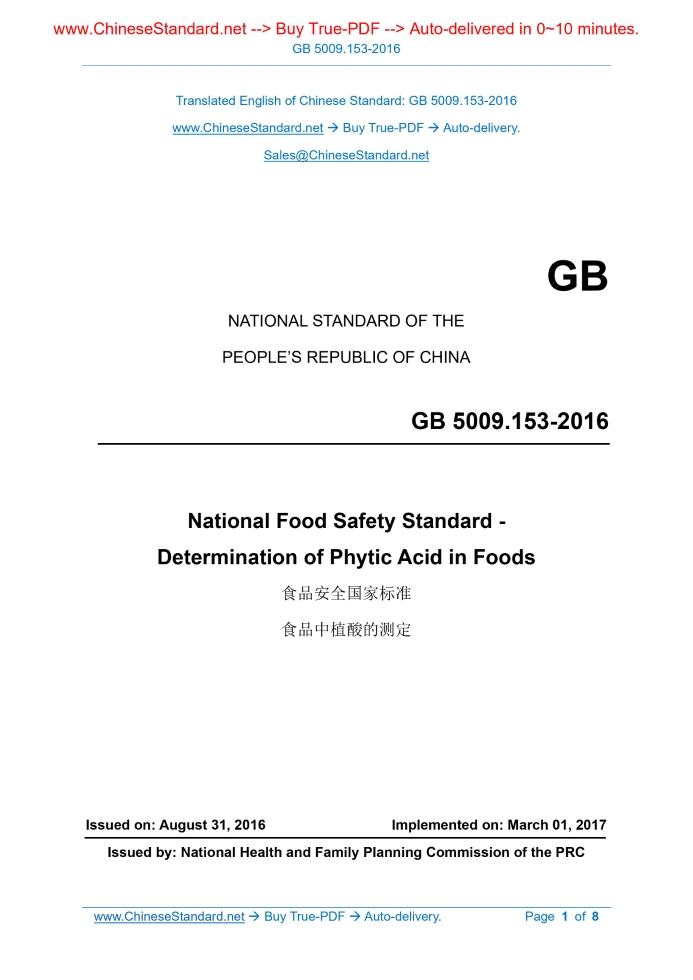
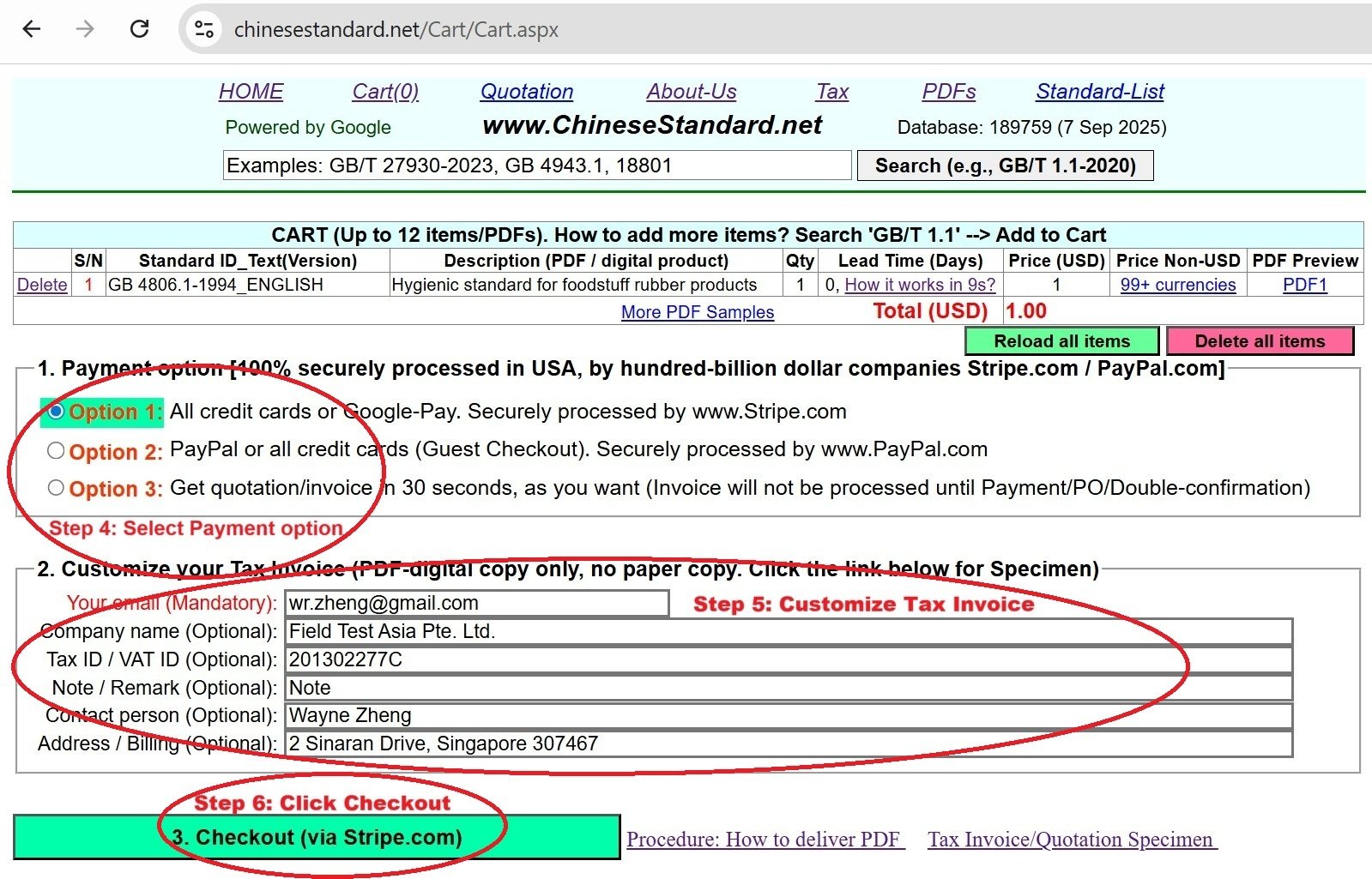
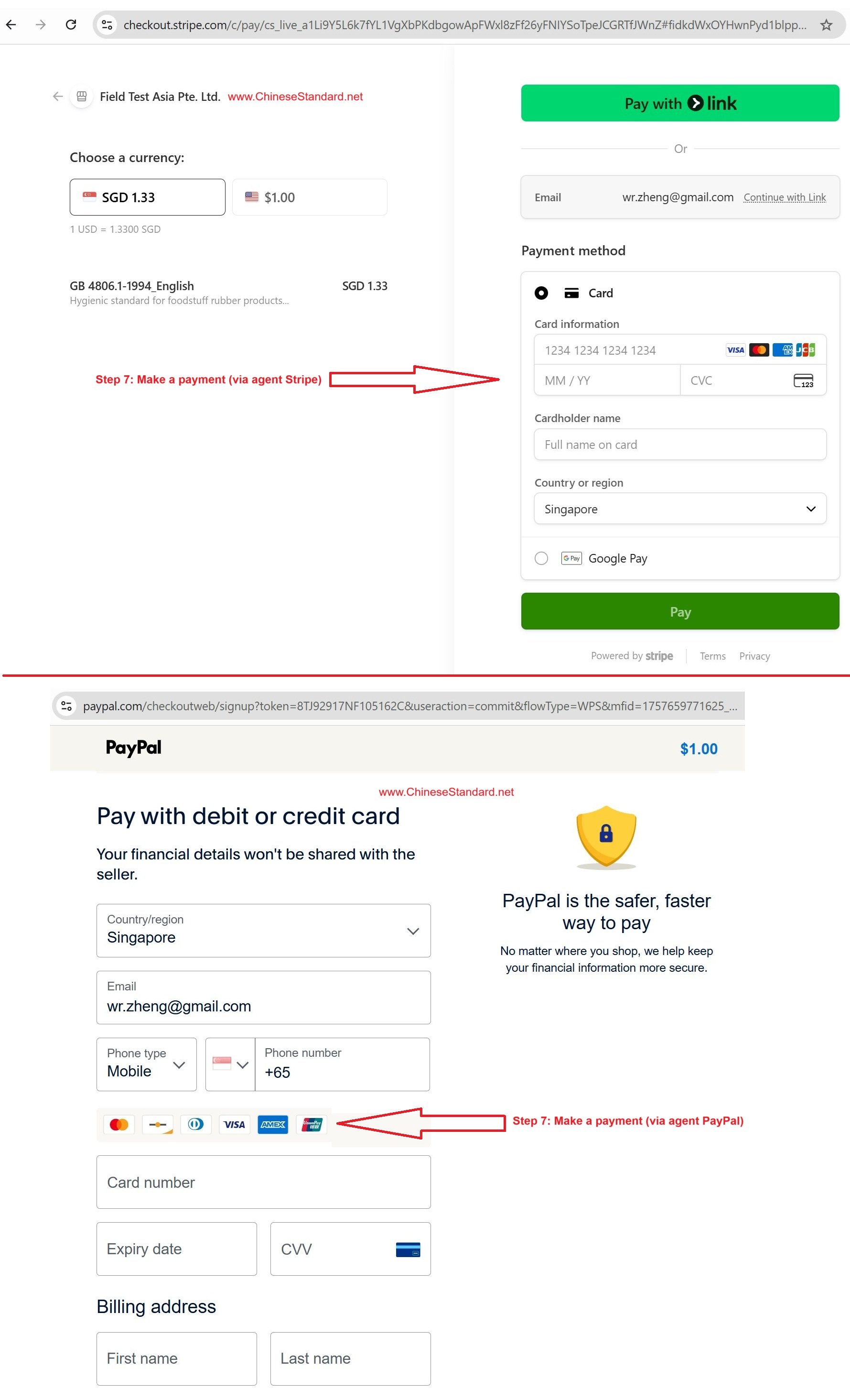
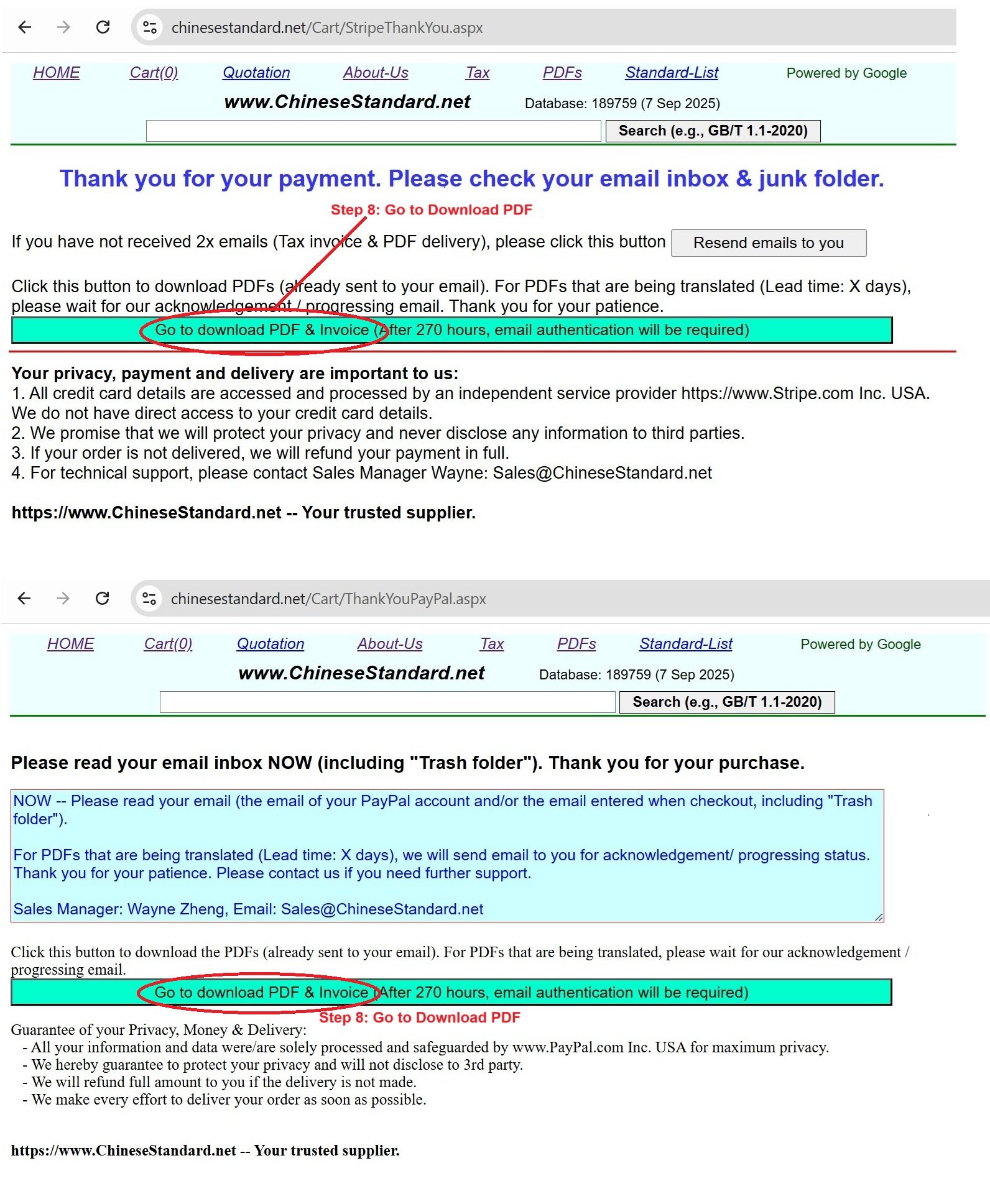
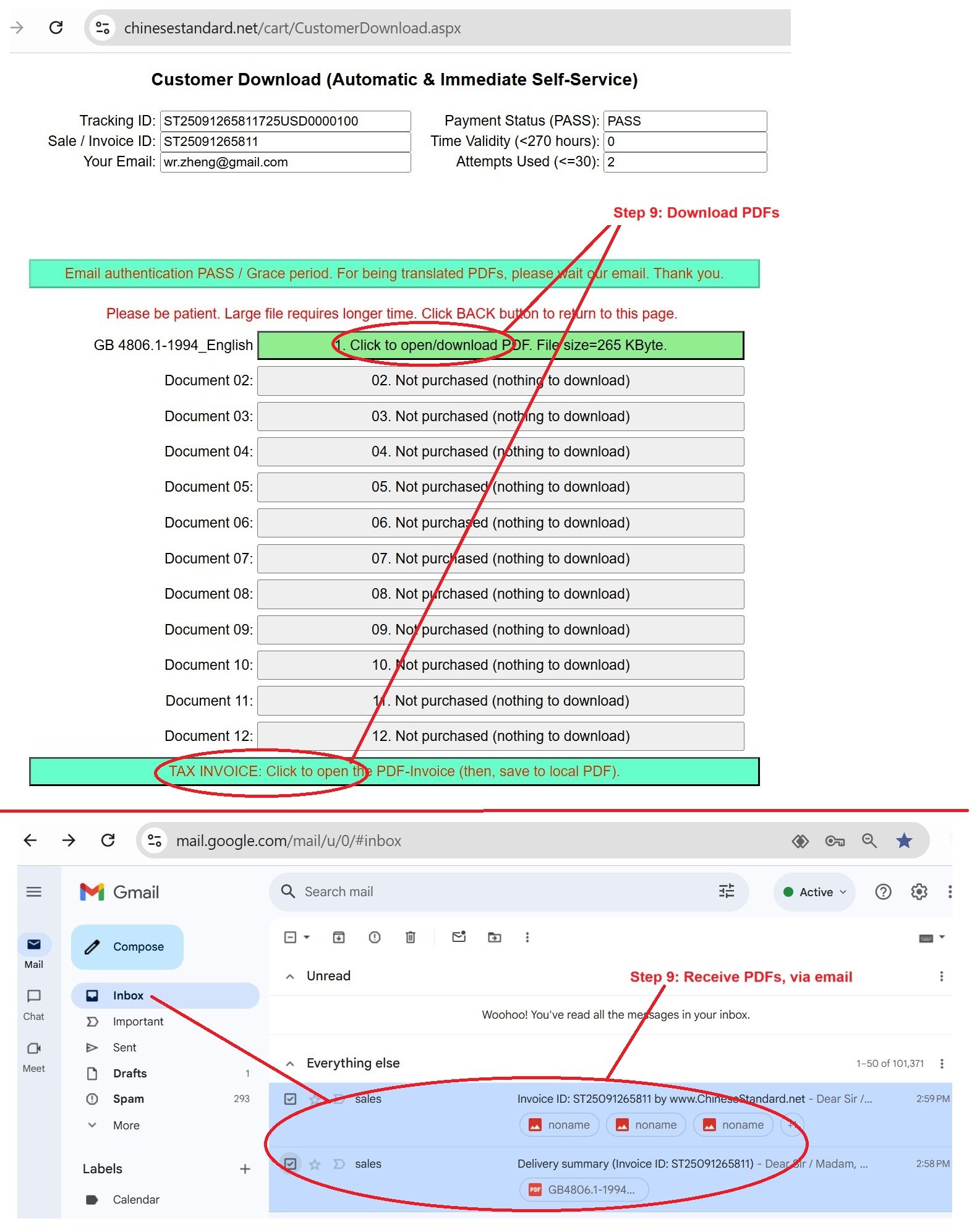
---This is an excerpt. Full copy of true-PDF in English version (including equations, symbols, images, flow-chart, tables, and figures etc.), auto-downloaded/delivered in 9 seconds, can be purchased online: https://www.ChineseStandard.net/PDF.aspx/GB5009.153-2016NATIONAL STANDARD OF THE PEOPLE’S REPUBLIC OF CHINA National Food Safety Standard - Determination of Phytic Acid in Foods ISSUED ON: AUGUST 31, 2016 IMPLEMENTED ON: MARCH 01, 2017 Issued by: National Health and Family Planning Commission of the PRC
Table of Contents
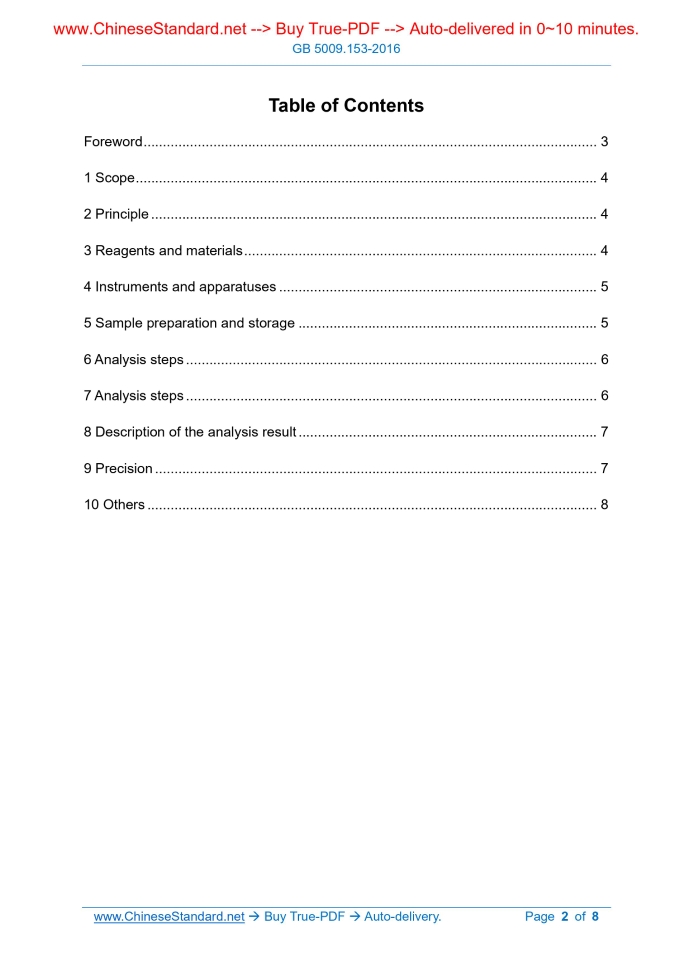
Foreword ... 3 1 Scope ... 4 2 Principle ... 4 3 Reagents and materials ... 4 4 Instruments and apparatuses ... 5 5 Sample preparation and storage ... 5 6 Analysis steps ... 6 7 Analysis steps ... 6 8 Description of the analysis result ... 7 9 Precision ... 7 10 Others ... 8 National Food Safety Standard - Determination of Phytic Acid in Foods1 Scope
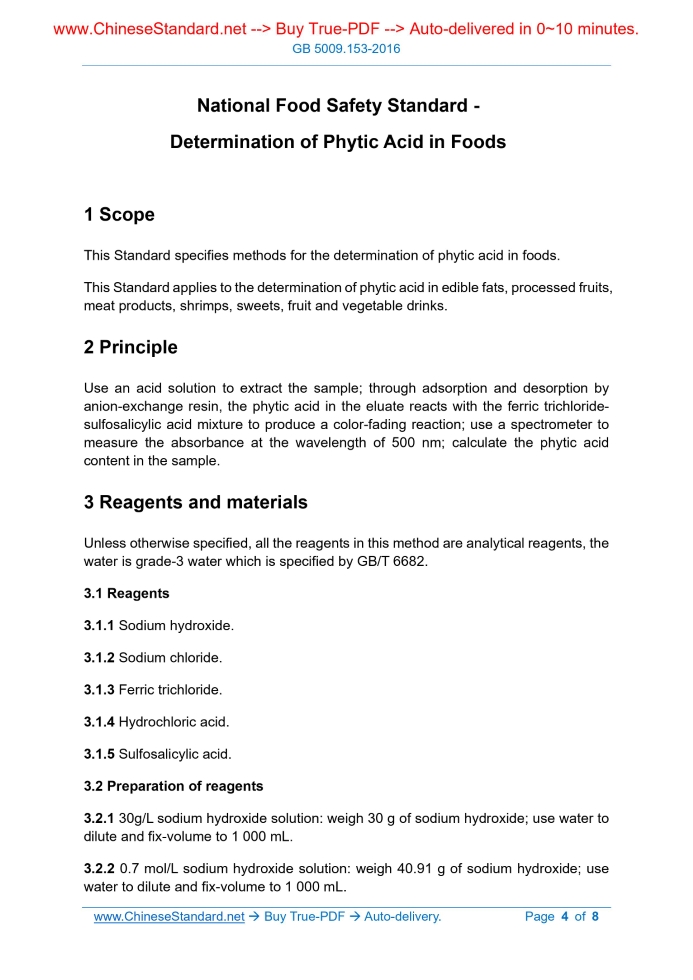
This Standard specifies methods for the determination of phytic acid in foods. This Standard applies to the determination of phytic acid in edible fats, processed fruits, meat products, shrimps, sweets, fruit and vegetable drinks.2 Principle
Use an acid solution to extract the sample; through adsorption and desorption by anion-exchange resin, the phytic acid in the eluate reacts with the ferric trichloride- sulfosalicylic acid mixture to produce a color-fading reaction; use a spectrometer to measure the absorbance at the wavelength of 500 nm; calculate the phytic acid content in the sample.3 Reagents and materials
Unless otherwise specified, all the reagents in this method are analytical reagents, the water is grade-3 water which is specified by GB/T 6682. 3.1 Reagents 3.1.1 Sodium hydroxide. 3.1.2 Sodium chloride. 3.1.3 Ferric trichloride. 3.1.4 Hydrochloric acid. 3.1.5 Sulfosalicylic acid. 3.2 Preparation of reagents 3.2.1 30g/L sodium hydroxide solution: weigh 30 g of sodium hydroxide; use water to dilute and fix-volume to 1 000 mL. 3.2.2 0.7 mol/L sodium hydroxide solution: weigh 40.91 g of sodium hydroxide; use water to dilute and fix-volume to 1 000 mL. Take a representative edible part; use a tissue masher to pulverize and homogenate; mix it evenly; put it into a clean container; seal it and mark it. 5.1.2 Liquid sample Take a representative sample; mix it evenly; put it into a clean container; seal it and mark it. 5.2 Sample storage The sample shall be stored in a refrigerator at -18°C. Note: During sample preparation and storage, the sample shall be protected from contamination and the test object shall be prevented from loss.6 Analysis steps
6.1 Extraction Weigh 10.0 g of the sample; place it in a triangular flask with a plug; add 40 mL of sodium sulfate-hydrochloric acid extraction solution (3.2.5); shake and extract for 2 h; centrifuge the extract at 5 000 r/min for 5 min; collect all the supernatant and use sodium sulfate-hydrochloric acid extraction solution to fix-volume to 50 mL; filter it through a quick filter paper and set aside. 6.2 Purification Take 0.5 g of anion-exchange resin (3.5) and wet-pack it into an empty column tube (4.5); respectively use 15 mL of a sodium chloride solution (3.2.2) and 20 mL of water to wash the ion-exchange column. Take 5 mL (for fresh shrimp sample, take 10 mL) of filtrate; add 1mL (for fresh shrimp sample, add 2mL) of sodium hydroxide solution (3.2.1); use water to dilute to 30 mL (for fresh shrimp sample, to 60mL); mix and transfer it to the activated ion-exchange column; then, respectively use 15 mL of water and 15 mL of sodium chloride solution (3.2.3) to elute the exchange column at a flow rate of 1 mL/min; discard the effluent. Finally, use 25 mL of sodium chloride solution (3.2.2) to elute; collect all the eluate in a 25 mL graded tube with a plug; fix-volume to the scale. Note: When the resin is filled, a sieve plate, with a hole diameter of 20 μm ~ 50 μm, should be placed between the upper and lower layers, and the resin should be compacted.7 Analysis steps
7.1 Preparation of the standard curve ......Source: Above contents are excerpted from the full-copy PDF -- translated/reviewed by: www.ChineseStandard.net / Wayne Zheng et al.