QC/T 983-2025 PDF English
Price & Delivery
US$425.00 · In stock · Download in 9 secondsQC/T 983-2025: Measuring method of cleanliness of automobile transmission assembly
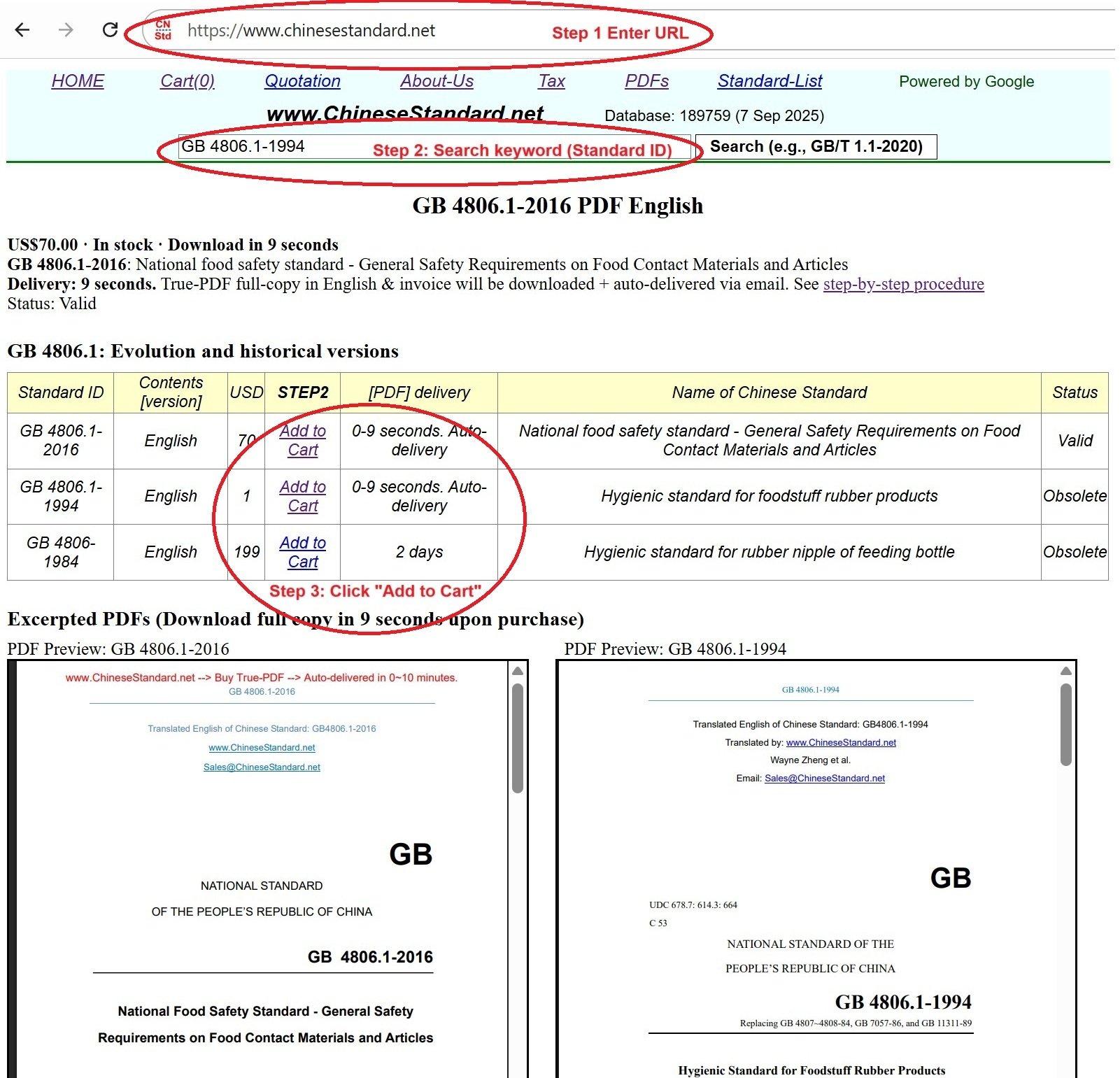
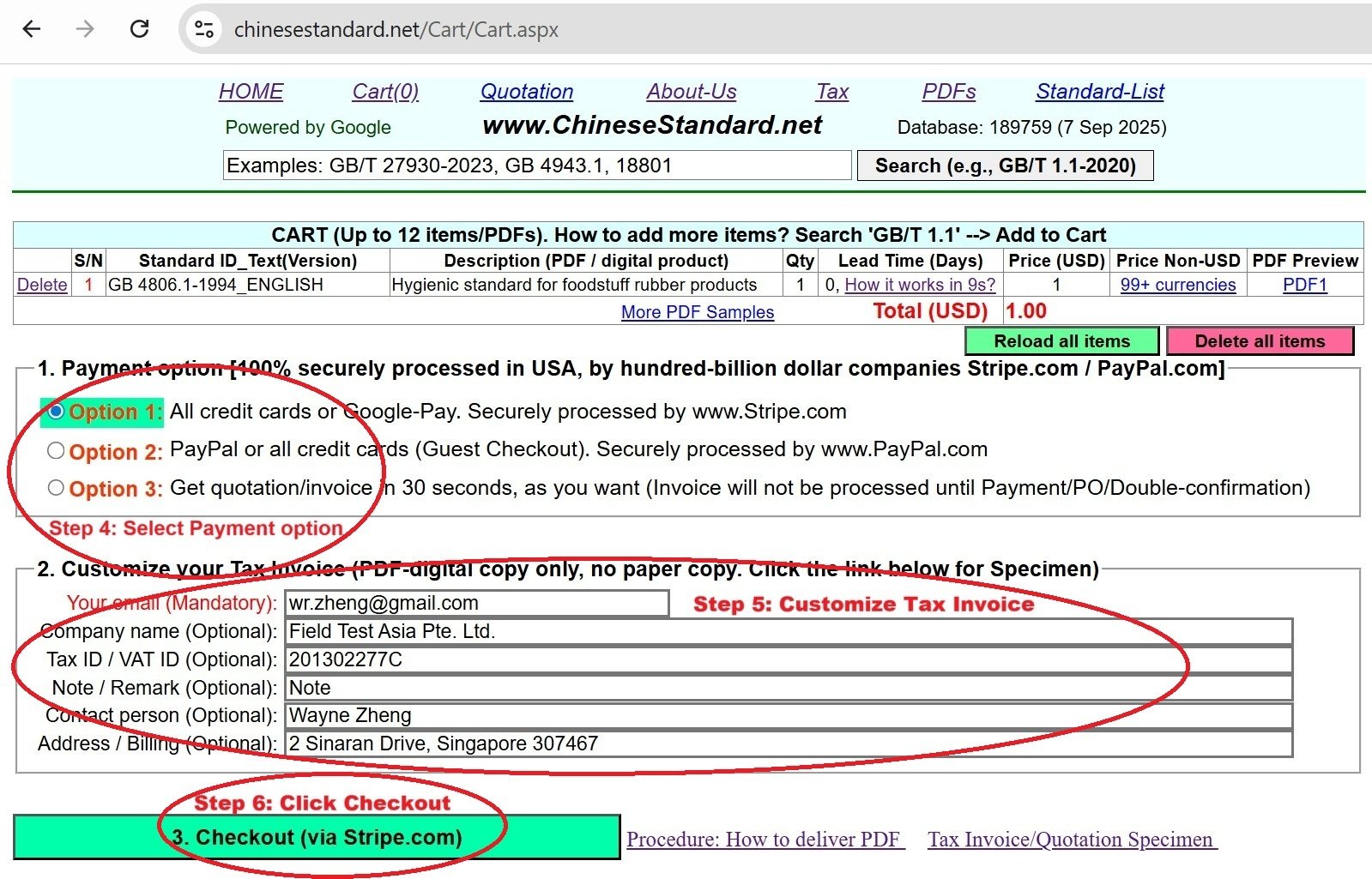
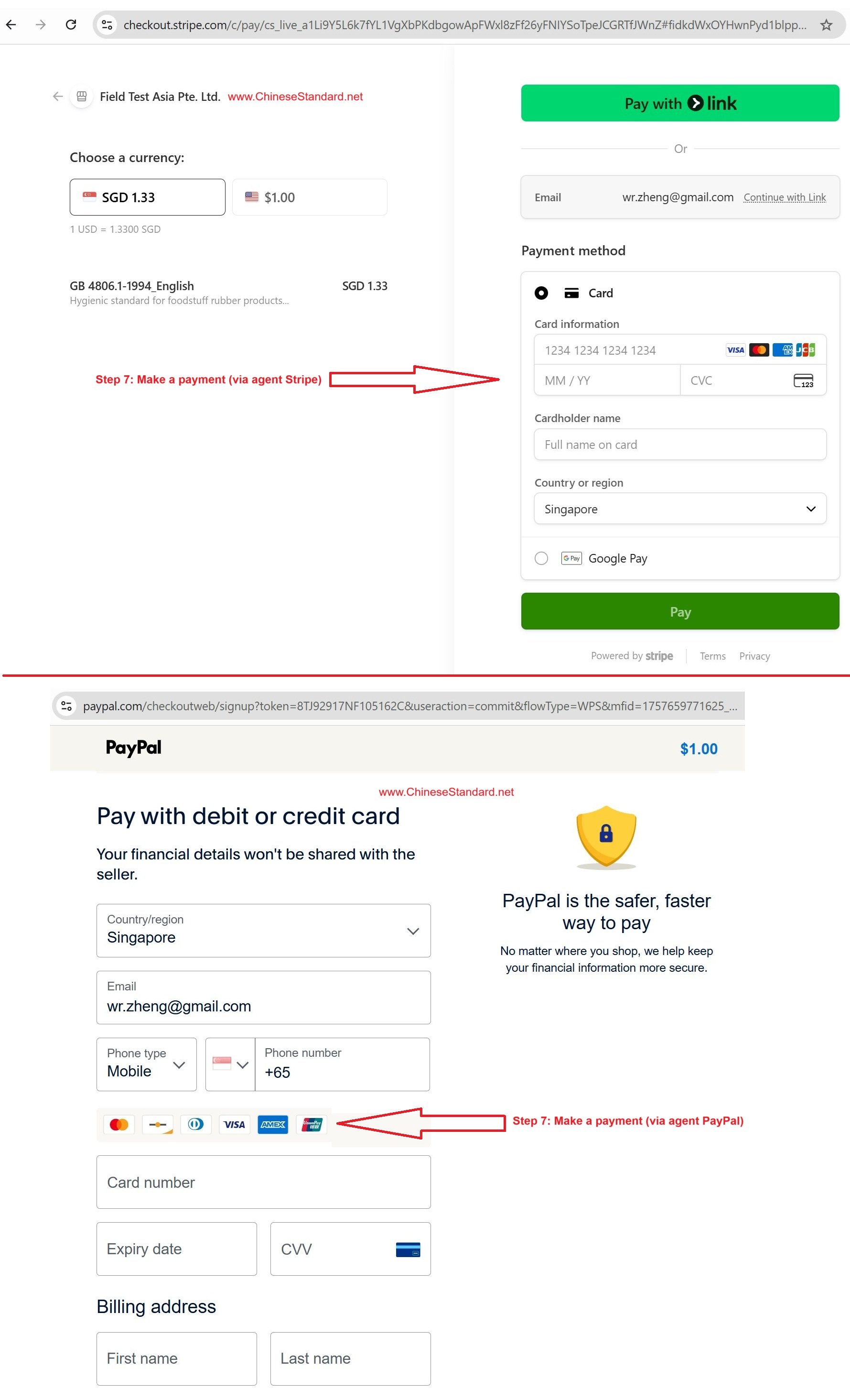
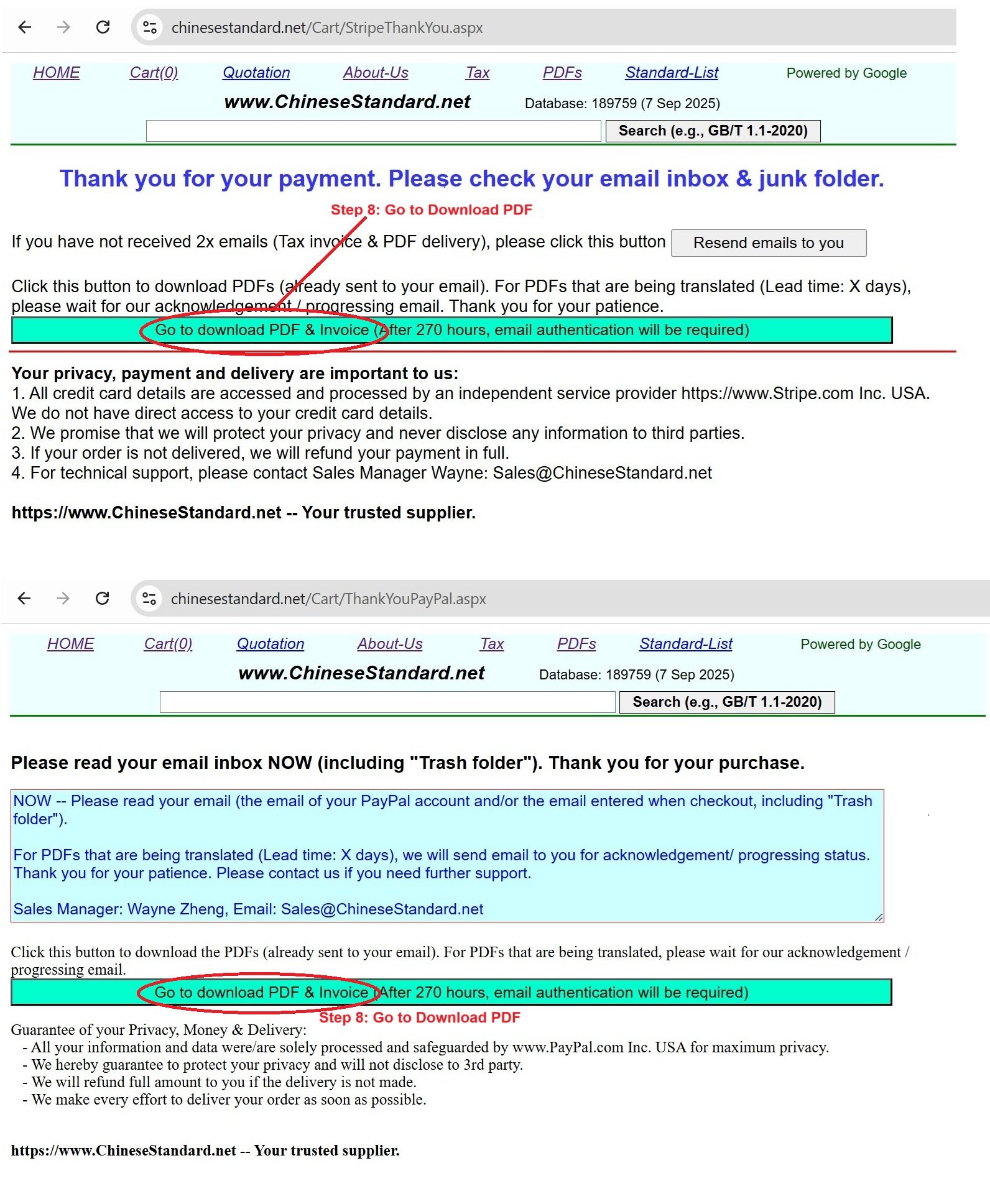
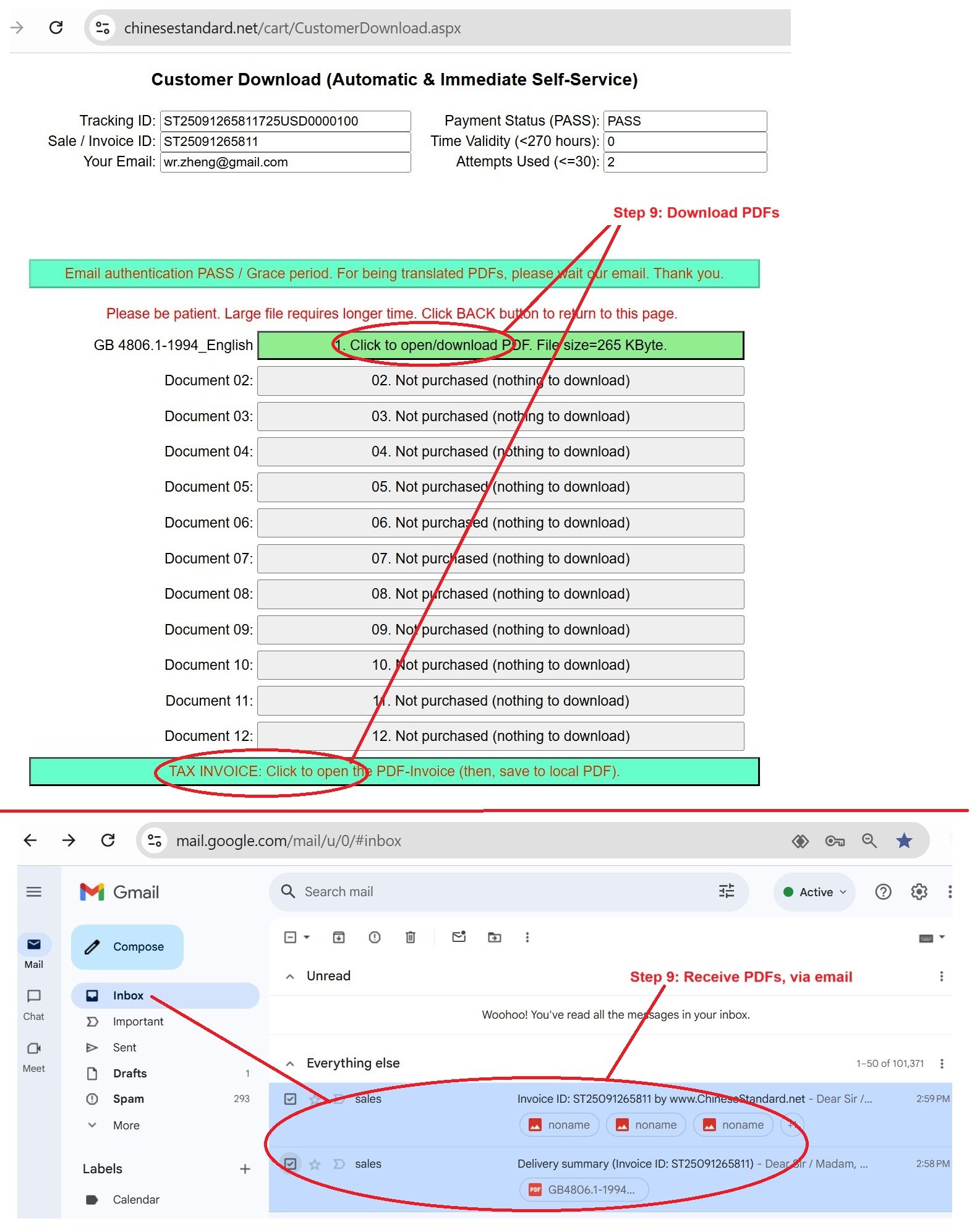
Delivery: 9 seconds. True-PDF full-copy in English & invoice will be downloaded + auto-delivered via email. See step-by-step procedure
Status: Valid
QC/T 983: Historical versions
| Standard ID | USD | BUY PDF | Delivery | Standard Title (Description) | Status |
| QC/T 983-2025 | 425 | Add to Cart | Auto, 9 seconds. | Measuring method of cleanliness of automobile transmission assembly | Valid |
| QC/T 983-2014 | 599 | Add to Cart | 3 days | Measuring method of cleanliness of automobile manual transmission assembly | Obsolete |
Click to Preview this PDF
QC/T 983-2025: Measuring method of cleanliness of automobile transmission assembly
---This is an excerpt. Full copy of true-PDF in English version (including equations, symbols, images, flow-chart, tables, and figures etc.), auto-downloaded/delivered in 9 seconds, can be purchased online: https://www.ChineseStandard.net/PDF.aspx/QCT983-2025QC AUTOMOBILE INDUSTRY STANDARD ICS 43.040 CCS T 21 Replacing QC/T 983-2014 Measuring Method of Cleanliness of Automobile Transmission Assembly Issued on: MAY 9, 2025 Implemented on: NOVEMBER 1, 2025 Issued by. Ministry of Industry and Information Technology of the People’s Republic of China
Table of Contents
Foreword... 3 1 Scope... 6 2 Normative References... 6 3 Terms and Definitions... 6 4.Testing Methods... 9 4.1 Test requirements... 9 4.2 Preparation for test... 11 4.3 Impurity extraction... 15 4.4 Impurity analysis... 18 4.5 Report on results... 25 Appendix A (Normative) Sampling Rules... 26 Bibliography... 28 Measuring Method of Cleanliness of Automobile Transmission Assembly1 Scope
This Document specifies the method for testing the cleanliness of automobile transmission assembly. This Document applies to the cleanliness testing of Types M and N automobile transmission assembly and electric drive assembly (including lubricating oils and components).2 Normative References
The provisions in following documents become the essential provisions of this Document through reference in this Document. For the dated documents, only the versions with the dates indicated are applicable to this Document; for the undated documents, only the latest version (including all the amendments) is applicable to this Document. GB/T 14039 Hydraulic fluid power – Fluids - Method for coding the level of contamination by solid particles GB/T 25915.1-2021 Cleanrooms and associated controlled environments - Part 1. Classification of air cleanliness by particle concentration GB/T 41481-2022 Road vehicles - Cleanliness of components and systems3 Terms and Definitions
For the purposes of this Document, the following terms and definitions apply. 3.1 Cleanliness of assembly The cleanliness of assembly is expressed by the mass or quantity, geometric size, and type of impurity particles. NOTE. The cleanliness of assembly is divided into cleanliness of disassembly and cleanliness of non- disassembly. 3.2 Impurity Pollutants that enter from the outside, remain on the product itself, or are generated by the system during the product's manufacturing, storage, transportation, use, and maintenance. 3.3 Filter membrane The cleanliness test uses a polymer film sheet with a knitted or mesh structure and special separation capabilities to retain the particles of interest through separation. 3.4 Cleaner The liquid medium that is used to clean the sample. 3.5 Blank experiment A set of experiments to determine the cleanliness of the system using methods for detecting sample cleanliness in the absence of a sample. 3.6 Mass constant The process of repeatedly drying, cooling, and weighing a substance until its mass remains constant. 3.7 Blank value The value that is obtained from blank experiment. 3.8 Attenuation test A set of tests that is used to determine cleaning parameters such as sample cleaning pressure, flow rate, and flow velocity, etc. 3.9 Lubricating oil Liquid lubricant that is used between the relatively moving surfaces of a friction pair. 3.10 Particle Tiny structures formed from solid organic or inorganic matter, such as metals, plastics, ceramics, minerals, rubber, and fibers, etc. 3.11 Particle size It mainly includes particle length, particle width, and inscribed circle diameter of the particle. NOTE. Unless otherwise specified, the longest size shall be used. 3.12 Particle length The maximum vertical distance between two parallel lines at both ends of the particle is 4.Testing Methods 4.1 Test requirements 4.1.1 Samples and lubricating oil 4.1.1.1 Cleanliness test of Types M and N automotive transmission assemblies and electric drive assemblies (hereinafter referred to as "assemblies") alters the cleanliness characteristics of the sample; therefore, cleanliness test shall not be repeated on the same sample. 4.1.1.2 For lubricating oil cleanliness test (such as contamination level and elemental analysis), samples can be retained for retest if the lubricating oil is homogeneous. 4.1.2 Cleaner The cleaner shall meet the following requirements. a) It shall be able to quickly remove impurities from the sample without altering the characteristics of the impurity particles; b) It shall be non-corrosive to the sample, harmless to the human body, and not chemically a) The testing room shall have independent working areas for impurity extraction, drying, and analysis; b) The testing room shall have dust prevention measures, and the indoor cleanliness level shall at least meet the ISO Class 9 requirements of GB/T 25915.1-2021; c) The testing room shall be well-ventilated, with a temperature of 15℃~30℃ and relative humidity ≤70%; d) The testing room shall have fire prevention and anti-static measures. 4.1.6 Samples Samples shall meet the following requirements. a) Samples shall be sealed in packaging during transportation and storage to avoid collisions and contamination from external pollutants; b) Non-testing areas shall be cleaned before testing. 4.1.7 Blank value The blank value shall meet the following requirements. a) The mass or number of the particles shall be less than 1/10 of the sample cleanliness limit; b) The largest particle shall be less than half the maximum permissible particle size of the sample, determined according to the lower limit of the particle's range; see Table 5 for range division; c) The blank value shall not be deducted from the test results. 4.1.8 Personnel Personnel shall meet the following requirements. a) Testing personnel shall wear anti-static and dustproof work clothes and caps; b) Testing personnel shall be professionally trained, familiar with the testing process, proficient in operating the testing equipment, able to diagnose equipment malfunctions, and perform routine maintenance. 4.2 Preparation for test 4.2.1 Impurity extraction device The impurity extraction device may include. a) Manual filtration devices, including. cleaning chamber with exhaust system, vacuum pump, pressure tank, spray gun, funnel, filter membrane support frame, suction flask, etc.; b) Automatic filtration devices, including. cleaning chamber, spray gun, automatic membrane forming system, automatic circulating filtration system, etc.; c) Glassware, including. desiccator, weighing bottle, conical flask, measuring cup, measuring cylinder, etc.; d) Other apparatuses, including. sampler, flat-tipped toothless stainless steel tweezers, weighing pan, oil-resistant rubber gloves, etc. 4.2.2 Instruments The following instruments may be used for test. a) Drying oven; b) Analytical balance. graduation value ≤ 0.1 mg; c) Optical microscope. capable of automatically and clearly identifying impurity particles ≥ 5 μm; and statistically analyzing their type, size, and quantity, classifying them according to size grade; and determine the cleanliness grade according to the cleanliness grade code provided in GB/T 41481-2022; d) Automatic particle counter. capable of counting particles ≥ 4 μm, and determine the cleanliness grade according to the cleanliness grade code provided in GB/T 14039; e) Scanning electron microscope-energy dispersive spectroscopy; f) Emission spectrometer. including oil spectrometer, full-spectrum direct-reading plasma emission spectrometer, energy dispersive (or wavelength dispersive) X-ray fluorescence spectrometer, etc.; g) Fourier transform infrared spectrometer/Raman spectrometer; h) Fourier transform micro-infrared spectrometer. 4.2.3 Sampling Sampling may be performed according to Appendix A. 4.2.4 Preparation of filter membrane 4.2.4.1 Cleaning Before use, the filter membrane shall be cleaned according to the following steps. a) Immerse the filter membrane in a clean cleaning solution; b) Place the cleaned filter membrane in a weighing bottle. NOTE. The orientation of polyester fiber membranes shall be consistent with the orientation indicated on the manufacturer's packaging. 4.2.4.2 Drying Slightly open the weighing bottle cap and place it in a drying oven to dry. The drying temperature and time shall be determined experimentally based on the type of cleaner and the filter membrane material. 4.2.4.3 Cooling Tightly close the weighing bottle cap and place it in a desiccator to cool to room temperature. The cooling time shall be consistent. 4.2.4.4 Weighing Weigh the filter membrane on a balance, accurate to 0.1 mg; and record the weighing value. 4.2.4.5 Mass constant Repeat steps 4.2.4.2 to 4.2.4.4 until the difference between two consecutive masses is ≤0.4 mg. NOTE. When performing only the light microscopy method, follow step 4.2.4.1. 4.2.5 Blank test 4.2.5.1 The light microscopy method steps are as follows. a) Use the specified volume of cleaner to clean the sampling tool, support, and inner wall of the cleaning chamber; filter; and remove the filter membrane; b) Flatten and place the filter membrane, after the cleaner has evaporated, under the microscope; c) After the microscope scan is complete, check the size and quantity of metal particles, non- metal particles, and fibers in sequence. 4.2.5.2 The steps of the mass method are as follows. a) Use the specified volume of cleaner to clean the sampling tools, support, and inner walls of the cleaning chamber, etc.; filter with a filter membrane with constant mass; and take out the filter membrane and place it in a weighing bottle; b) Dry, cool, and weigh according to 4.2.4.2~4.2.4.4; ......Source: Above contents are excerpted from the full-copy PDF -- translated/reviewed by: www.ChineseStandard.net / Wayne Zheng et al.