GB/T 18216.8-2015 PDF EnglishUS$130.00 · In stock · Download in 9 seconds
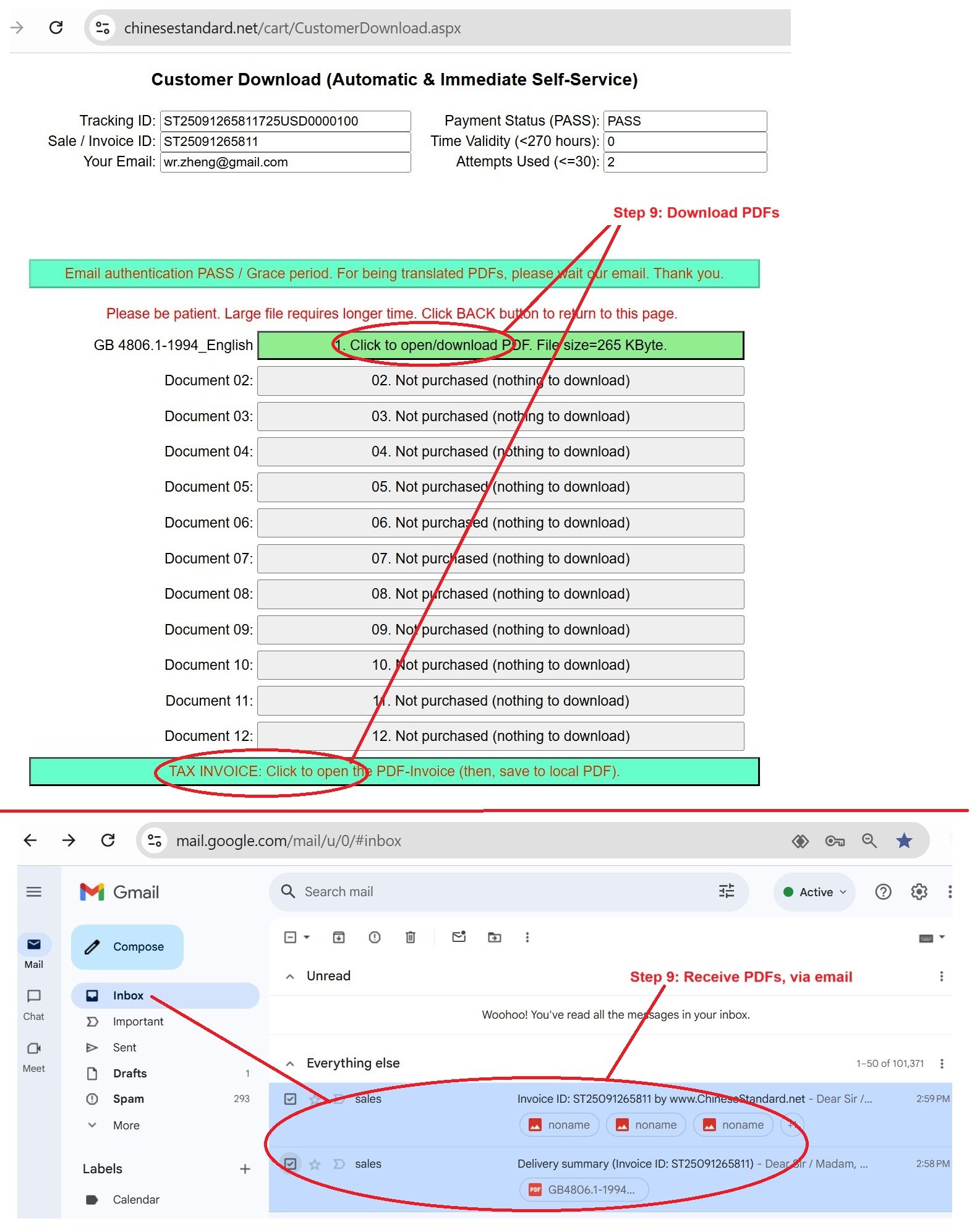
GB/T 18216.8-2015: Electrical safety in low voltage distribution systems up to 1 000 V a.c. and 1 500 V d.c. -- Equipment for testing, measuring or monitoring of protective measures -- Part 8: Insulation monitoring devices for IT systems Delivery: 9 seconds. True-PDF full-copy in English & invoice will be downloaded + auto-delivered via email. See step-by-step procedure Status: Valid
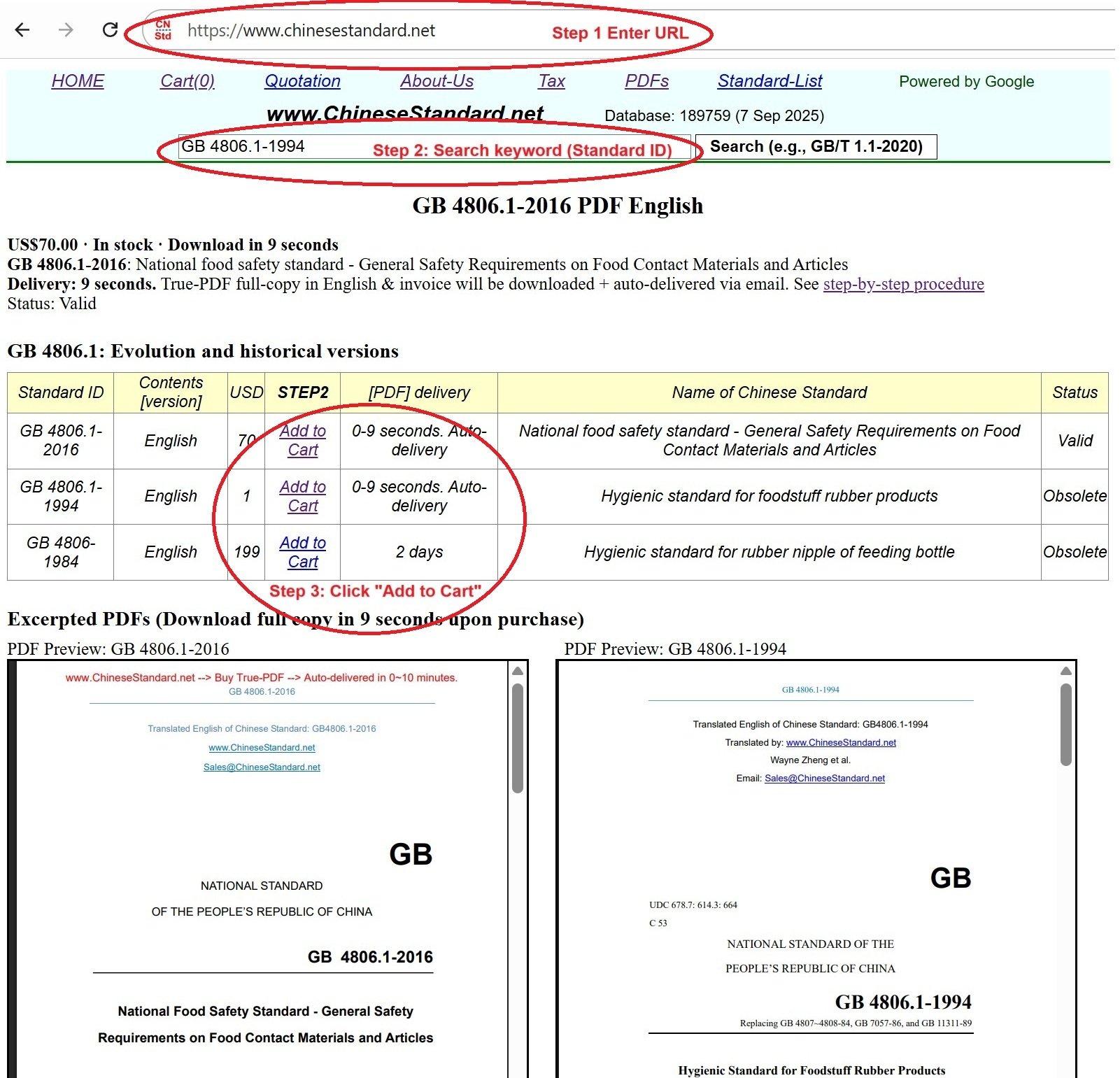
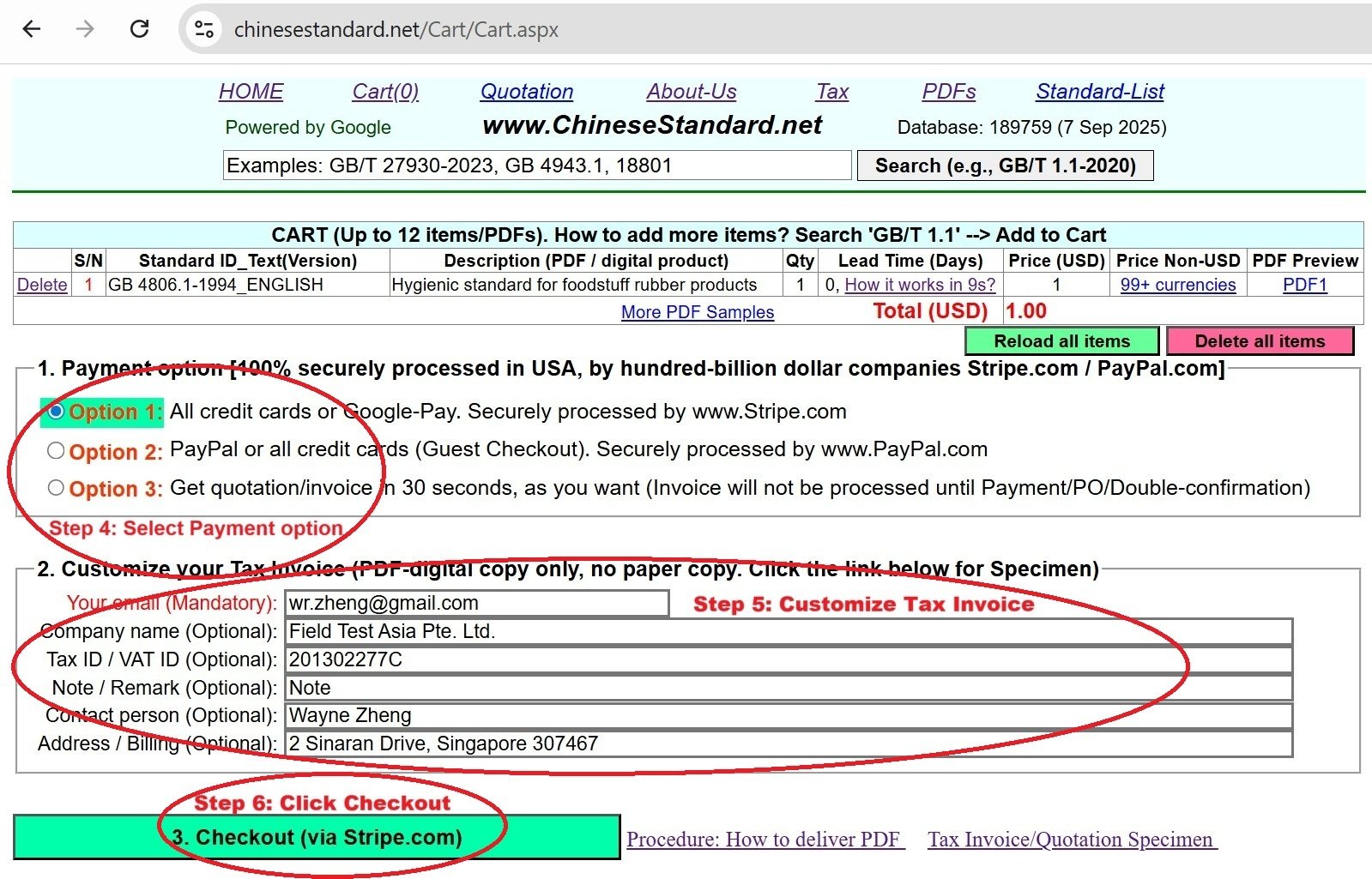
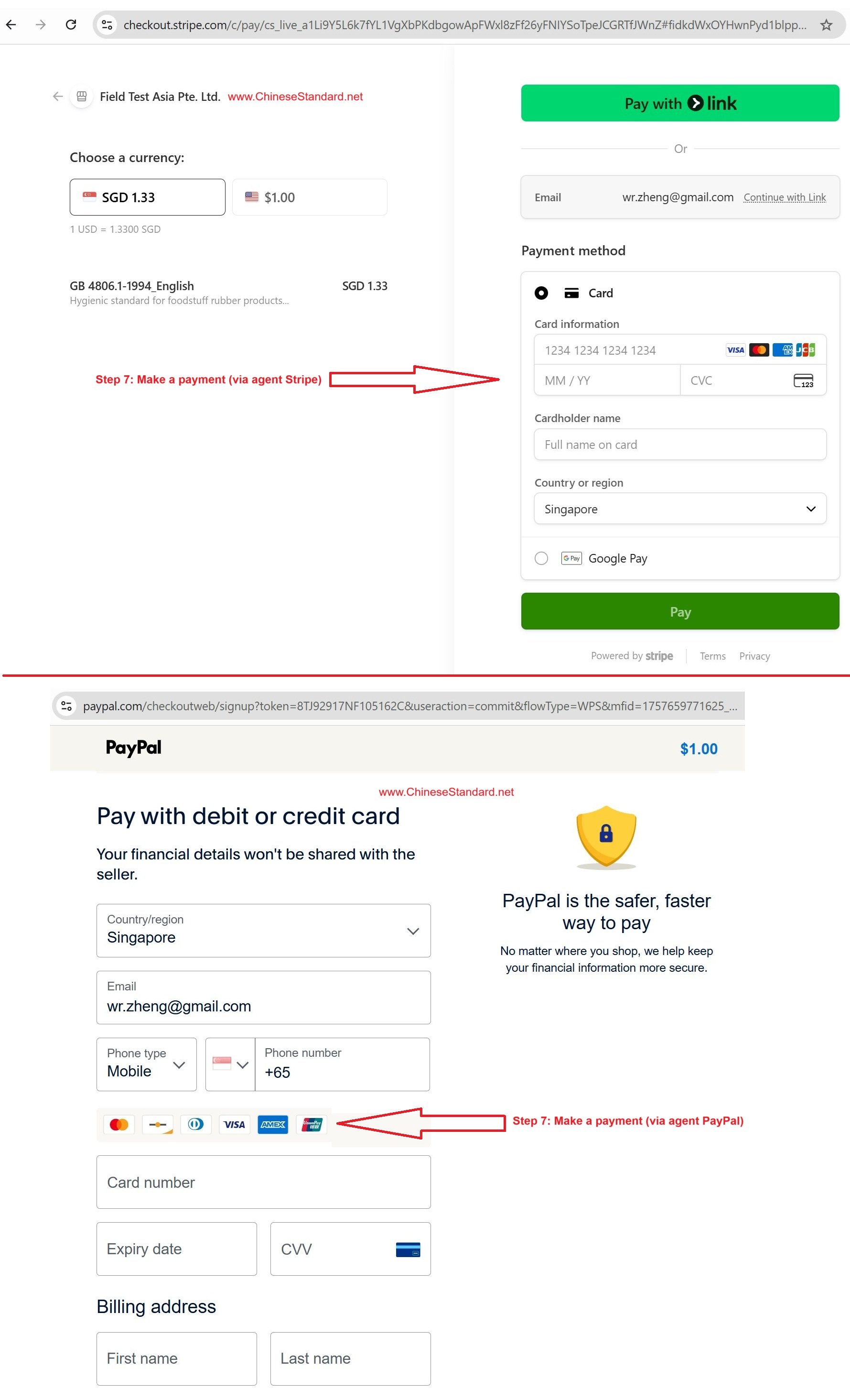
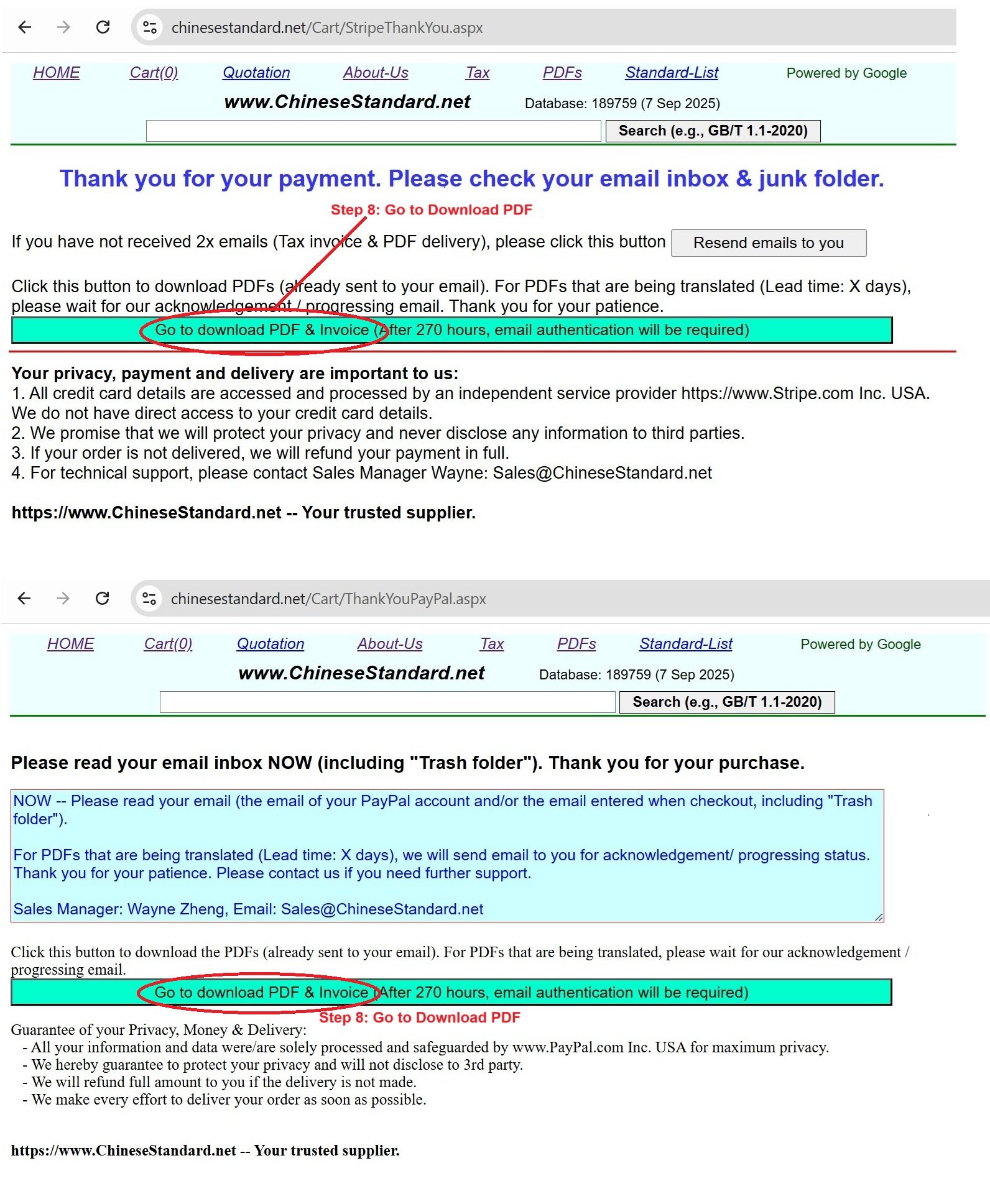
Similar standardsGB/T 18216.8-2015: Electrical safety in low voltage distribution systems up to 1 000 V a.c. and 1 500 V d.c. -- Equipment for testing, measuring or monitoring of protective measures -- Part 8: Insulation monitoring devices for IT systems---This is an excerpt. Full copy of true-PDF in English version (including equations, symbols, images, flow-chart, tables, and figures etc.), auto-downloaded/delivered in 9 seconds, can be purchased online: https://www.ChineseStandard.net/PDF.aspx/GBT18216.8-2015 Electrical safty in low voltage distribution systems up to 1 000 V ac and 1 500 V dc-Equipment for testing, measuring or monitoring of protective measures-Part 8.Insulation monitoring devices for IT systems ICS 17.220.20 N20 National Standards of People's Republic of China 1000V AC and 1500V DC Electrical safety protection measures for low-voltage power distribution systems Test, measurement or monitoring equipment Part 8.Insulation monitoring devices in IT systems 1500Vd.c-Equipmentfortesting, measuringormonitoringofprotective measures-Part 8.InsulationmonitoringdevicesforITsystems (IEC 61557-8..2007, IDT) 2015-12-10 Release.2016-07-01 Implementation General Administration of Quality Supervision, Inspection and Quarantine of the People's Republic of China Published by China National Standardization Administration Table of ContentsForeword III 1 Scope 1 2 Normative references 1 3 Terms and definitions 2 4 Requirement 3 5 Signs and instructions for use 5 6 Test 6 Appendix A (Normative) Medical Insulation Monitoring Devices (IMDs) 9 Appendix B (informative) Monitoring of overload and high temperature 12 References 13ForewordGB/T 18216 《Test, measurement or test of electrical safety protection measures for low-voltage distribution systems with AC 1000V and DC 1500V below Monitoring Equipment is divided into 13 parts. --- Part 1.General requirements; --- Part 2.Insulation resistance; --- Part 3.Loop impedance; --- Part 4.Ground resistance and equipotential ground resistance; --- Part 5.Resistance to ground; --- Part 6.Residual current protection devices (RCD) in TT and TN systems; --- Part 7.Phase sequence; --- Part 8.Insulation monitoring devices in IT systems; --- Part 9.Insulation fault location equipment in IT systems; --- Part 10.Comprehensive detection or monitoring device for protective measures; --- Part 11.Effectiveness of Class A and B residual current monitoring in TT, TN, IT systems; --- Part 12.Performance Measurement and Monitoring Device (PMD); --- Part 13.Hand-held current clamps and sensors for leakage current measurement in power distribution systems. This part is Part 8 of GB/T 18216. This section is drafted in accordance with the rules given in GB/T 1.1-2009. This section uses the translation method equivalent to the IEC 61557-8..2007 "AC 1000V and DC 1500V low voltage power distribution system Testing, measuring or monitoring equipment for electrical safety protection measures-Part 8.Insulation monitoring devices in IT systems "(English version). This section incorporates the contents of the technical corrigendum to IEC 61557-8..2007.The clauses related to these amendments have been passed on its outer margin. The vertical double line (|) in the white position is marked. The Chinese documents that have a consistent correspondence with the international documents referenced normatively in this section are as follows. --- GB 4793.1-2007 Safety requirements for electrical equipment for measurement, control and laboratory use-Part 1.General requirements (IEC 61010-1..2001, IDT) --- GB/T 4798.1-2005 Environmental conditions for the application of electric and electronic products Part 1.Storage (IEC 60721-3-1..1997, MOD) --- GB/T 4798.2-2008 Environmental conditions for the application of electric and electronic products Part 2.Transportation (IEC 60721-3-2..1997, MOD) --- GB/T 4798.3-2007 Environmental conditions for the application of electric and electronic products Part 3.Fixed use in weather-protected places (IEC 60721-3-3..2002, MOD) --- GB 9816-2008 Requirements and Application Guidelines for Thermal Links (IEC 60691..2002, IDT) --- GB 14048.5-2008 Low-voltage switchgear and control equipment Part 5-1.Control circuit appliances and switching element machines Electrical control circuit appliances (IEC 60947-5-1..2003, MOD) --- GB/T 14048.17-2008 Low-voltage switchgear and control equipment Part 5-4.Control circuit appliances and switchgear Special test for performance evaluation method of a small-capacity contact (IEC 60947-5-4..2002, IDT) --- GB 16895.24-2005 Building electrical installations Part 7-710.Requirements for special installations or locations-Medical facilities (IEC 60364-7-710..2002, IDT) --- GB/T 16935.1-2008 Insulation coordination for equipment in low-voltage systems Part 1.Principles, requirements and tests (IEC 60664- 1..2007, IDT) --- GB/T 16935.3-2005 Insulation coordination for equipment in low-voltage systems Part 3.Use coating, canning and molding Antifouling protection (IEC 60664-3..2003, IDT) --- GB/T 18216.1-2012 Electrical safety protection measures for low-voltage distribution systems with AC 1000V and DC 1500V below Testing, measuring or monitoring equipment-Part 1.General requirements (IEC 61557-1..2007, IDT) --- GB/T 18268.24-2010 Requirements for electromagnetic compatibility of electrical equipment for measurement, control and laboratory use. Part 24.Special Special requirements for testing of insulation monitoring devices conforming to IEC 61557-8 and insulation fault locating equipment conforming to IEC 61557-9 Configuration, operating conditions and performance criteria (IEC 61326-2-4..2006, IDT) The following editorial changes have been made in this section. --- Replace IEC 61557-8..2007 with this part of GB/T 18216; --- In the Note 1 of Chapter 1 and references, GB 16895.21 is used instead of IEC 60364-4-41; --- Decimal point symbol with "." Instead of ",". Please note that some elements of this document may involve patents. The issuer of this document is not responsible for identifying these patents. This section is proposed by China Machinery Industry Federation. tions) IEC 60947-5-1 Low-voltage switchgear and controlgear. Part 5-1.Control circuit devices and switching elements. Electromechanical control circuits (Low-voltageswitchgearandcontrolgear-Part 5-1.Controlcircuitdevicesandswitchingele- ments-Electromechanicalcontrolcircuitdevices) IEC 60947-5-4 Low-voltage switchgear and controlgear. Part 5-4.Low-energy contacts for control circuit devices and switching elements Performance evaluation method special test (Low-voltageswitchgearandcontrolgear-Part 5-4.Controlcircuitdevices andswitchingelements-Methodofassessingtheperformanceoflow-energycontacts-Specialtests) IEC 61010-1..2001 Safety requirements for electrical equipment for measurement, control and laboratory use-Part 1.General requirements (Safety requirementsforelectricalequipmentformeasurement, control, andlaboratoryuse-Part 1.General requirements) IEC 61326-2-4 EMC requirements for electrical equipment for measurement, control, and laboratory use-Part 2-4.Special requirements apply Test configuration, operating conditions and performance of insulation monitoring devices according to IEC 61557-8 and insulation fault location equipment according to IEC 61557-9 Performance criteria (Electricalequipmentformeasurement, controlandlaboratoryuse-EMCrequirements-Part 2-4. Particularrequirements-Testconfigurations, operationalconditionsand performancecriteriaforinsu- lationmonitoringdevicesaccordingtoIEC 61557-8andforequipmentforinsulationfaultlocationac- cordingtoIEC 61557-9) IEC 61557-1 Test and measurement of electrical safety protection measures for low-voltage distribution systems with AC 1000V and DC 1500V below Or monitoring equipment Part 1.General requirements (Electricalsafetyinlowvoltagedistributionsystemsupto1000V acand1500Vd.c.-Equipmentfortesting, measuringormonitoringofprotectivemeasures-Part 1. Generalrequirements) IEC 61810-2 Basic Electromechanical Relays Part 2.Reliability (Electromechanical elementary relays-Part 2. Reliability) CISPR11 Measurement methods and limits for electromagnetic disturbance characteristics of industrial, scientific and medical (ISM) RF equipment (Industrial, scientificandmedical (ISM) radio-frequencyequipment-Electromagneticdisturbancecharacteristics- Limitsandmethodsofmeasurement) 3 terms and definitions The terms and definitions defined in IEC 61557-1 and the following apply to this document. 3.1 External DC voltage extraneousd.c.volatage Ufg A DC voltage (generated by a DC component) between an AC conductor and ground in an AC system. 3.2 Insulation resistance RF The ground resistance of the monitored system, including the ground resistance of all connected equipment. 3.3 Specified response value Ran The insulation resistance value is fixed or adjustable on the insulation monitoring device, and it is monitored whether the insulation resistance drops below this limit. 3.4 Response value Ra Under specified conditions, the insulation resistance value of the insulation monitoring device responds. 3.5 Relative uncertainty The response value is subtracted from the specified response value and then divided by the specified response value and multiplied by 100%, which is expressed as a percentage. A = Ra-Ran Ran × 100% 3.6 Systemleakagecapacitance Ce The maximum allowable value of the total capacity of the monitored system to ground (including all electrical equipment connected to the system), below this value The device can work as specified. 3.7 Rated contact voltage Rated voltage at which the relay contacts open and close under specified conditions. 3.8 Response time tan The time required for the insulation monitoring device to respond under the conditions specified in 6.1.2. 3.9 Measuring voltage Um The voltage appearing on the measurement terminal during measurement. Note. Supplementary explanation to the definition given in IEC 61557-1, the measured voltage (Um) is the terminal of the monitored system and the protective conductor terminal without fault and no current The voltage that appears between. 3.10 Measuring current Im The maximum current that can flow between the system and ground is limited by the internal resistance Ri of the measuring voltage source of the insulation monitoring device. Note. The measured current is called injection current in IEC 60364-7-710. 3.11 Internal impedance Zi The total impedance of the insulation monitoring device measured at the nominal frequency (connected) between the terminal of the monitored system and the ground terminal. 3.12 DC internal resistance internald.c.resistance Ri Resistance (connection) between the terminal of the monitored system and the ground terminal on the insulation monitoring device. 3.13 Functional grounding; FE The grounding of one or more points in the system, device or equipment is for the functional needs of the device in addition to electrical safety. Note. For insulation monitoring devices, functional grounding is the measurement connection to ground. 4 Requirements The following requirements and those given in IEC 61557-1 shall apply. 4.1 Insulation monitoring devices should be able to monitor symmetrical and asymmetrical changes in insulation resistance of IT systems. A warning should be issued when the resistance drops to a predetermined level. Note 1.When the insulation resistance of all conductors in the monitored system decreases (approximately) similarly, it indicates that symmetrical insulation degradation has occurred. And for example when one of them The insulation resistance of one conductor decreases significantly, and it exceeds that of other conductors, which indicates that asymmetric insulation degradation has occurred. Note 2.When a ground fault occurs, the so-called ground fault relay that uses voltage imbalance (voltage offset) as the only measurement criterion is not GB/T 18216 This section explains the insulation monitoring device. Note 3.In order to meet the monitoring of the system under specific conditions, (may be necessary) a combination of several measurement methods, including asymmetric monitoring. 4.2 The insulation monitoring device should be provided with a test equipment or can provide a facility to connect the test equipment to detect the insulation monitoring Whether the device can perform its intended function. The system being monitored should not be grounded directly, and no damage to the monitoring device is allowed. This test Not used to detect response values. 4.3 Contrary to IEC 61557-1, the PE connection of the insulation monitoring device is a measurement connection and can be considered as functional earth (FE). in case Insulation monitoring devices have additional components for ground protection. The connection should be considered as protective ground (PE). 4.4 When the specified response value Ran of the insulation monitoring device is adjustable, its set value shall be designed so that it cannot be modified at will, except by using a Key, tool or password. Note. The electrical system installation standard specifies the minimum allowable setting value of the insulation monitoring device with variable response value. 4.5 Insulation monitoring devices should include a visual warning (signal) device, or be provided with facilities to connect such devices to indicate operating status. This A device should not be equipped with a means to cut off its power. The built-in or externally connectable audible signalling device may have a reset mechanism. Make sure one After a new fault is cleared and the audible signal device is reset, it can issue an audible signal. Note. The measuring equipment that gives the indication of insulation resistance is not enough as a visual annunciator. 4.6 The maximum operating uncertainty of an insulation monitoring device is expressed in terms of relative uncertainty. Uncertainty and its limits are listed in Table 1. Table 1 Requirements applicable to insulation monitoring devices Sign for all systems Response time tana ≤10s, when at 0.5 × Ran and Ce = 1μF≤100s, at 0.5 × Ran and Ce = 1μF Permissible continuous additional DC voltage Ufg according to manufacturer's instructions ≤ peak 1.15 × Un, not for DC systems Peak value of measured voltage Um when at 1.1 × Un and 1.1 × Us, and RF = ∞. ≤120V Measuring current Im ≤10mA, when at RF = 0 Internal impedance Zi ≥30Ω/V rated system voltage, at least ≥15kΩ DC internal resistance Ri ≥30Ω/V rated system voltage, at least 1.8kΩ Allow continuous application of nominal voltage ≤ 1.15 × Un Relative uncertainty b ± 15% of specified response value Ran Climate and environmental conditions Operation. c class 3k5 (IEC 60721-3-3), -5 ℃ ~ 45 ℃ Transportation. Class 2k3 (IEC 60721-3-2), -25 ℃ ~ 70 ℃ Storage. Class 1k4 (IEC 60721-3-1), -25 ℃ ~ 55 ℃ a In some IT systems, the voltage changes at a low speed (for example. an inverter system for a low-speed control process, or a DC motor with a low-speed change), Response time depends on the minimum operating frequency between the IT system and the ground. These response times may differ from those defined above. b Relative uncertainty is determined under the following reference conditions. --- Temperature. -5 ℃ ~ 45 ℃; --- Voltage. 0% ~ 115% of nominal voltage and 85% ~ 110% of rated power supply voltage; --- Frequency. rated frequency; --- Leakage capacitance. 1μF. If the response value is adjustable, identify the range of response values that are not within the specified limit range, for example. use a dotted line at the limit of this range or multiple ranges Mark out. Information on relative uncertainty within the scope of work specified by the manufacturer shall be included in the document, but not including leakage capacitance greater than 1μF and the frequency is lower or higher than the rated frequency or frequency range. c Except for condensation and icing. 4.7 When the insulation monitoring device includes equipment indicating insulation resistance, the manufacturer shall indicate that the equipment is incorrect under the rated operating conditions. Degree. 4.8 According to the requirements of IEC 60664-1 and IEC 60664-3 or only IEC 61010-1..2001, the insulation monitoring device shall have Small electrical clearance and creepage distance. Clearance and creepage distance should be selected according to the following requirements. --- Overvoltage category III; --- pollution degree 2; --- IMD internal circuit coated according to the requirements of IEC 60664-3, pollution degree 1. Note. For accessible parts on the enclosure, creepage distance of pollution level 3 should be recommended to withstand higher environmental requirements. 4.9 Where the insulation monitoring device uses different voltages (e.g. Us, Un), the designed clearances and creepage distances should meet the highest Voltage. 4.10 In equipment combination applications, when the electrical connection is by means of a resistive, capacitive or inductive voltage divider, the circuit is allowed to Separation (e.g. for IT systems with rated voltages above 1000V AC and 1500V DC), and In the event of a failure, such line design characteristics can also prevent the occurrence of impermissibly high contact voltages or impermissible high currents to ground. E.g, The above circuit design characteristics (see IEC 61140) can use a reliable voltage divider or a double resistor (safe impedance) in a resistor divider Form to provide additional. 4.11 Insulation monitoring devices shall comply with the relevant electromagnetic compatibility (EMC) requirements of IEC 61326-2-4. 4.12 Other requirements for insulation monitoring devices are listed in Table 1. 5 Signs and instructions for use 5.1 Logo In addition to the signs specified in IEC 61557-1 on the insulation monitoring equipment, the following signs shall be provided. 5.1.1 The type of device and the mark of origin or the name of the manufacturer. 5.1.2 The IT system being monitored (if the insulation monitoring device is used for a specific type of IT system). 5.1.3 Wiring diagram, or the number of the wiring diagram, or the number of the operation guide. 5.1.4 Nominal system voltage Un or range of nominal voltage. 5.1.5 Nominal value of rated power supply voltage Us, or working range of rated power supply voltage. 5.1.6 Nominal frequency of rated power supply voltage Us, or working range of rated power supply voltage frequency. 5.1.7 Specify the response value Ran, or the minimum and maximum response values Ran; if applicable, specify the range of response values, within this range, relative (percent The ratio) uncertainty is higher than the values listed in Table 1. 5.1.8 Mandatory external signs, if necessary, can be listed inside the device. serial number, year of manufacture or model identification. The data given in 5.1.1 must be permanently marked on the insulation monitoring device, and the method of marking shall ensure that These signs are still clearly visible after installation. 5.2 Instructions for use In addition to the instructions given in IEC 61557-1, the instructions should also provide the following. 5.2.1 The internal impedance Zi of the measuring line as a function of the nominal frequency. 5.2.2 When the rated supply voltage is the nominal value Us, the peak value Um of the measured voltage shall meet the requirements of Table 1. 5.2.3 When the measuring terminal is short-circuited, the maximum value Im of the measured current shall meet the requirements of Table 1. 5.2.4 Technical data for connecting the external alarm device interface, including the description of rated voltage and current, rated insulation voltage and interface functions. For contact circuits, the data should refer to the standards IEC 61810-2 or IEC 60947-5-1 and IEC 60947-5-4. 5.2.5 Note that insulation monitoring devices should not be connected in parallel (eg when multiple systems are connected together). 5.2.6 When the wiring diagram is not marked on the device in accordance with the requirements of 5.1.3, the wiring diagram shall be provided. 5.2.7 Information on the effect of the system leakage capacitance Ce and its allowable maximum. 5.2.8 Externally added DC voltage (Ufg) of any polarity that can continuously act on the insulation monitoring device without causing damage. 5.2.9 The test voltage required by 4.9 and meet the relevant EMC standards. 5.2.10 According to the requirements of 5.2.4, the electrical data of the contact circuit. 5.2.11 Measure the internal resistance Ri of the line. 6 Test In addition to the tests given in IEC 61557-1, the following tests shall be performed. 6.1 Type test The type test shall be carried out in accordance with the requirements of 6.1.1 to 6.1.7. 6.1.1 Response value The response value test shall be performed on the specified nominal voltage Un and the rated power supply voltage Us minimum and maximum. When testing, the insulation resistance shall be simulated as follows. --- Unipolar (from a certain phase of Un); --- Symmetric (all phases with the same resistance from Un). The test measuring device should be able to adjust slowly, continuously or in small steps when simulating the insulation resistance, and add a parallel leakage Leakage capacitance. When simulating the leakage capacitance of the system, the insulation resistance of the capacitor used should have at least 100 times the specified response value and its maximum The maximum allowable deviation limit is 10%. During the test, the test resistance should start from a high value and slowly decrease.At the same time, observe the operation of the insulation monitoring device. Line situation. When determining the response value, the insulation resistance presented by the test circuit and its inherent leakage capacitance should be taken into account. When the specified response value of the insulation monitoring device is continuously adjustable, or with a digital setting without a mechanical switch, it should be at least within the setting range Check the compliance with the conditions listed in Table 1 at 5 points within the range. This check should be roughly averaged at each end point and within a set range At various points of the distribution. This method is also applicable to a setting device without a switch. If the specified response value is set by a mechanical switch method, each stage should be tested. The initial test should be performed at The line does not contain any system leakage capacitance, and the test resistance should be slowly reduced in order to find the steady-state response value. The manufacturer should provide detailed instructions.If the measurement method is affected by the leakage capacity Ce of the system, the electricity should be inserted in steps The method of the container is checked to determine whether the limits shown in Table 1 are met within the range of capacitance indicated by the manufacturer. Should be determined To uncertainty. 6.1.2 Response time Under the condition of 1μF leakage capacitance Ce and nominal system voltage, the insulation resistance value suddenly decreases from near infinity to the minimum When the value is 50% of Ran, test the operation delay time of the output circuit. 6.1.3 Measuring the peak value of the voltage Um The peak voltage test shall be used to check whether the requirements given in Table 1 are met, and whether the instructions in 5.2.2 are applicable. Voltage measuring instrument The internal resistance should be at least 20 times the DC internal resistance Ri of the measurement circuit. 6.1.4 Internal resistance and impedance The following tests shall be used to check compliance with the requirements specified in Table 1.These tests can be performed with or without rated power Under the source voltage Us, an appropriate measurement voltage is applied between the interconnected system terminals and the ground terminal. Uncertainty of the measuring device Degree limit value should not exceed 5% under reference conditions. 6.1.4.1 Internal impedance Zi To confirm that the internal impedance Zi meets the requirements of Table 1, its voltage source should be consistent with the nominal system voltage Un, and its frequency should be equal to the nominal System frequency, its harmonic coefficient should be lower than 5%, and internal resistance should be lower than 10Ω. From the resulting peak-to-peak current Ipp, the following formula is used to calculate the internal impedance. Zi = 2 × 2 × Un Ipp 6.1.4.2 DC internal resistance Ri To confirm that the DC internal resistance meets the requirements of Table 1, the DC voltage should have the same order of magnitude as the nominal system voltage Un, but must not exceed Allowable maximum external DC voltage Ufg. The following formula should be used to calculate the DC internal resistance Ri from the generated current I. Ri = Un (Un≤Ufg) 6.1.5 Equipment indicating insulation resistance When the insulation monitoring device is provided with equipment indicating the insulation resistance, a test shall be carried out in accordance with the requirements of 4.7 to check the manufacturer's requirements. Whether the uncertainty limit is met. 6.1.6 Dielectric strength test The insulation monitoring device shall be tested in accordance with the requirements of IEC 61010-1. 6.1.7 Electromagnetic compatibility (EMC) The electromagnetic compatibility test shall be performed in accordance with the requirements of 4.11. 6.2 Routine tests Routine tests shall be performed on each insulation monitoring device. Note. If the method of technical failure analysis and/or statistical analysis can be used to prove that the failure rate is low in serial production, the routine test can be limited. System is to simplify the sampling test. All routine tests should be performed during manufacturing or at the end. 6.2.1 Response value The relative uncertainty of the response value shall be routinely tested in accordance with the requirements of 6.1.1.In this test, the following conditions shall apply. --- room temperature (23 ℃ ± 3 ℃); --- 1.0 times Un and 1.0 times Us, or for devices with several rated voltages, according to the highest rated voltage Un or Us; --- Ce = 1μF. In this test, the limit value should be reduced as far as possible until the conditions in Table 1 can be met. When the insulation monitoring device has a continuously adjustable specified response If the value is correct, the operation should be checked at least three points within the setting range. When checking, set the start and end points of the range As well as the intermediate points. When the specified response value is selected by means of mechanical switches, each stage should be an examination. 6.2.2 Performance of the test device The internal test button and external test button (if equipped) should be checked to see if they are operating normally and in accordance with Claim. 6.2.3 Equipment indicating insulation resistance In accordance with the requirements of 4.7, when the insulation monitoring device contains equipment indicating insulation resistance, it... ......Source: Above contents are excerpted from the full-copy PDF -- translated/reviewed by: www.ChineseStandard.net / Wayne Zheng et al. Tips & Frequently Asked Questions:Question 1: How long will the true-PDF of English version of GB/T 18216.8-2015 be delivered?Answer: The full copy PDF of English version of GB/T 18216.8-2015 can be downloaded in 9 seconds, and it will also be emailed to you in 9 seconds (double mechanisms to ensure the delivery reliably), with PDF-invoice.Question 2: Can I share the purchased PDF of GB/T 18216.8-2015_English with my colleagues?Answer: Yes. The purchased PDF of GB/T 18216.8-2015_English will be deemed to be sold to your employer/organization who actually paid for it, including your colleagues and your employer's intranet.Question 3: Does the price include tax/VAT?Answer: Yes. Our tax invoice, downloaded/delivered in 9 seconds, includes all tax/VAT and complies with 100+ countries' tax regulations (tax exempted in 100+ countries) -- See Avoidance of Double Taxation Agreements (DTAs): List of DTAs signed between Singapore and 100+ countriesQuestion 4: Do you accept my currency other than USD?Answer: Yes. www.ChineseStandard.us -- GB/T 18216.8-2015 -- Click this link and select your country/currency to pay, the exact amount in your currency will be printed on the invoice. Full PDF will also be downloaded/emailed in 9 seconds.How to buy and download a true PDF of English version of GB/T 18216.8-2015?A step-by-step guide to download PDF of GB/T 18216.8-2015_EnglishStep 1: Visit website https://www.ChineseStandard.net (Pay in USD), or https://www.ChineseStandard.us (Pay in any currencies such as Euro, KRW, JPY, AUD).Step 2: Search keyword "GB/T 18216.8-2015". Step 3: Click "Add to Cart". If multiple PDFs are required, repeat steps 2 and 3 to add up to 12 PDFs to cart. Step 4: Select payment option (Via payment agents Stripe or PayPal). Step 5: Customize Tax Invoice -- Fill up your email etc. Step 6: Click "Checkout". Step 7: Make payment by credit card, PayPal, Google Pay etc. After the payment is completed and in 9 seconds, you will receive 2 emails attached with the purchased PDFs and PDF-invoice, respectively. Step 8: Optional -- Go to download PDF. Step 9: Optional -- Click Open/Download PDF to download PDFs and invoice. See screenshots for above steps: Steps 1~3 Steps 4~6 Step 7 Step 8 Step 9 |