GB 5009.231-2016 PDF English
| Standard ID | USD | BUY PDF | Delivery | Standard Title (Description) | Status |
| GB 5009.231-2016 | 70 | Add to Cart | Auto, 9 seconds. | Determination of volatile phenolic compounds residues in fishery products Spectrophotometric method | Valid |
Similar standards
GB 5009.231-2016: Determination of volatile phenolic compounds residues in fishery products Spectrophotometric method
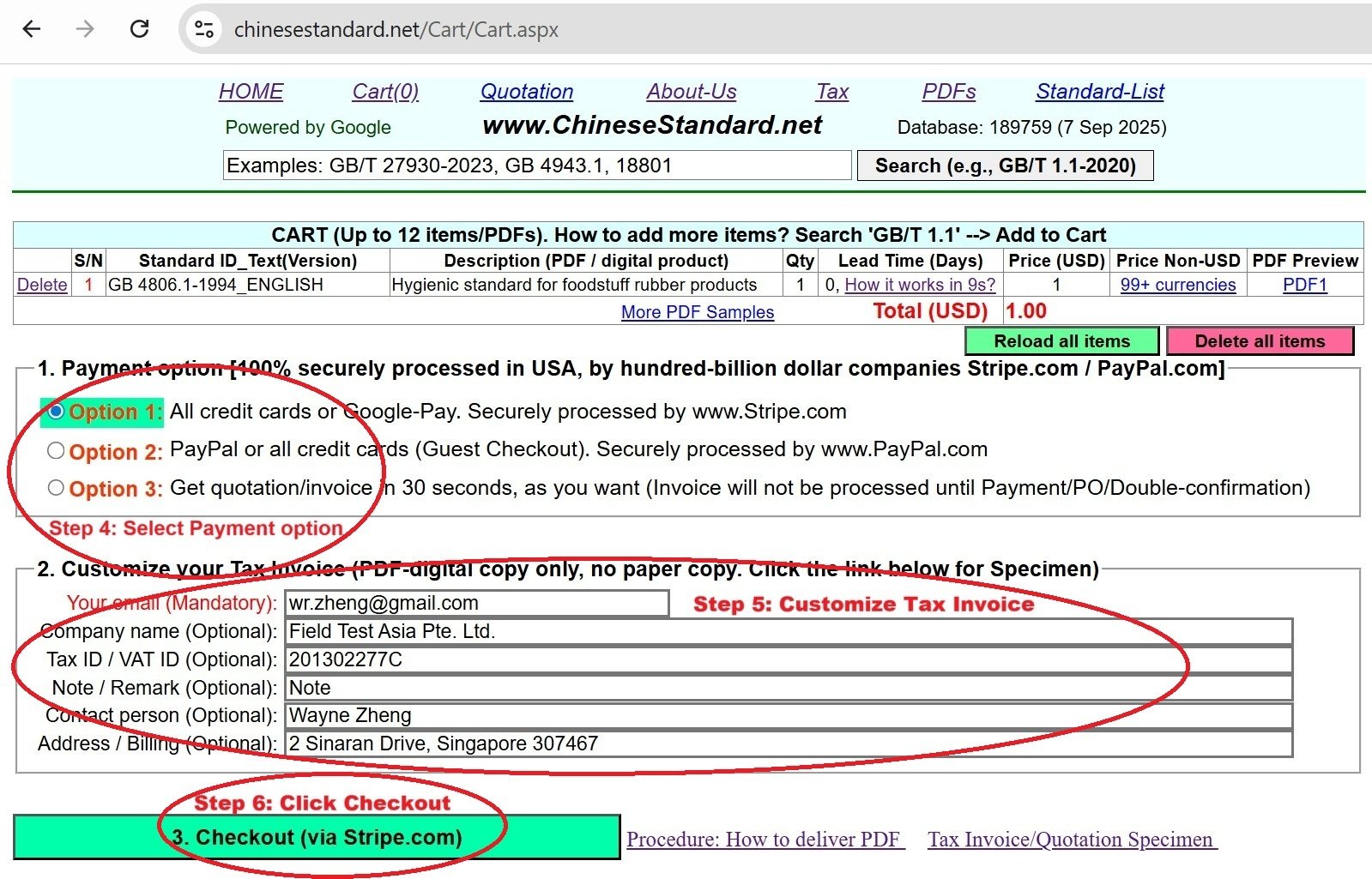
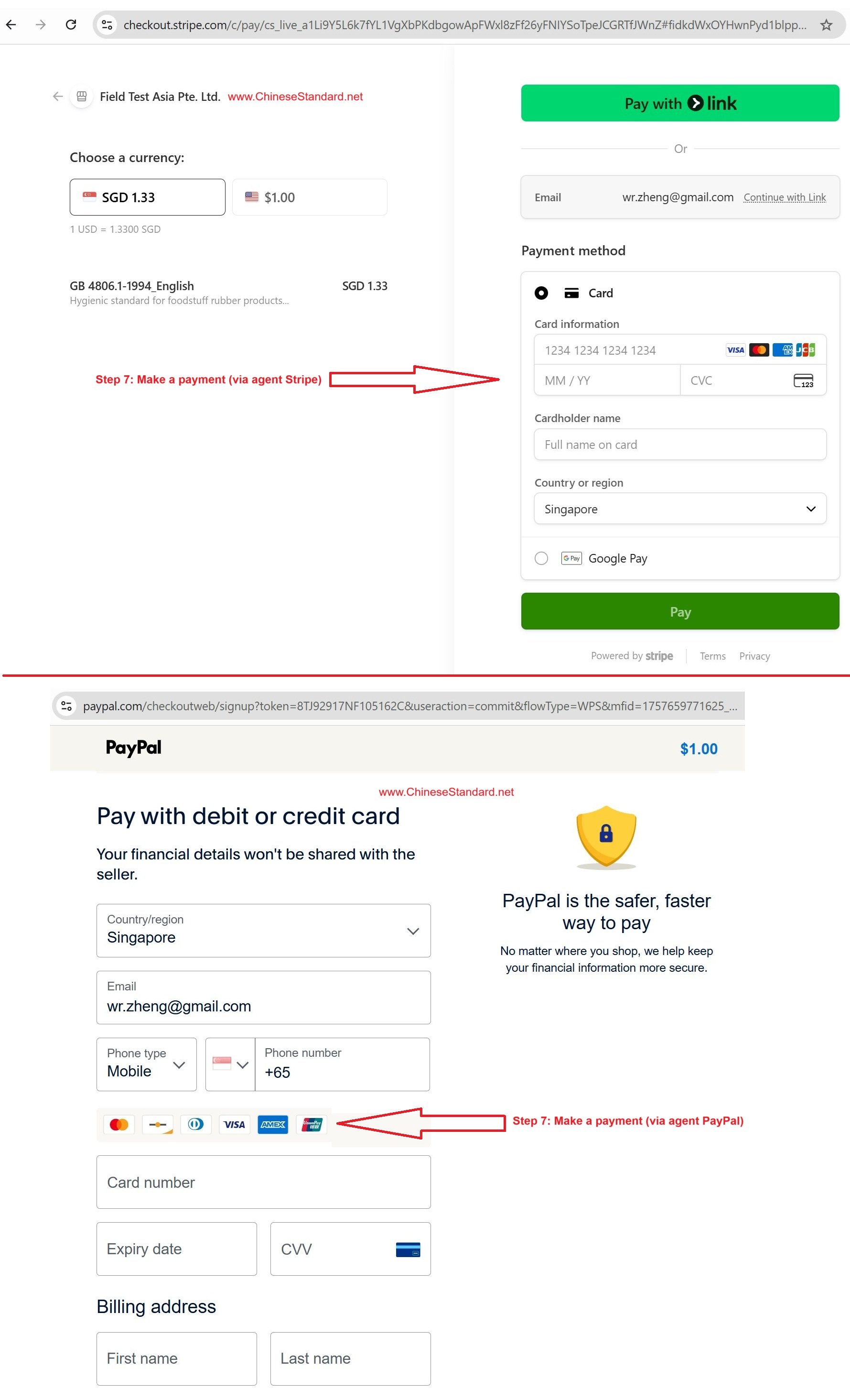
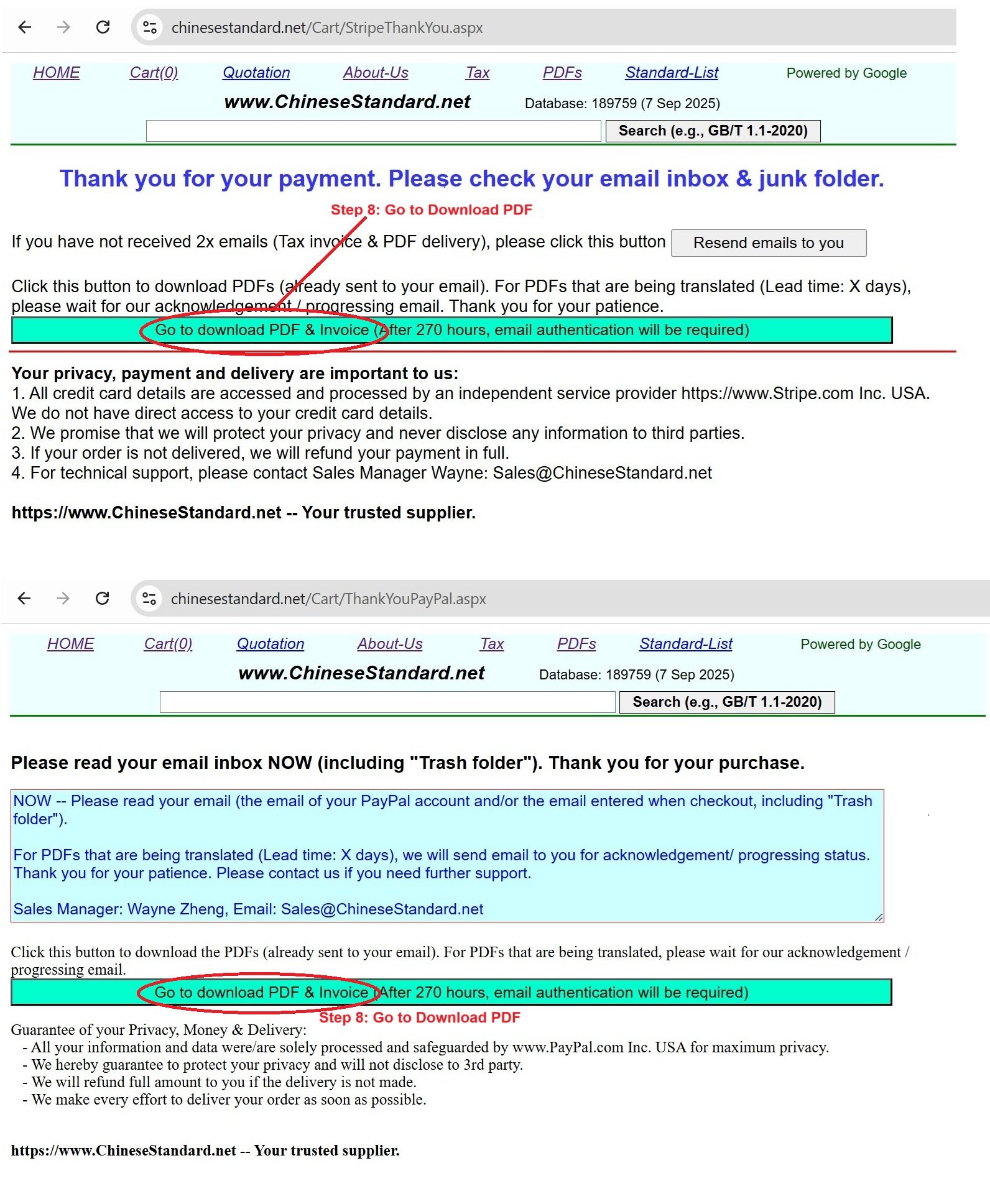
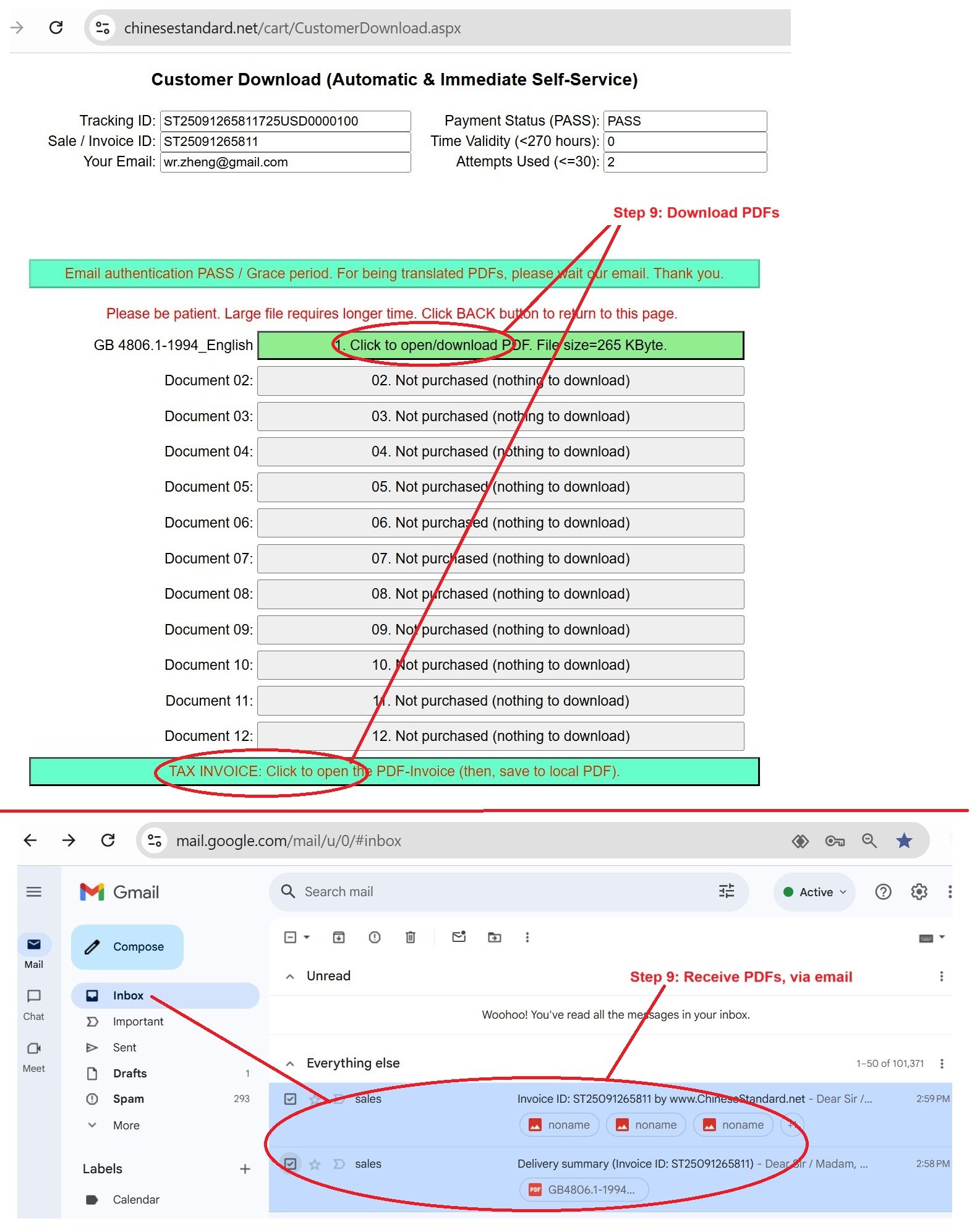
---This is an excerpt. Full copy of true-PDF in English version (including equations, symbols, images, flow-chart, tables, and figures etc.), auto-downloaded/delivered in 9 seconds, can be purchased online: https://www.ChineseStandard.net/PDF.aspx/GB5009.231-2016
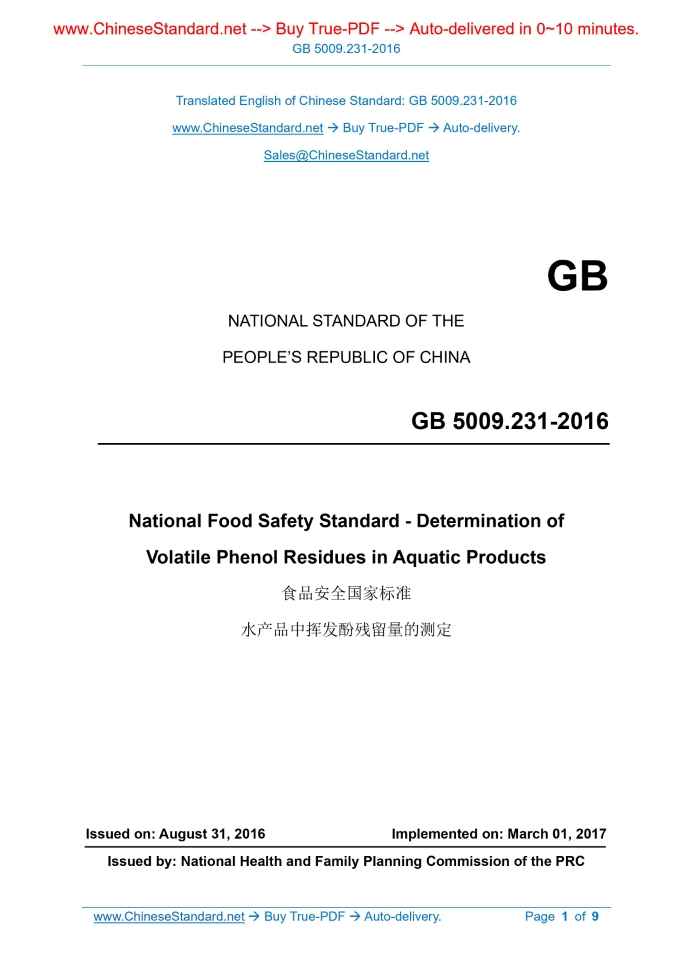
GB NATIONAL STANDARD OF THE PEOPLE’S REPUBLIC OF CHINA National Food Safety Standard - Determination of Volatile Phenol Residues in Aquatic Products ISSUED ON: AUGUST 31, 2016 IMPLEMENTED ON: MARCH 01, 2017 Issued by: National Health and Family Planning Commission of the PRC
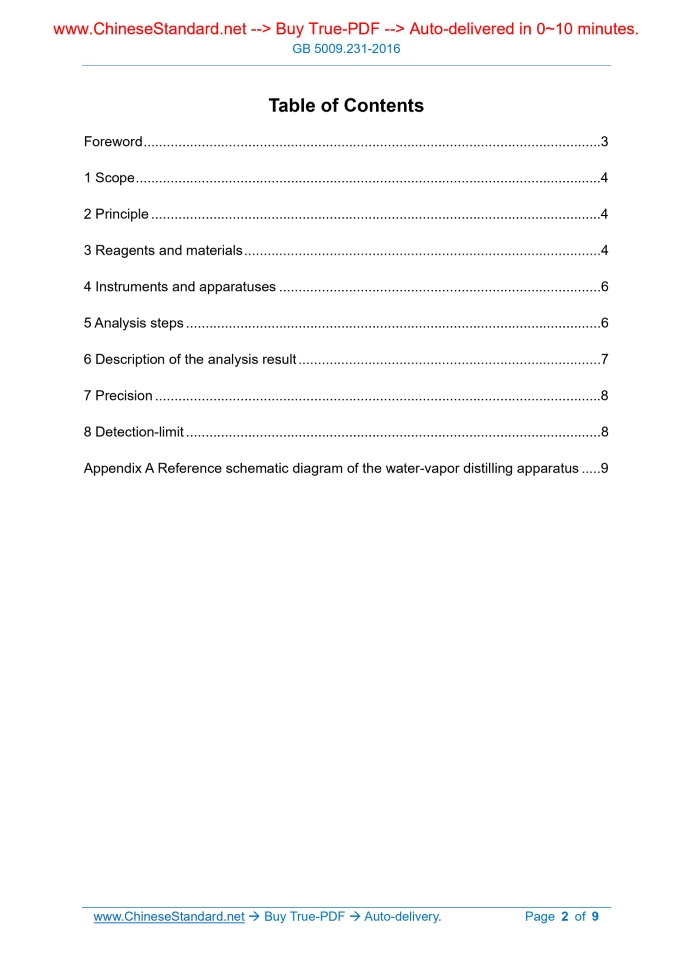
Table of Contents
Foreword ...3 1 Scope ...4 2 Principle ...4 3 Reagents and materials ...4 4 Instruments and apparatuses ...6 5 Analysis steps ...6 6 Description of the analysis result ...7 7 Precision ...8 8 Detection-limit ...8 Appendix A Reference schematic diagram of the water-vapor distilling apparatus ...9 National Food Safety Standard - Determination of Volatile Phenol Residues in Aquatic Products1 Scope
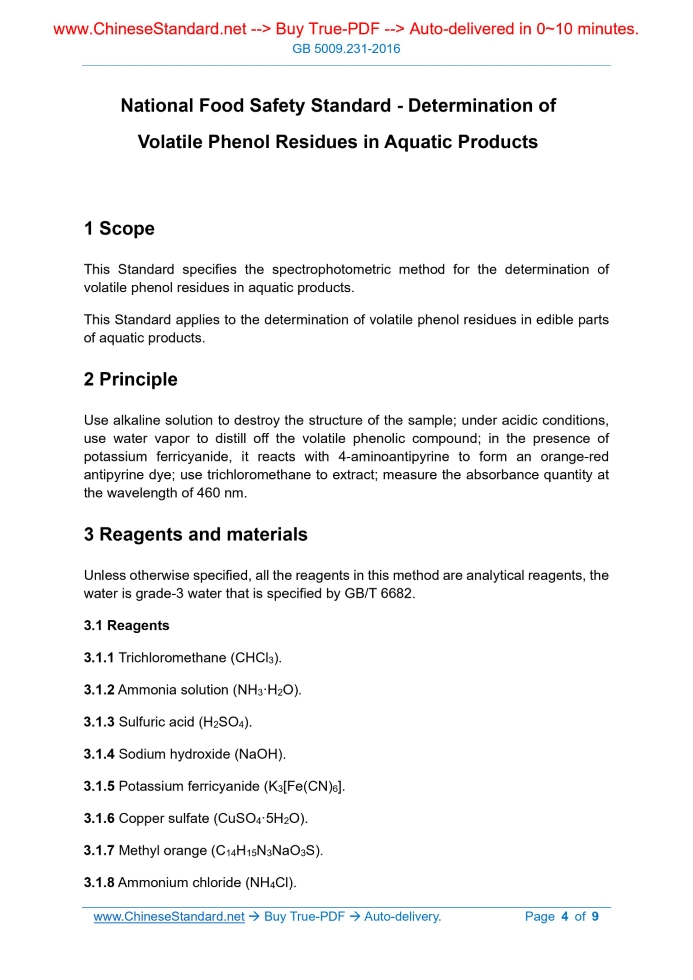
This Standard specifies the spectrophotometric method for the determination of volatile phenol residues in aquatic products. This Standard applies to the determination of volatile phenol residues in edible parts of aquatic products.2 Principle
Use alkaline solution to destroy the structure of the sample; under acidic conditions, use water vapor to distill off the volatile phenolic compound; in the presence of potassium ferricyanide, it reacts with 4-aminoantipyrine to form an orange-red antipyrine dye; use trichloromethane to extract; measure the absorbance quantity at the wavelength of 460 nm.3 Reagents and materials
Unless otherwise specified, all the reagents in this method are analytical reagents, the water is grade-3 water that is specified by GB/T 6682. 3.1 Reagents 3.1.1 Trichloromethane (CHCl3). 3.1.2 Ammonia solution (NH3·H2O). 3.1.3 Sulfuric acid (H2SO4). 3.1.4 Sodium hydroxide (NaOH). 3.1.5 Potassium ferricyanide (K3[Fe(CN)6]. 3.1.6 Copper sulfate (CuSO4·5H2O). 3.1.7 Methyl orange (C14H15N3NaO3S). 3.1.8 Ammonium chloride (NH4Cl). 3.4.2 Standard working solution: take an appropriate amount of phenol standard solution; use phenol-free water to dilute to 1.00 μg of phenol per millimeter; use it within 2 hours after preparation.4 Instruments and apparatuses
4.1 Water vapor distiller or 500 mL glass water-vapor distilling apparatus (see Appendix A). 4.2 Balance: the sensitivity is 0.1mg and 0.01g. 4.3 500 mL (pear-shaped) separatory funnel. 4.4 Magnetic stirrer. 4.5 Spectrophotometer. 4.6 Constant-temperature electric furnace or thermostat electric heating sleeve. 4.7 Tissue masher.5 Analysis steps
5.1 Sample preparation and storage Use the tissue masher to homogenate the edible part of the aquatic products; stir the mixture uniformly; package; seal and refrigerate or freeze to store. 5.2 Sample processing 5.2.1 Distillation extraction Weigh 10 g ~ 20 g of pretreated sample (accurate to 0.01g, and do a blank test at the same time) into the beaker; add 75 mL of sodium hydroxide solution; use a magnetic stirrer to stir for 10 min. Then, add 3 ~ 5 drops of methyl orange solution; use sulfuric acid solution to adjust the pH ≤ 4 (the solution is orange-red); add 5 mL of copper sulphate solution; mix; then put it in a water-vapor distiller or a 500 mL distilling flask; use a small amount of phenol-free water to wash the flask; merge the washing liquid into a water-vapor distilling apparatus or a distilling flask, and add several glass beads. Use the glass water-vapor distilling apparatus (or water-vapor distiller) to perform distillation - the water-vapor distilling apparatus shall be connected well to ensure strict gas leakage; take a 250 mL conical flask to receive the distillate; distillate at medium speed for 60 min ~ 90 min; until the distillate is about 240 mL, stop the distillation, and use 10 mL of phenol-free water to wash the condenser; merge the washing liquid into the distillate (which remains acidic during the distillation). The distillate shall be ......Source: Above contents are excerpted from the full-copy PDF -- translated/reviewed by: www.ChineseStandard.net / Wayne Zheng et al.