QC/T 531-2025 PDF English
Price & Delivery
US$275.00 · In stock · Download in 9 secondsQC/T 531-2025: Motor vehicle mirrors
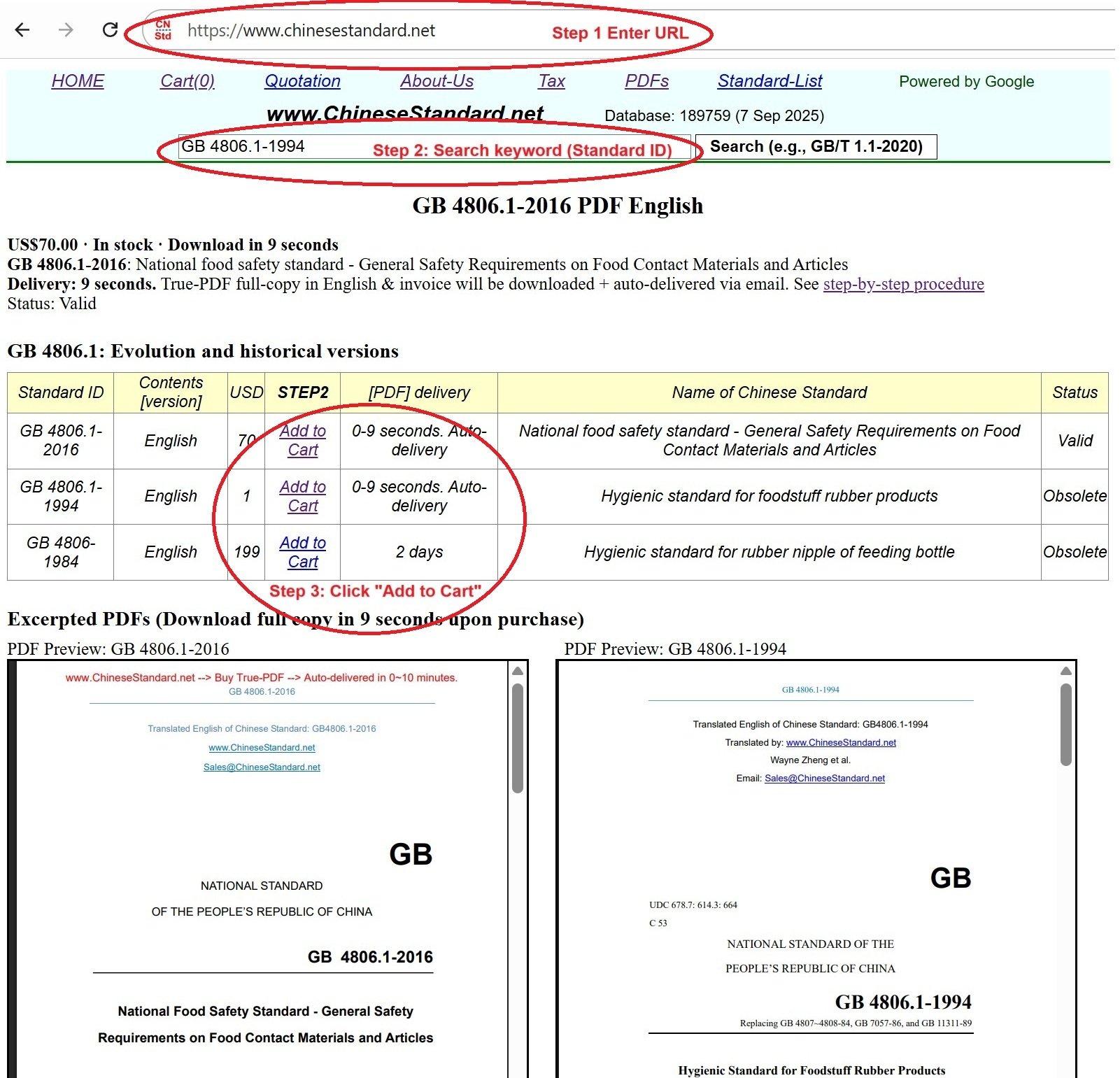
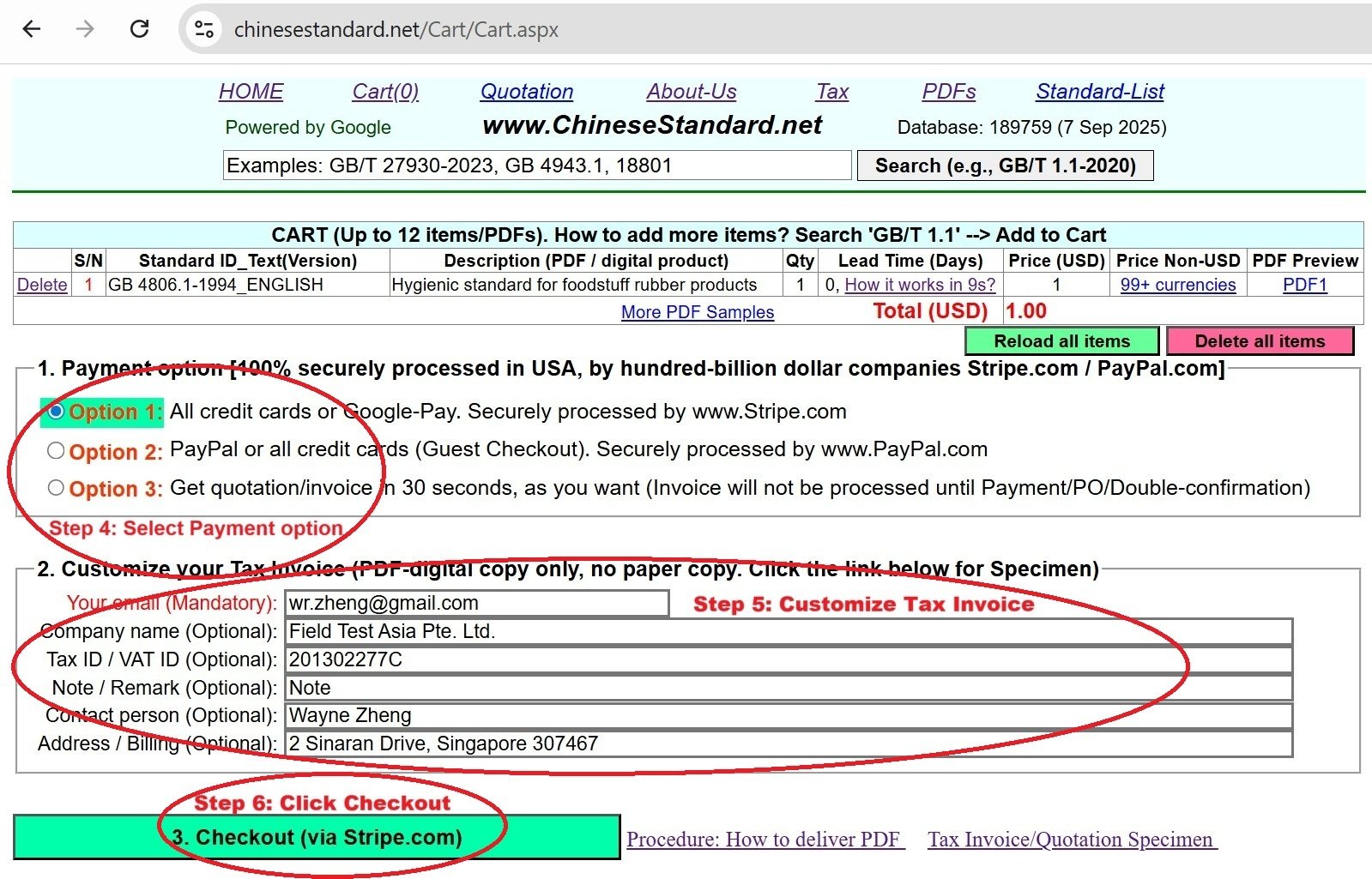
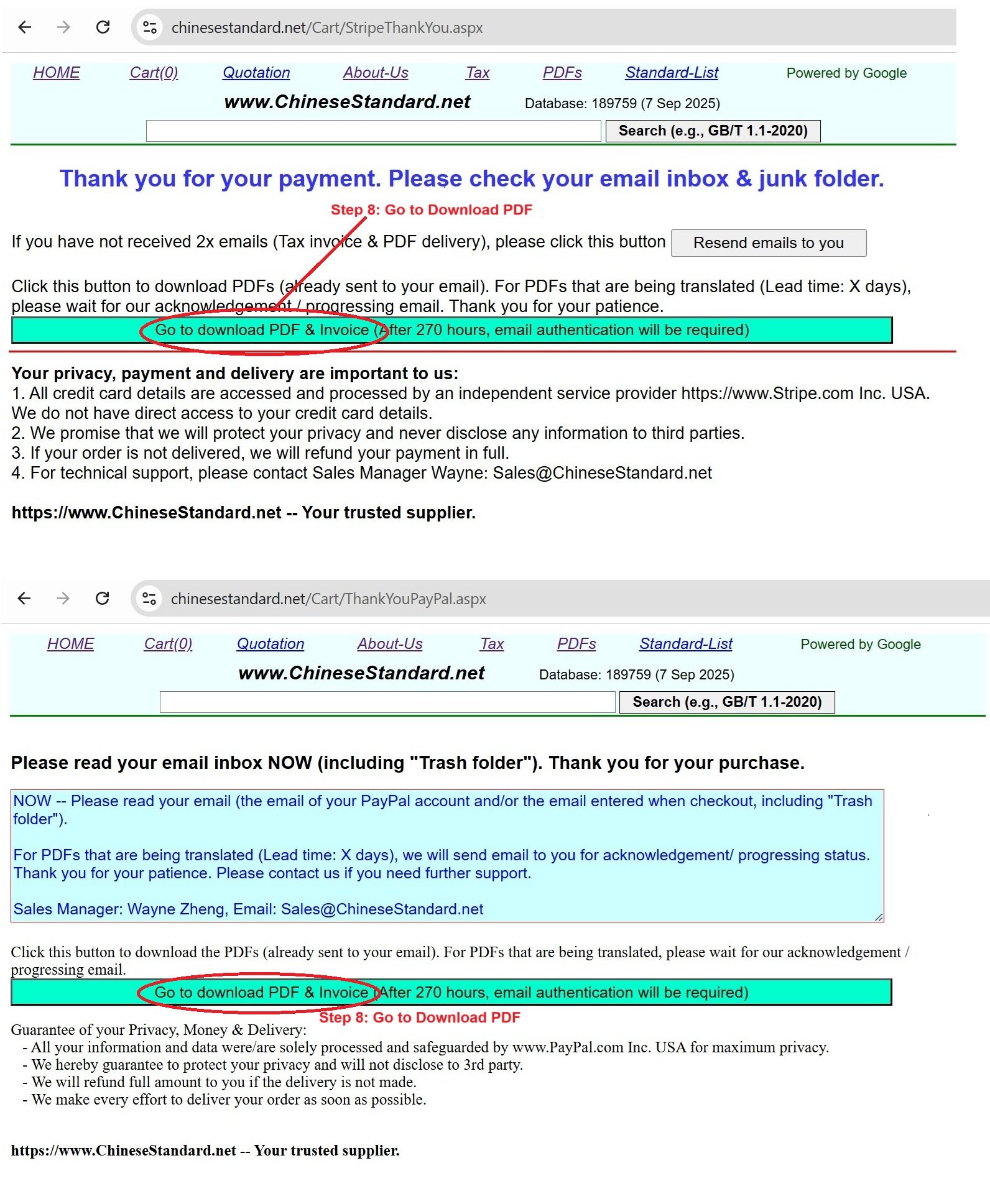
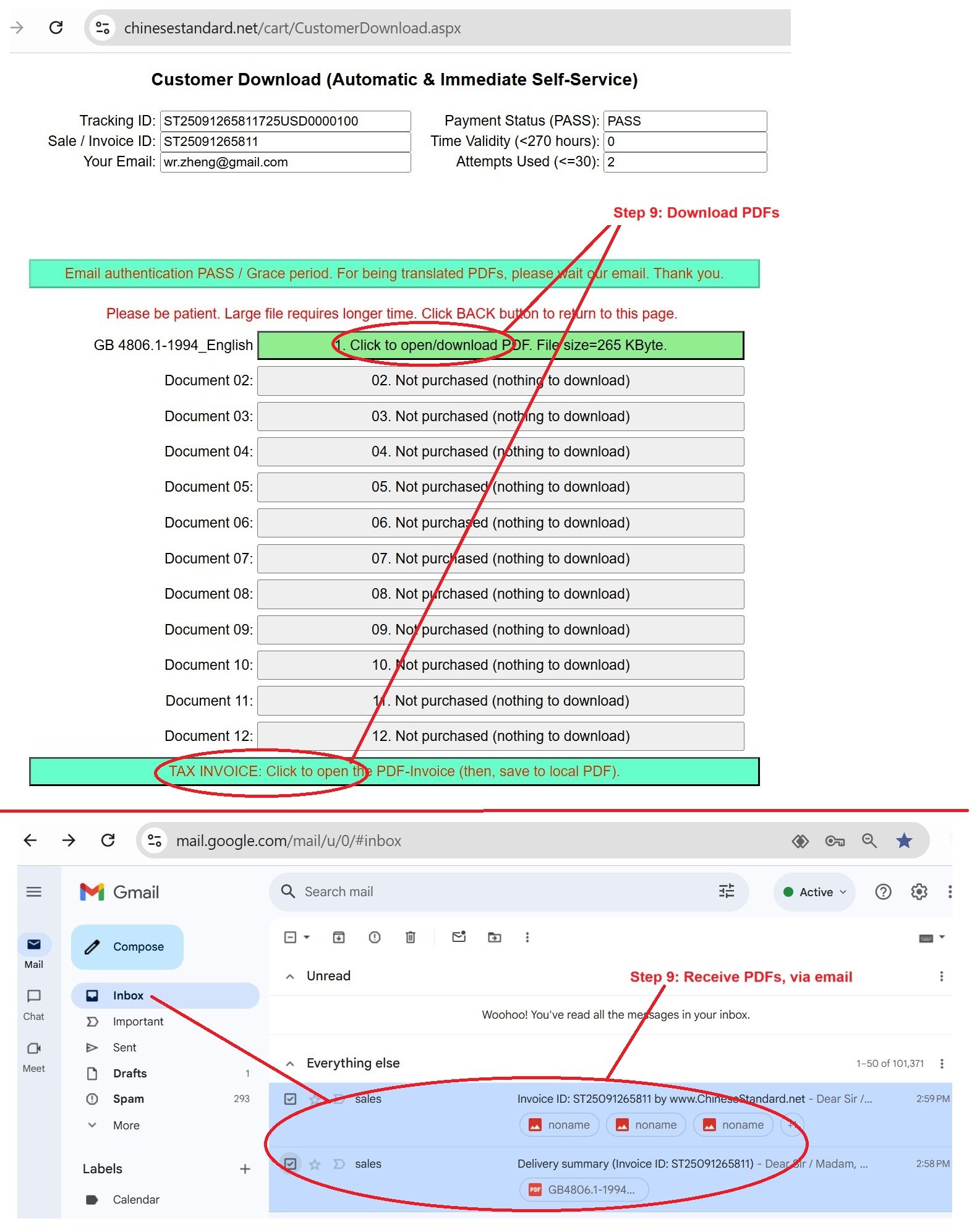
Delivery: 9 seconds. True-PDF full-copy in English & invoice will be downloaded + auto-delivered via email. See step-by-step procedure
Status: Valid
QC/T 531: Historical versions
| Standard ID | USD | BUY PDF | Delivery | Standard Title (Description) | Status |
| QC/T 531-2025 | 275 | Add to Cart | Auto, 9 seconds. | Motor vehicle mirrors | Valid |
| QC/T 531-2001 | 250 | Add to Cart | Auto, 9 seconds. | Car rearview mirror | Obsolete |
| QC/T 531-1999 | RFQ | ASK | 3 days | (Chinese Industry Standard) | Obsolete |
Click to Preview this PDF
QC/T 531-2025: Motor vehicle mirrors
---This is an excerpt. Full copy of true-PDF in English version (including equations, symbols, images, flow-chart, tables, and figures etc.), auto-downloaded/delivered in 9 seconds, can be purchased online: https://www.ChineseStandard.net/PDF.aspx/QCT531-2025QC AUTOMOBILE INDUSTRY STANDARD ICS 43.040.60 CCS T 26 Replacing QC/T 531-2001 Motor Vehicle Mirrors Issued on: MAY 9, 2025 Implemented on: NOVEMBER 1, 2025 Issued by. Ministry of Industry and Information Technology of the People’s Republic of China
Table of Contents
Foreword... 3 1 Scope... 5 2 Normative References... 5 3 Terms and Definitions... 5 4 Technical Requirements... 6 5 Test Methods... 9 6 Inspection Rules... 12 7 Marking, Packaging, Transportation, and Storage... 14Foreword
This Document was drafted as per the rules specified in GB/T 1.1-2020 Directives for Standardization – Part 1.Rules for the Structure and Drafting of Standardizing Documents. This Document replaced QC/T 531-2001 Car Rearview Mirror. Compared with QC/T 531- 2001, the major technical changes of this Document are as follows besides the structural adjustments and the editorial modifications. a) Delete the terms and definitions of monitoring mirror, plane mirror, convex mirror, and variable reflectivity rearview mirror (see 3.1.3, 3.2, 3.3, and 3.4 of the 2001 Edition); b) Change the general requirements (see 4.1 of this Edition; 4.1 of the 2001 Edition); c) Change temperature alternation resistance and test methods (see 4.2.4 and 5.2.4 of this Edition; see 4.2.6 and 5.6 of the 2001 Edition); d) Change damp heat resistance and test methods (see 4.2.5 and 5.2.5 of this Edition; see 4.2.5 and 5.5 of the 2001 Edition); e) Change light aging resistance and test methods (see 4.2.6 and 5.2.6 of this Edition; see 4.2.7 and 5.7 of the 2001 Edition); f) Change the vibration resistance and test methods (see 4.2.8 and 5.2.8 of this Edition; see 4.2.4 and 5.4 of the 2001 Edition); g) Add optical vibration and test methods (see 4.2.9 and 5.2.9 of this Edition); h) Add interior mirror operational durability and test methods (see 4.2.10 and 5.2.10 of this Edition); i) Add exterior mirror folding durability and test methods (see 4.2.11 and 5.2.11 of this Edition); j) Add interior mirror odor and test methods (see 4.2.12 and 5.2.12 of this Edition); k) Add prohibited substances and test methods (see 4.2.13 and 5.2.13 of this Edition); l) Add combustion characteristics and test methods (see 4.2.14 and 5.2.14 of this Edition); m) Delete impact cushioning and test methods (see 4.2.8 and 5.8 of the 2001 Edition). Please note some contents of this Document may involve patents. The issuing agency of this Document shall not assume the responsibility to identify these patents. This Document was proposed by and under the jurisdiction of National Technical Committee of Auto Standardization (SAC/TC 114). Motor Vehicle Mirrors1 Scope
This Document specifies the technical requirements, test methods, inspection rules, marking, packaging, transportation, and storage of motor vehicle mirror (hereinafter referred to as "mirrors"). This Document applies to mirror installed on vehicles of Category M and N.2 Normative References
The provisions in following documents become the essential provisions of this Document through reference in this Document. For the dated documents, only the versions with the dates indicated are applicable to this Document; for the undated documents, only the latest version (including all the amendments) is applicable to this Document. GB/T 191 Packaging - Pictorial Marking for Handling of Goods GB/T 250 Textiles - Tests for color fastness - Grey scale for assessing change in color GB 8410 Flammability of automotive interior materials GB/T 10125-2021 Corrosion tests in artificial atmospheres - Salt spray tests GB 15084-2022 Motor vehicles - Devices for indirect vision - Requirements of performance and installation GB/T 30512 Requirements for prohibited substances on automobiles GB 38262 Flammability of Interior Materials for Buses QC/T 236 Test method for automotive interior decorative material properties QC/T 947 Technology standards of auto-dimming rearview mirror for motor vehicle QC/T 965 Driver of electric rear-view mirrors for motor vehicle3 Terms and Definitions
For the purposes of this Document, the terms and definitions given in GB 15084-2022 and the following apply. 3.1 Mirror Indirect field-of-view devices that obtain a field of view through a reflecting surface. NOTE. It does not include complex optical systems such as periscopes. [SOURCE. GB 15084-2022, 3.2] 3.2 Interior mirror A mirror installed inside a vehicle is used to observe the field of view directly behind the vehicle. [SOURCE. GB 15084-2022, 3.3] 3.3 Exterior mirror A mirror installed outside a vehicle is used to observe the field of view behind, to the sides, or in front of the vehicle. [SOURCE. GB 15084-2022, 3.4]4 Technical Requirements
4.1 General requirements 4.1.1 The fillet radius, protrusion height, dimensions, reflective surface, and radius of curvature of the mirror shall conform to the provisions of GB 15084-2022. 4.1.2 The surface of the mirror shall be free from defects such as deformation, blurring, bubbles, scratches, cracks, bright spots, black spots, and water ripples, etc. 4.1.3 The surface of the injection-molded parts shall be free from defects such as burrs, breaks, exposed areas, shrinkage marks, weld lines, and scratches, etc. 4.1.4 The auto-dimming rearview mirror shall conform to the provisions of QC/T 947. 4.1.5 The Driver of electric rear-view mirrors for motor vehicles shall conform to the provisions of QC/T 965. 4.2 Performance requirements 4.2.1 Radius of curvature The radius of curvature of the mirror shall conform to the provisions of GB 15084-2022. 4.2.2 Reflectivity The reflectivity of the mirror shall comply with the provisions of GB 15084-2022. 4.2.3 Impact performance The impact performance of the mirror shall comply with the provisions of GB 15084-2022. 4.2.4 Temperature alternating The test shall be conducted according to the method specified in 5.2.4.After the test, the mirror surface shall not be blurred or aged; and the mirror components shall not exhibit defects affecting the product appearance such as cracking, powdering, visible deformation, stickiness, or discoloration, etc. All functions shall operate normally. 4.2.5 Damp heat resistance The test shall be conducted according to the method specified in 5.2.5.After the test, the mirror surface shall not be blurred or aged; and the mirror components shall not exhibit defects affecting the product appearance such as cracking, powdering, visible deformation, stickiness, or discoloration, etc. All functions shall operate normally. 4.2.6 Light-aging resistance The test shall be conducted according to the method specified in 5.2.6.After the test, the color fastness to light of the mirror shall be no lower than Grade 4 specified in GB/T 250; and all functions shall operate normally. 4.2.7 Corrosion resistance The test shall be conducted according to the method specified in 5.2.7.After the test, the metal parts of the mirror with coatings shall show no rust, cracks, deformation, or other corrosion phenomena; and all functions shall operate normally. 4.2.8 Vibration resistance The test shall be conducted according to the method specified in 5.2.8.After the test, each part of the mirror shall not exhibit the phenomena that affect its function such as deformation, damage, or detachment, etc. The mirror surface direction shall maintain its original normal operating position; and all functions shall operate normally. 4.2.9 Optical vibration The test shall be conducted according to the method specified in 5.2.9.The mirror assembly shall be tested under a vibration acceleration of 0.25g (g=9.8 m/s²) and a vibration frequency range of 20 Hz to 250 Hz, the measured torsional angle α shall meet the requirements of Table 1.5 Test Methods
5.1 Appearance Visual inspection shall be conducted at a distance of 500 mm from the human eye at a 45° angle under an illumination of 500 lx. 5.2 Performance test 5.2.1 Radius of curvature The radius of curvature of the mirror shall be measured according to the method specified in GB 15084-2022. 5.2.2 Reflectivity The reflectivity of the mirror shall be measured according to the method specified in GB 15084- 2022. 5.2.3 Impact performance The impact performance of the mirror shall be tested according to the method specified in GB 15084-2022. 5.2.4 Temperature alternating The mirror is installed on the test frame in its actual vehicle condition, without power supply, and placed in the test apparatus. The interior mirror is placed at a high temperature of (90±2)℃ and the exterior mirror at (70±2)℃ for 1 h; then stand at room temperature for 0.5 h; then stand at a low temperature of (-40±2)℃ for 1 h; and then stand at room temperature for 0.5 hour. This completes one thermal cycle, which is repeated for 10 times. 5.2.5 Damp heat resistance Install the mirror on the test stand as it should be on a real vehicle, without power supply, and conduct the test according to the conditions given in Table 3. 5.2.6 Light-aging resistance ......Source: Above contents are excerpted from the full-copy PDF -- translated/reviewed by: www.ChineseStandard.net / Wayne Zheng et al.