GB/T 1601-2023 PDF English
GB/T 1601: Historical versions
| Standard ID | USD | BUY PDF | Delivery | Standard Title (Description) | Status |
| GB/T 1601-2023 | 170 | Add to Cart | Auto, 9 seconds. | Determination method of pH value for pesticides | Valid |
| GB/T 1601-1993 | 100 | Add to Cart | Auto, 9 seconds. | Determination method of pH value for pesticides | Obsolete |
GB/T 1601-2023: Determination method of pH value for pesticides
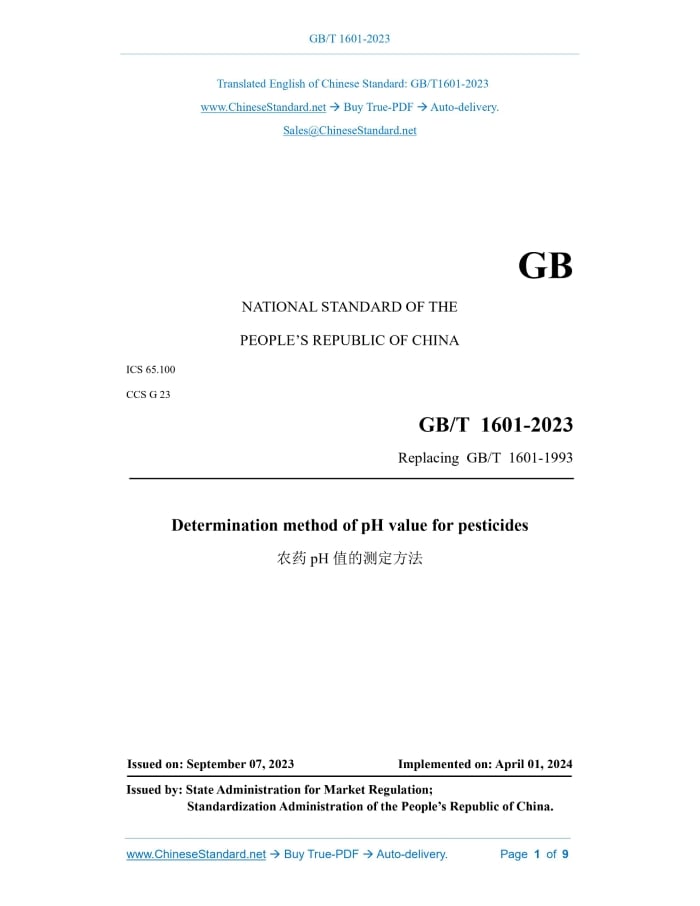
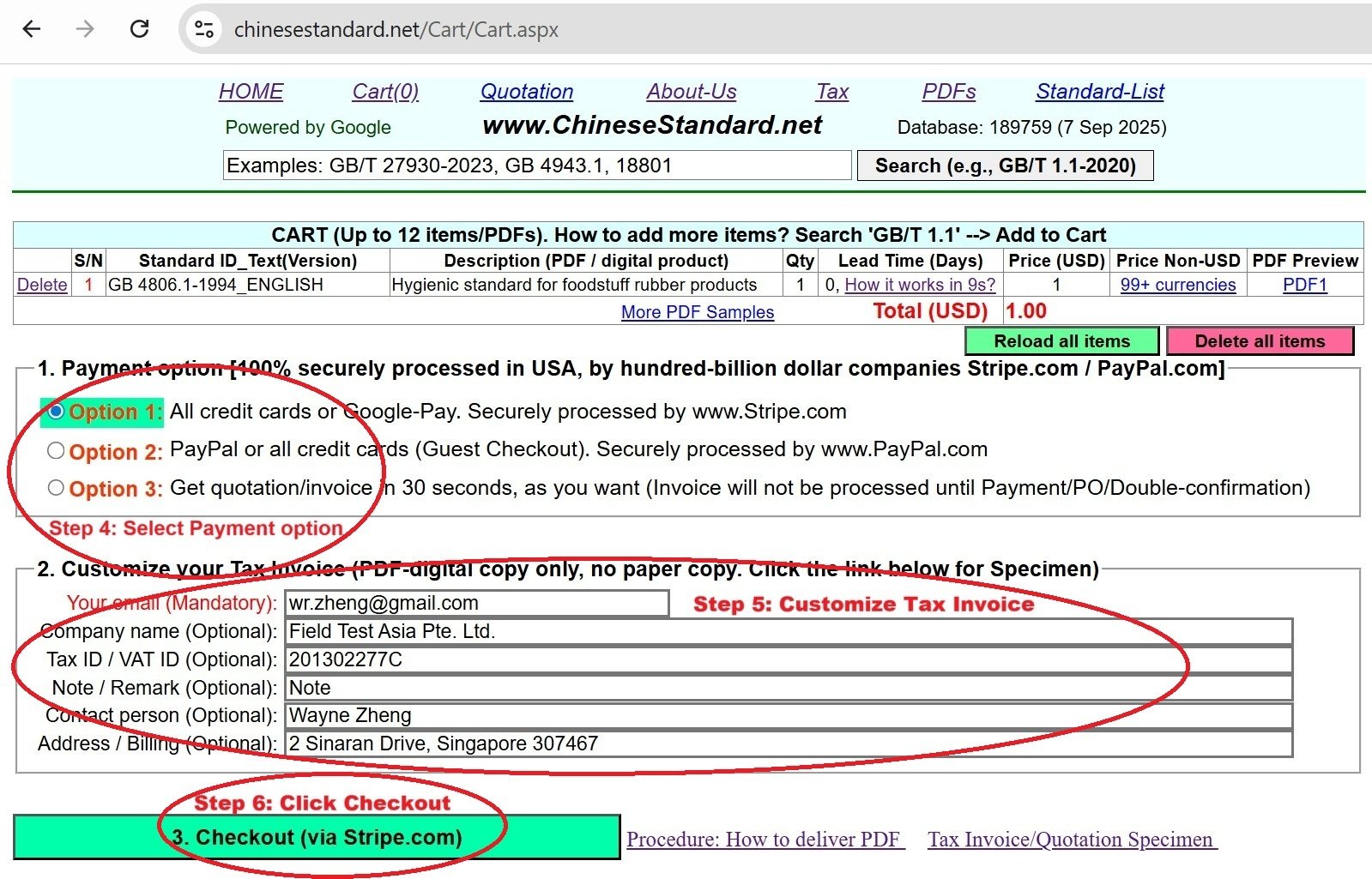
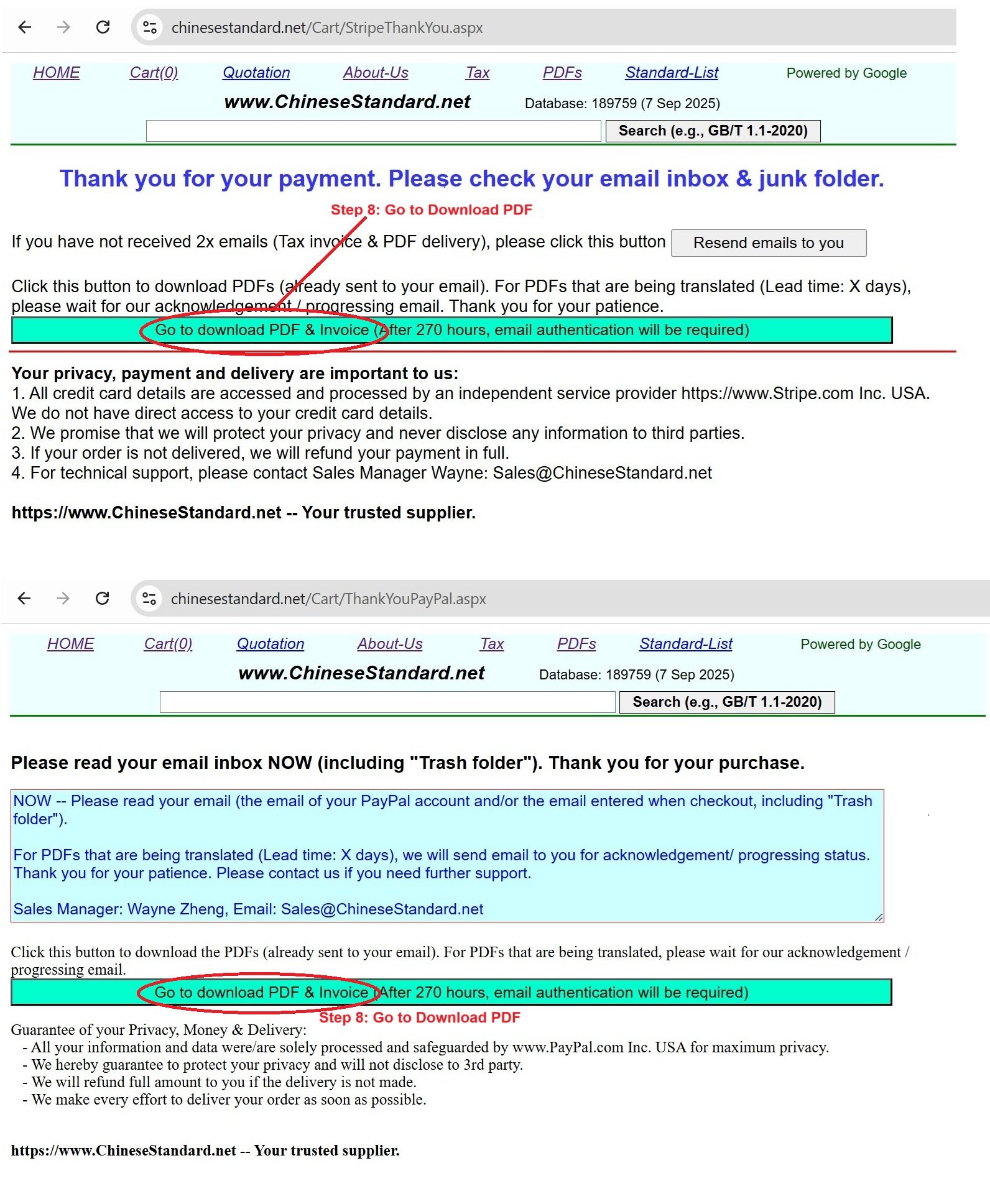
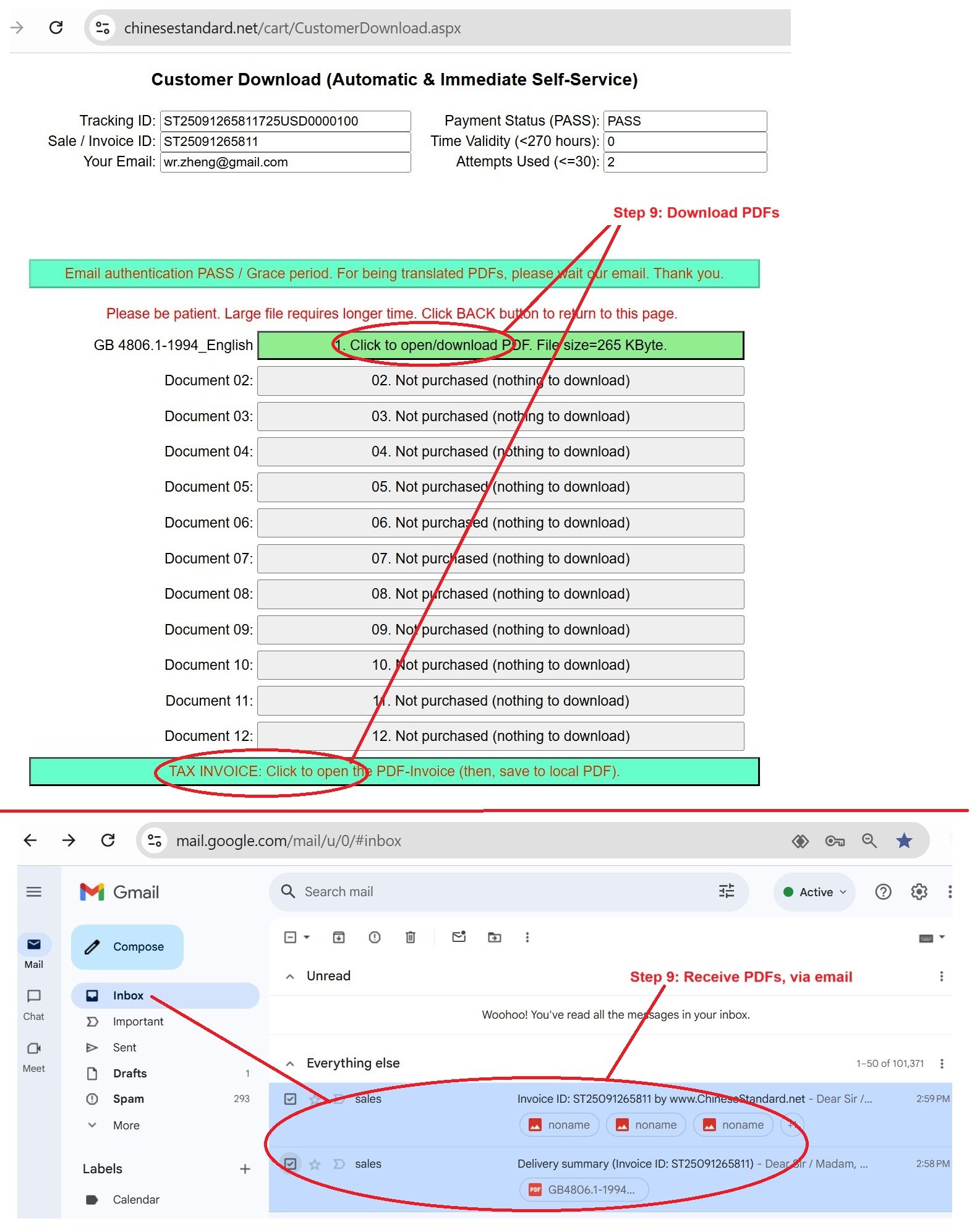
---This is an excerpt. Full copy of true-PDF in English version (including equations, symbols, images, flow-chart, tables, and figures etc.), auto-downloaded/delivered in 9 seconds, can be purchased online: https://www.ChineseStandard.net/PDF.aspx/GBT1601-2023GB NATIONAL STANDARD OF THE PEOPLE’S REPUBLIC OF CHINA ICS 65.100 CCS G 23 Replacing GB/T 1601-1993 Determination method of pH value for pesticides Issued on. SEPTEMBER 07, 2023 Implemented on. APRIL 01, 2024 Issued by. State Administration for Market Regulation; Standardization Administration of the People’s Republic of China.
Table of Contents
Foreword... 3 1 Scope... 5 2 Normative references... 5 3 Terms and definitions... 5 4 Test method... 5 Appendix A (Normative) pH standard buffer solution... 8Foreword
This document was drafted in accordance with the rules given in GB/T 1.1-2020, Directives for standardization - Part 1.Rules for the structure and drafting of standardizing documents. This document replaces GB/T 1601-1993, Determination method of pH value for pesticides; compared with GB/T 1601-1993, in addition to structural adjustments and editorial modifications, the main technical changes are as follows. a) Change the scope of application (see Chapter 1; Chapter 1 of the 1993 edition); b) Add terms and definitions (see Chapter 3); c) Add the general provisions (see 4.1); d) Change the method summary (see 4.2; Chapter 3 of the 1993 edition); e) Add pH standard buffer solution and pH reference reagent (see 4.3.1 and 4.3.2); f) Delete potassium hydrogen phthalate pH standard solution and sodium tetraborate pH standard solution (see 4.2 and 4.3 of the 1993 edition); g) Change the description of instrument electrodes (see 4.4.2; 5.2 and 5.3 of the 1993 edition); h) Change the calibration of the pH meter (see 4.5.1; 6.1 of the 1993 edition); i) Change the preparation of sample solution in the determination of diluted samples (see 4.5.2.1.1; 6.2 of the 1993 edition); j) Change the reading method for sample solution measurement in diluted sample measurement (see 4.5.2.1.2; 6.3 of the 1993 edition); k) Add direct measurement method (see 4.5.2.2); l) Add the preparation and temperature correction of pH standard buffer solution (see Appendix A). Please note that some of the contents of this document may involve patents. The issuing organizations of this document are not responsible for identifying patents. This document was proposed by China Petroleum and Chemical Industry Federation. This document shall be under the jurisdiction of National Technical Committee on Pesticides of Standardization Administration of China (SAC/TC 133). Drafting organizations of this document. Guangxi Tianyuan Biochemical Co., Ltd., Jiangsu Dongbao Agrochemical Co., Ltd., Anhui Share World Bio-Tech Co., Ltd., Guangxi Sujing Technology Co., Ltd., Syngenta (Suzhou) Crop Protection Co., Ltd., Shanghai Shengnong Pesticide Co., Ltd., Hunan Haohua Chemical Co., Ltd., Zhejiang Xinan Chemical Industrial Group Co., Ltd., Shandong Luba Chemical Co., Ltd., Pesticide Testing Institute of the Ministry of Agriculture and Rural Affairs. Main drafters of this document. Duan Lifang, Jiang Yifei, Ding Peifang, Shi Kaiwei, Wu Peng, Gao Jie, Gao Xinyue, Xu Kaiyun, Zhu Weiyu, Zhao Wei, Wang Fujun, Xu Haiyan, Gou Juanjuan, Chen Genliang, Du Kai, Qin Jiaqi, Wu Jinlong. The previous versions of this document and the documents which are replaced by this document are as follows. -- It was first published as GB/T 1601-1979 in 1979, and first revised in 1993; -- This is the second revision. Determination method of pH value for pesticides1 Scope
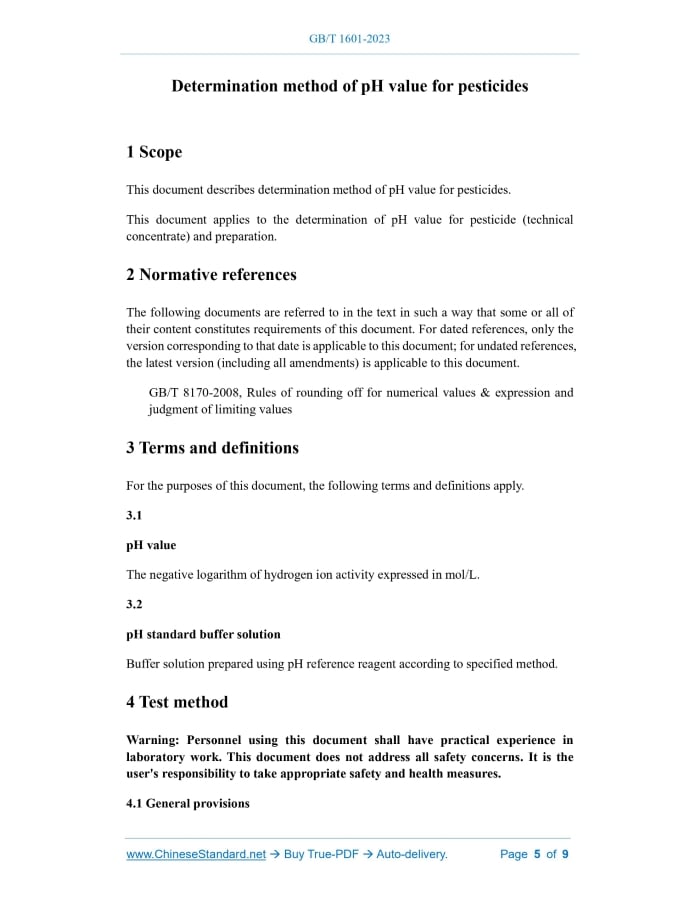
This document describes determination method of pH value for pesticides. This document applies to the determination of pH value for pesticide (technical concentrate) and preparation.2 Normative references
The following documents are referred to in the text in such a way that some or all of their content constitutes requirements of this document. For dated references, only the version corresponding to that date is applicable to this document; for undated references, the latest version (including all amendments) is applicable to this document. GB/T 8170-2008, Rules of rounding off for numerical values & expression and judgment of limiting values3 Terms and definitions
For the purposes of this document, the following terms and definitions apply. 3.1 pH value The negative logarithm of hydrogen ion activity expressed in mol/L.4 Test method
Warning. Personnel using this document shall have practical experience in laboratory work. This document does not address all safety concerns. It is the user's responsibility to take appropriate safety and health measures. 4.1 General provisions The judgment of the inspection results shall be carried out in accordance with the provisions of 4.3.3 in GB/T 8170-2008. 4.2 Method summary Use a pH meter to measure the pH of the aqueous sample solution or undiluted water- based preparation. 4.3 Reagents and solutions 4.3.1 pH standard buffer solution. Either commercial pH standard buffer solution, or self-prepared pH reference reagent can be used. The preparation process is carried out in accordance with Appendix A. 4.4 Apparatus 4.4.1 pH meter. with temperature compensation function, available for at least two- point calibration. 4.5 Test steps 4.5.1 Calibration of pH meter According to the instructions for use of the pH meter, select an appropriate standard buffer solution to calibrate the pH meter at least two points, so that the pH value of the sample solution is between the two points. 4.5.2 Determination of pH value 4.5.2.1 Dilution method (applicable to all pesticide products) 4.5.2.1.1 Preparation of sample solution Weigh 1.0 g (accurate to 0.001 g) of the sample; place it in a 100 mL stoppered measuring cylinder containing 50 mL of water; then, use water to make up to 100 mL; shake vigorously until the sample is fully mixed or dispersed; then, transfer to a 200 mL beaker; let stand for 1 minute.Appendix A
(Normative) pH standard buffer solution A.1 Preparation of pH standard buffer solution A.1.1 Oxalate pH standard buffer solution. Weigh 12.71 g (accurate to 0.001 g) of potassium trihydrogen oxalate that has been baked to constant weight at 54 ℃ ± 3 ℃; place it in a 1 000 mL volumetric flask; use water to dissolve it and dilute it to the mark; shake well. A.1.4 Disodium tetraborate pH standard buffer solution. Weigh 19.07 g (accurate to 0.001 g) of disodium tetraborate decahydrate; place it in a 1 000 mL volumetric flask; use water to dissolve and dilute to the mark; shake well. A.1.5 Calcium hydroxide pH standard buffer solution. At 25 °C, use carbon dioxide- free water and excess calcium hydroxide to make a saturated solution through full shaking; take the supernatant for use. Since the buffer solution is a saturated calcium hydroxide solution at 25 °C; therefore, it shall be confirmed before use whether the temperature of the solution is 25 °C. If not, adjust the temperature to 25 °C, and then take the supernatant after dissolution and equilibrium. When storing, carbon dioxide in the air shall be prevented from entering. Once turbidity occurs, discard it and re-prepare. A.2 Temperature correction of pH value of pH standard buffer solution The pH correction values of various pH standard buffer solutions under different temperature conditions are shown in Table A.1. ......Source: Above contents are excerpted from the full-copy PDF -- translated/reviewed by: www.ChineseStandard.net / Wayne Zheng et al.